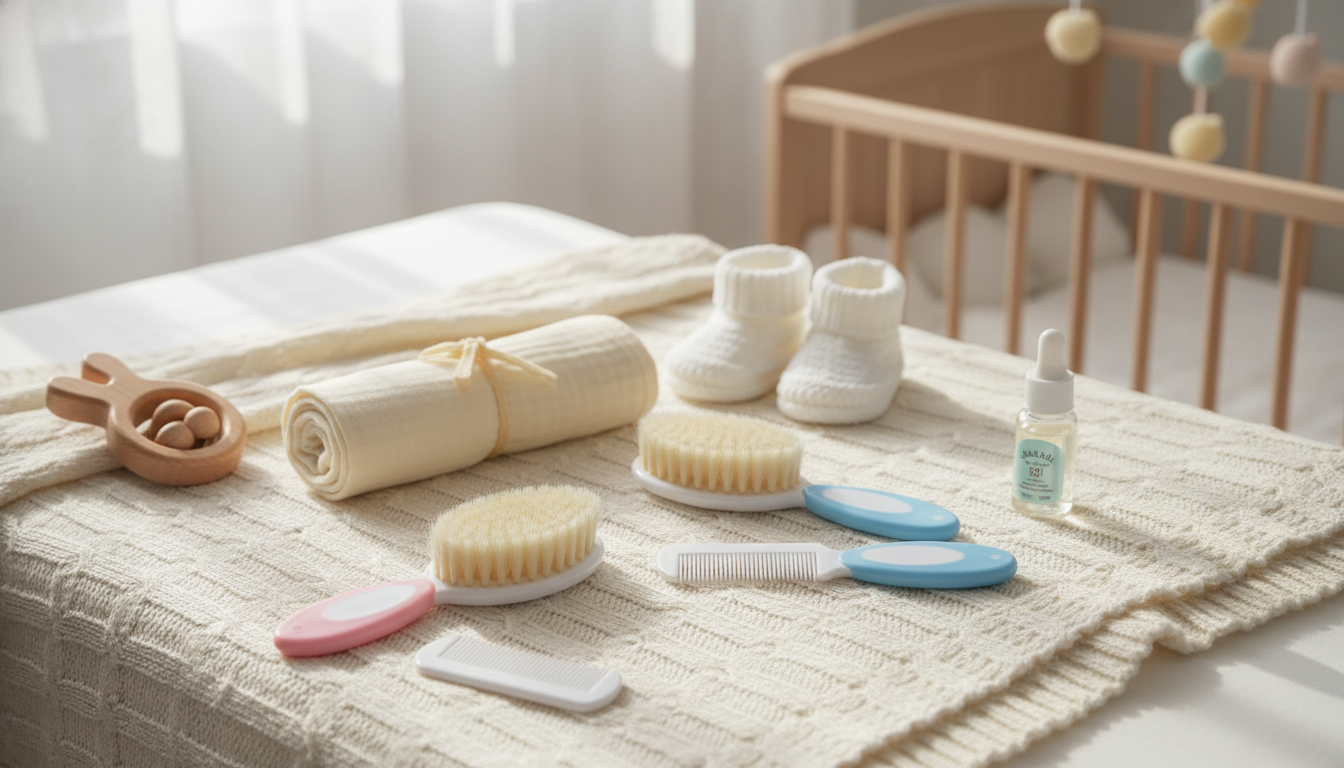
A good baby hair brush set supports comfortable, tear-free grooming from the first weeks through toddlerhood. The right tools help smooth fine hair, massage the scalp, and manage common concerns like tangles or flaky scalp—while keeping bristles soft enough for delicate skin. With a simple, repeatable routine, brushing can become one of those quick care moments that keeps hair tidy and helps little ones feel calm and cared for.
Most baby brush sets combine a few gentle tools so you can handle everyday grooming without improvising with adult brushes that may be too stiff or scratchy.
Babies grow quickly, and their hair (and patience) changes just as fast. A set works best when you match the tool and technique to your child’s stage and texture.
If your child has a sensitive scalp, keep sessions brief and stop if they show signs of discomfort. Gentle consistency generally works better than trying to fix everything in one long grooming session.
Each tool has a specific “sweet spot.” Using the right one at the right time helps prevent tugging and keeps the scalp comfortable.
| Tool | Best For | How Often | Gentle Use Tip |
|---|---|---|---|
| Soft-bristle brush | Newborn hair, smoothing, calming scalp massage | Daily or as needed | Use feather-light strokes; avoid brushing over irritated skin |
| Rounded-tooth comb | Parting hair, light detangling | After baths or styling | Hold hair near the roots and work from ends upward |
| Cradle cap brush/sponge | Loosening flakes during bath time | Only when flakes appear | Use with mild shampoo and minimal pressure; rinse thoroughly |
When shopping for baby grooming tools, comfort is the real measure of quality. A set can look cute but still feel rough on delicate skin.
For cradle cap concerns, it can help to review trusted medical guidance before changing routines or adding new scalp products. Helpful references include the American Academy of Pediatrics (HealthyChildren.org) cradle cap overview, the NHS cradle cap page, and Mayo Clinic’s cradle cap guidance.
Baby brushes and combs pick up natural oils, lotion residue, and tiny flakes. Regular cleaning keeps tools fresh and helps bristles stay soft.
A predictable rhythm can make grooming easier—especially once toddlers want independence. Small routines also help you catch tangles early, before they become knots.
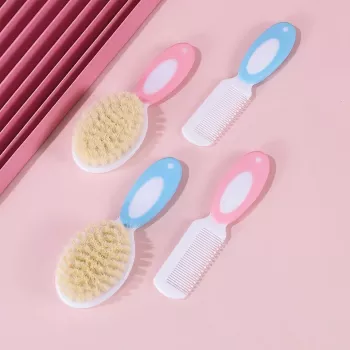
If you want an all-in-one kit for gentle brushing and light detangling, the Baby Hair Brush Set for Newborns and Toddlers keeps the essentials together for quick routines at home or on the go. Keeping one set in the nursery and a second in a diaper bag or daycare cubby can make mornings and transitions smoother.
For parents building calmer routines beyond grooming, a small planning resource can also be handy. The digital guide From Hustle to Holding | eBook for Turning Side Hustles Into Long-Term Assets is an at-home read for carving out time and structure when days feel packed.
Daily is fine if your baby enjoys it; keep pressure very light and use short strokes. Brushing can also be occasional—the main goal is gentle smoothing and comfort.
A gentle cradle cap brush or soft brush during bath time can help loosen flakes, but avoid scraping. If the skin looks red, swollen, or weepy, pause and consult a pediatric clinician.
Detangle when hair is damp, use a rounded comb, start at the ends and work upward, and hold hair near the roots to reduce pulling. Working in small sections helps prevent yanks and frustration.





Leave a comment