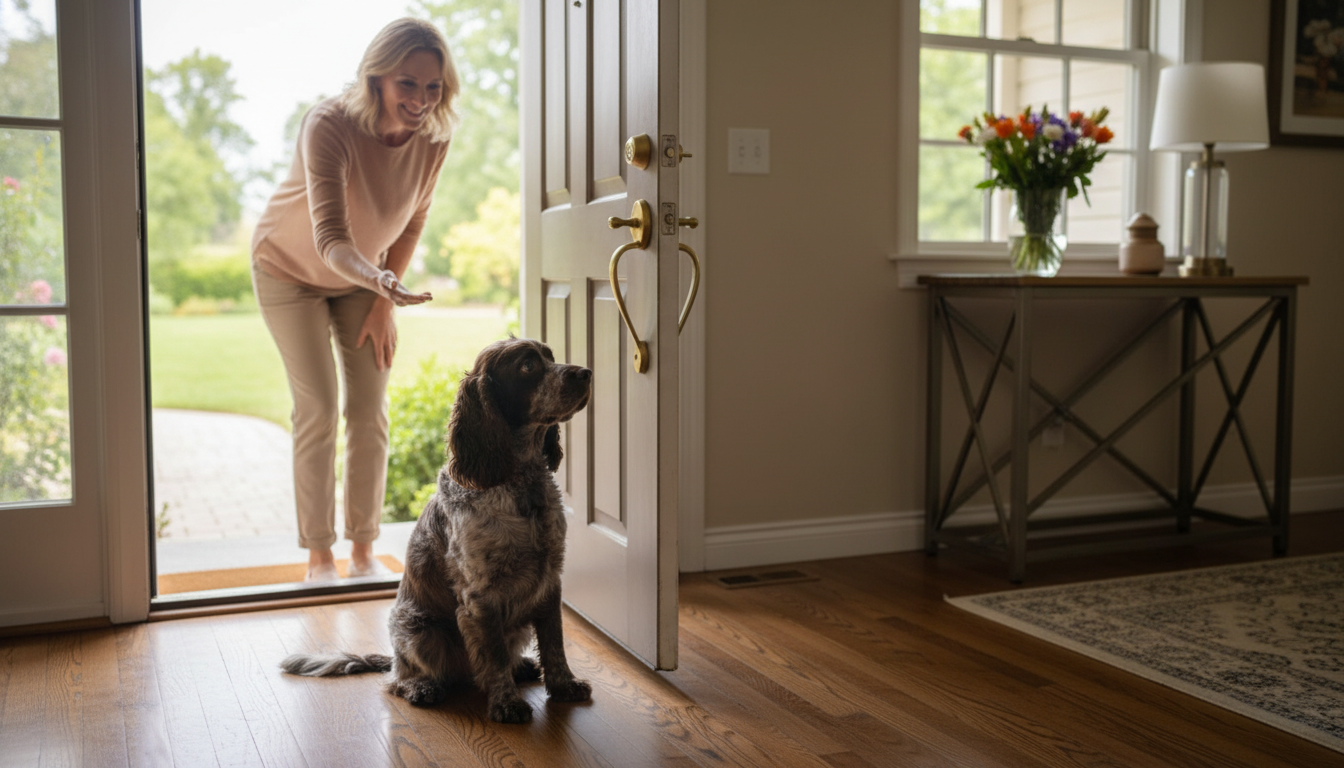
A dog that rushes the door, jumps, or barks nonstop can make visits stressful for everyone—including the dog. Good manners around guests come from clear routines, consistent reinforcement, and management that prevents rehearsal of unwanted behavior. The goal is a simple, repeatable “guest protocol” that teaches a default calm response at the door, polite greetings when invited, and a relaxing off-switch once visitors are inside.
Start by defining success in observable, repeatable behaviors. That way, everyone in the household can reward the same thing and your dog gets clearer feedback.
Management is not “cheating.” It prevents your dog from practicing the exact behaviors you’re trying to change.
Polite greetings are easier when the pieces are trained separately. Keep sessions short and upbeat, and end while your dog still wants more.
Ring once, then immediately toss treats away from the door (toward the mat area). Repeat until the sound predicts moving away from the door rather than charging it. This is a classic counterconditioning pattern supported by humane, reinforcement-based guidance from organizations like AVSAB and training resources from the ASPCA.
| Challenge | Likely cause | Immediate fix during a visit | Practice plan (between visits) |
|---|---|---|---|
| Jumping on guests | Overexcitement and reinforced greeting history | Step on leash/hold leash short; guest turns away; reward four paws down | Teach “sit to say hi,” reward calm approach, add short greeting timeouts |
| Barking at the doorbell/knock | Startle + anticipation | Send to mat, rapid treat delivery, increase distance from door | Pair bell with treat scatter away from door; add door sounds at low volume |
| Mouthing hands/clothes | Arousal and poor bite inhibition | End interaction immediately; offer chew; keep greetings brief | Reinforce gentle take, teach “leave it,” add calm enrichment before guests |
| Guarding the couch/owner | Insecurity and resource guarding | Separate with gate; remove access to valued spot; avoid forcing contact | Work with a qualified professional; practice trade-ups and safe distance setups |
| Over-friendly pestering | Lack of off-switch and unclear boundaries | Mat station with chew; leash drag line indoors; structured breaks | Build duration on mat, reward calm eye contact, practice “place” around distractions |
A structured guide can help turn the routine into a repeatable plan with clear steps, practice sessions, and troubleshooting ideas. The Teaching Dog Good Manners Around Guests download is designed to help set weekly goals (mat duration, doorbell response, calm greeting time) and track progress across visits.
If structured checklists and “one-step-at-a-time” practice plans are motivating, some people also prefer pairing training goals with a separate planning system for consistency—resources like Aim High, Teach Bold: A Practical Guide to Goal Setting can help build a routine for follow-through.
Many dogs improve in 2–4 weeks with consistent management and daily practice, but longer histories of jumping can take a few months to fully fade. Progress depends on preventing “successful” jumping during real visits and rewarding four paws on the floor every time. Expect occasional setbacks during especially exciting arrivals, then return to the same protocol.
Yes—ignoring at the doorway lowers arousal and prevents guests from accidentally rewarding jumping or barking. Ask guests to enter calmly, look away, and wait until your dog is settled on the mat; then you can release for a short, earned greeting.
Increase distance from the door using a gate or another room, then pair door sounds and arrivals with high-value treats and mat work so the pattern becomes predictable. Provide calming enrichment (like a chew on the mat) once your dog can stay settled. If barking includes lunging, snapping, or intense guarding, consult a qualified professional for a tailored safety plan.






Leave a comment