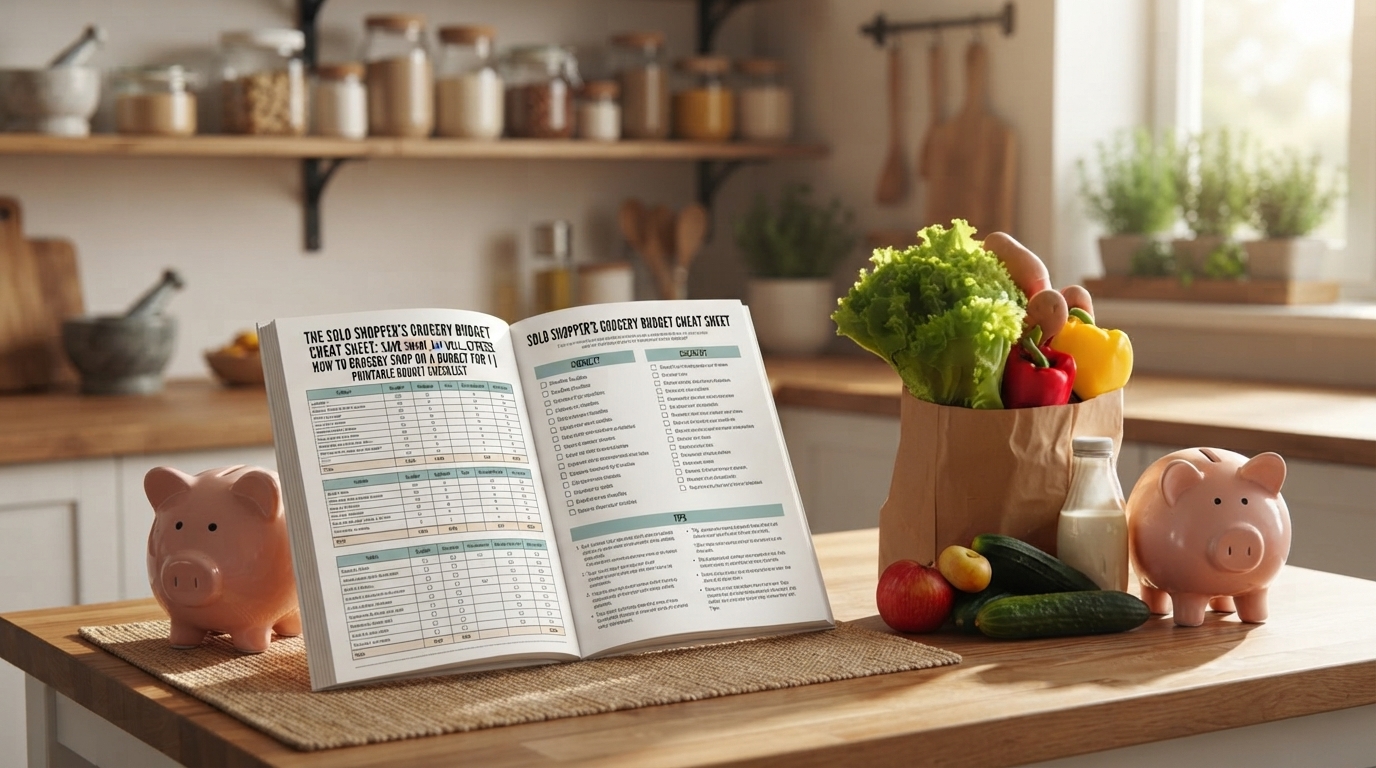
Shopping for one can feel oddly expensive: small packages cost more per serving, produce spoils faster, and impulse buys add up quickly. The fix isn’t extreme couponing or eating the same meal every night—it’s a simple routine you can repeat every week. Use the cheat-sheet approach below to set a realistic number, plan meals with overlap, shop with purpose, and waste less—so your grocery trip feels calmer and your total stays predictable.
If you want a ready-to-print version you can keep on your phone or fridge, try The Solo Shopper’s Grocery Budget Cheat Sheet (Printable Budget Checklist).
Your “right” grocery budget depends on how you actually live: how often you cook, how much convenience food you buy, and whether you’re feeding hobbies like baking or meal prep. Pick a weekly range that feels doable, then defend it with simple guardrails.
| Budget Slice | Target Share | What It Covers | Simple Guardrail |
|---|---|---|---|
| Staples | 35–45% | Rice/pasta, oats, beans, eggs, frozen veg, canned tomatoes, spices | Restock only when down to 25% remaining |
| Fresh | 30–40% | Fruit, salad greens, fresh veg, yogurt, deli substitutes | Buy 2–3 “quick-use” items + 2 “longer-life” items |
| Proteins | 15–25% | Chicken, tuna, tofu, ground meat, lentils | Choose 1 primary + 1 backup protein each week |
| Flexible | 0–10% | Snacks, dessert, specialty drinks, convenience meals | Set a fixed cap and pay attention to serving cost |
Solo budgets get easier when your meals share ingredients. Think “building blocks,” not “new recipe every night.” You’ll shop faster, cook faster, and waste less.
If protein planning is a sticking point, High-Protein Ideas for Muscle Recovery Checklist can help you keep breakfasts (and post-workout meals) consistent without buying random extras.
A good list isn’t long—it’s specific. The goal is to buy what you’ll actually eat in the next 7 days and have backups that prevent last-minute takeout.
The order you shop matters because it reduces “wandering decisions”—the fast track to overspending.
For more budget-friendly shopping basics, the USDA has practical guidance at MyPlate – Budget-Friendly Shopping Tips.
Longevity is your secret weapon as a solo shopper. The less you throw out, the more flexible your budget becomes.
When you’re unsure how long something stays fresh, check the USDA FoodKeeper App and the FDA food storage and safety basics for reliable guidelines.
For a one-page version you can reuse every week, grab The Solo Shopper’s Grocery Budget Cheat Sheet.
A practical starting range is about $50–$120 per week, depending on your location, dietary needs, and how many convenience foods you buy. Track your total for 2–4 weeks, then adjust your weekly number so it’s realistic and separate from dining out.
Go heavy on freezer-friendly and shelf-stable items like frozen vegetables and fruit, beans, lentils, oats, rice, eggs, canned fish, and sauces. Round it out with longer-life produce (carrots, cabbage, apples) and freeze extras in single portions to avoid spoilage.
Set an “extras cap,” shop with a list (and ideally after you’ve eaten), and skip aimless aisle browsing. If you want treats, plan one intentional item, check unit prices, and leave once your list is done.





Leave a comment