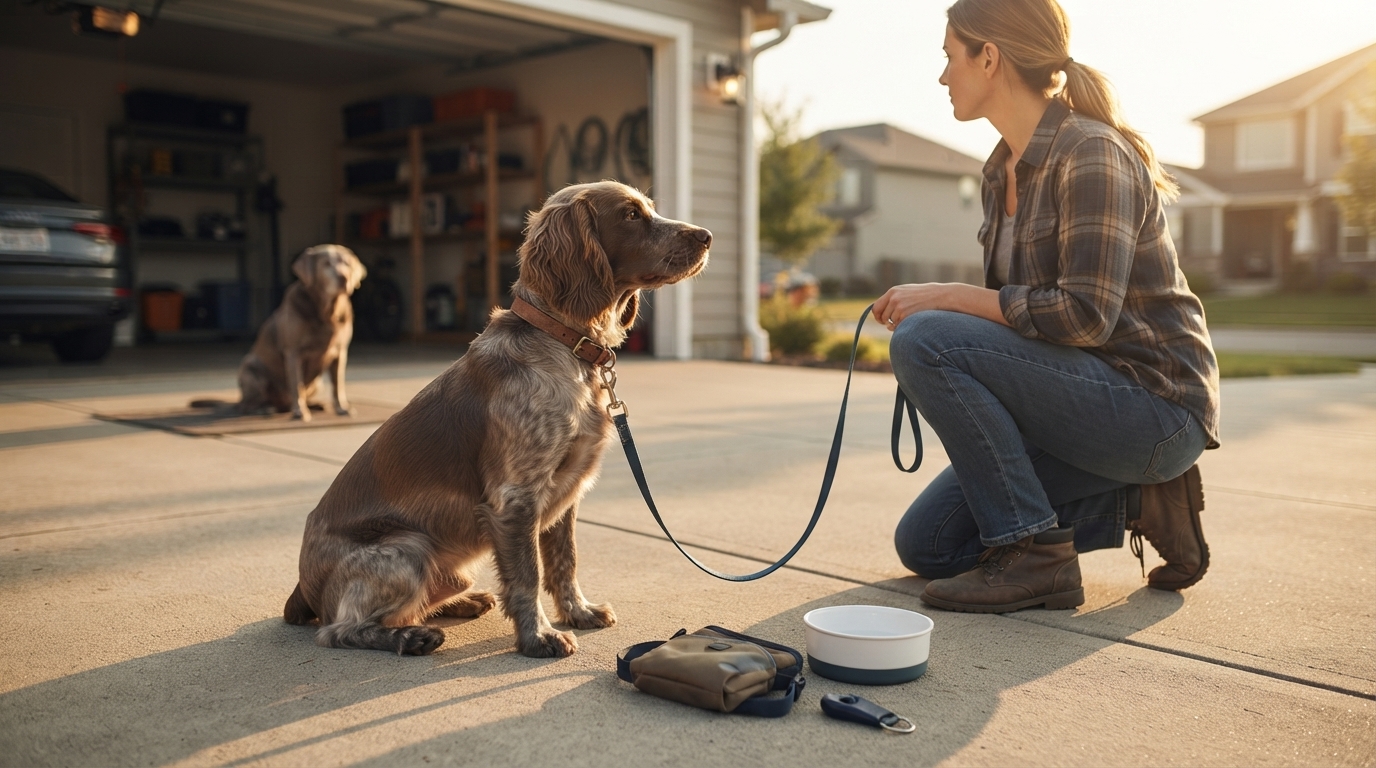
Teaching dog-to-dog manners is mostly about building calm habits before your dog ever reaches another dog. Start by rewarding focus, loose-leash walking, and a quick response to cues like “sit” and “leave it” in low-distraction places. When your dog can stay composed, you can slowly bring those skills into real-life greetings.
Don’t wait until noses touch to ask for behavior. When you spot another dog, create space and ask for an easy cue (sit, touch/hand target, or look). Reward immediately. If your dog is pulling, whining, or fixating, you’re too close—move away until your dog can think again.
Keep greetings short and structured: approach in a loose “J” arc (not a straight line), pause for a brief sniff (1–3 seconds), then cheerfully call your dog away and reward. Repeat only if both dogs are relaxed. This builds the idea that greetings are optional, brief, and end on cue.
Reward soft eyes, a relaxed mouth, and a loose wag. Interrupt and reset if you see stiff posture, hard staring, raised hackles, or your dog trying to mount. A simple “this way” and a few steps of distance can prevent a spiral.
Work with one well-socialized, calm dog first. Avoid crowded dog parks until your dog consistently responds around mild distractions. Parallel walks (two dogs walking the same direction with space between them) are a low-pressure way to build comfort.
The same calm greeting habits you use at the front door—waiting, checking in, and being rewarded for composure—apply to meeting other dogs. For a step-by-step approach to teaching calm greetings and impulse control, see this guide to good manners around guests and calm door greetings.
Increase distance until the leash loosens, then reward your dog for looking at you and walking calmly. Practice “this way” turns and treat frequently before your dog gets overly excited, gradually decreasing distance over multiple sessions.





Leave a comment