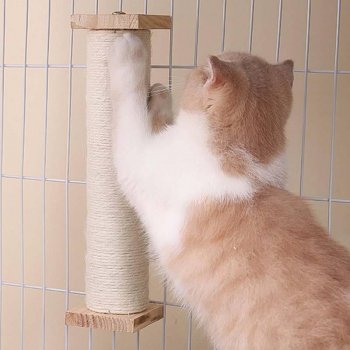
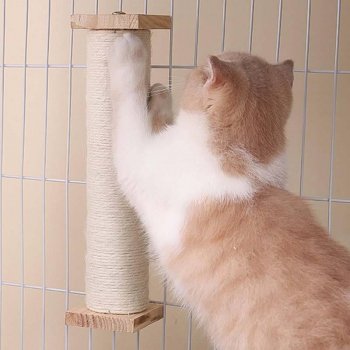
A wall-mounted scratcher creates a dedicated, vertical place for cats to stretch, dig in, and shed old claw layers—without sacrificing floor space. A wood-backed design can look more like decor than pet gear, while helping redirect scratching away from couches, door frames, and rugs. The key is choosing the right height, surface, and placement so it becomes the most satisfying option in the room.
Why wall-mounted scratching works so well
Scratching is more than “nail sharpening.” It’s a normal behavior that supports claw maintenance, stretching, and scent/visual marking. A wall-mounted scratcher leans into how many cats naturally prefer to scratch: upright, stable, and tall enough to reach.
- Supports natural full-body stretching: many cats prefer to scratch upright with a long reach, engaging shoulders, spine, and hips.
- Saves floor space: compared with posts and scratch trees, wall units are ideal for apartments, narrow hallways, and compact living rooms.
- Builds a consistent scratch “route”: cats often scratch after waking or when moving between rooms, so a wall station can become part of the daily loop.
- Protects furniture with smarter proximity: the best scratch alternative is usually the closest, most stable one—especially near previous scratch hotspots.
For a quick refresher on why cats scratch and how to manage it humanely, the ASPCA’s scratching guidance is a helpful baseline.
What sets a wood wall-mounted scratcher apart
Not all wall scratchers feel the same to a cat—or look the same in a home. A wood-backed model tends to be both sturdier and more visually “finished,” which matters in modern spaces where pet items live in plain sight.
- Wood backing adds rigidity and a finished look: it can blend with shelving, trim, and minimalist interiors instead of reading as clutter.
- A firm mount reduces wobble: stability is often the difference between “ignored” and “daily favorite,” especially for confident, full-force scratchers.
- Cleaner placement off the floor: lifting the scratch surface reduces contact with litter scatter, spills, or damp areas near food bowls.
- Fits vertical cat “architecture”: it pairs naturally with a perch, window ledge, or climbing steps—creating a satisfying sequence of climb, observe, scratch, repeat.
International Cat Care also emphasizes offering appropriate scratching options in the right places so cats can perform the behavior comfortably and regularly (scratching behaviour overview).
Placement and height: make it irresistible
Placement is the make-or-break factor. A great scratcher in the wrong spot can be ignored, while an “okay” one in the perfect spot becomes the household favorite.
- Start near an existing scratch target: if the sofa arm or a doorway corner is already “claimed,” intercept that habit with the new scratcher nearby.
- Mount tall enough for a full stretch: aim for the top of the scratch area to land around your cat’s extended reach (front paws up, body long).
- Add a second unit for multi-cat homes: separate territories reduce competition and help shy cats scratch without being ambushed.
- Avoid cramped corners: give shoulder-width clearance on both sides so your cat can stance comfortably and step back without bumping into furniture.
Quick placement guide
| Location |
Why it works |
Tip |
| Near sleeping spot |
Cats often scratch after waking |
Place within a few steps of the bed or favorite nap area |
| Beside a doorway/hall |
High-traffic route reinforces routine |
Mount at a consistent height along the pathway |
| Next to prior scratch damage |
Direct replacement for the old target |
Cover/clean the old spot so the new surface wins |
| By a window perch |
Pairs scratching with viewing time |
Add a small perch or ledge nearby if possible |
Surface preferences: what cats actually like
Cats have strong texture preferences, and those preferences often show up in what they’ve already chosen to scratch. Instead of guessing, let current behavior point the way.
- Many cats prefer fibrous, shreddable textures: materials like sisal can “grab” the claws and provide satisfying feedback.
- Some cats love cardboard-like resistance: others want a rougher rope feel—watch whether your cat targets boxes, rugs, or woven furniture.
- Rug scratchers may need a second option: if your cat scratches horizontally on rugs, add a floor pad too; the wall-mounted unit can still become the main station with a little training.
- Plan for wear: replaceable or long-lasting scratch surfaces keep the station rewarding as it gets “seasoned.”
How to mount safely without wall damage
Training and habit reset (no stress)
For broader behavior management best practices (including stress reduction and environment setup), the AAHA behavior management resources are a solid reference.
Recommended picks from our store
FAQ
What height should a wall-mounted scratcher be installed?
Install it so your cat can fully stretch upward, with the top of the scratch area near their extended reach. If your cat only uses the middle, raise it slightly; if they miss the bottom, lower it a bit.
Will a wall-mounted scratcher stop cats from scratching the couch?
It can, especially when placed right next to the old scratch spot and made more rewarding with treats, play, or a light catnip refresh. Protecting the couch temporarily helps the new habit “stick” faster.
Is a wall-mounted scratcher safe for kittens and senior cats?
Yes, as long as it’s mounted securely and placed where footing is stable. For seniors, keep it along an easy walking route or near a low perch so they don’t need steep jumps.
Recommended for you





Leave a comment