
Detailers prevent streaks on the inside of a windshield by controlling two things: the residue left behind and the direction of their wipe. Interior glass collects a stubborn film from plastics, HVAC vapor, and fingerprints, so the job starts with a dry “reset,” then finishes with a tight, even buff.
Before any cleaner touches the glass, pros wipe the inside windshield with a clean, dry microfiber towel or pad. This lifts dust and loose film that can turn into smears once it gets wet. Use light pressure and work in sections so you’re not pushing grime around.
Detailers typically use a dedicated glass microfiber (low-lint, tight weave) and avoid fabric softener residue. They spray cleaner onto the towel or pad—not directly onto the windshield—to prevent overspray onto the dash and to avoid soaking the glass, which increases streaking. Less liquid is usually better; add more only if the towel drags.
A common pro method is a crosshatch wipe (horizontal passes, then vertical passes) to ensure full coverage, followed by a final dry buff with a second towel or the dry side of the pad. Flipping to a dry surface is what removes the last trace of cleaner and breaks up faint streaks you only see at an angle.
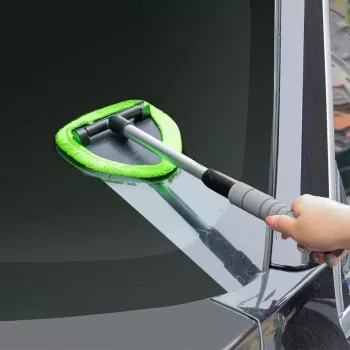
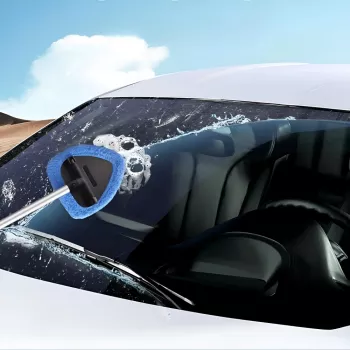
The lower corners and far edge near the dashboard are where streaks linger because your hand can’t keep even pressure. An extendable handle with microfiber pads helps maintain a flat contact patch, making it easier to clean uniformly without missed spots. For step-by-step technique and tool tips, see the full guide: streak-free windshield cleaning tool guide.
Start with a dry microfiber wipe to lift dusty film, then clean using a lightly dampened glass towel and finish with a separate dry buff. Keeping the final pass dry is the fastest way to stop haze from reappearing.




Leave a comment