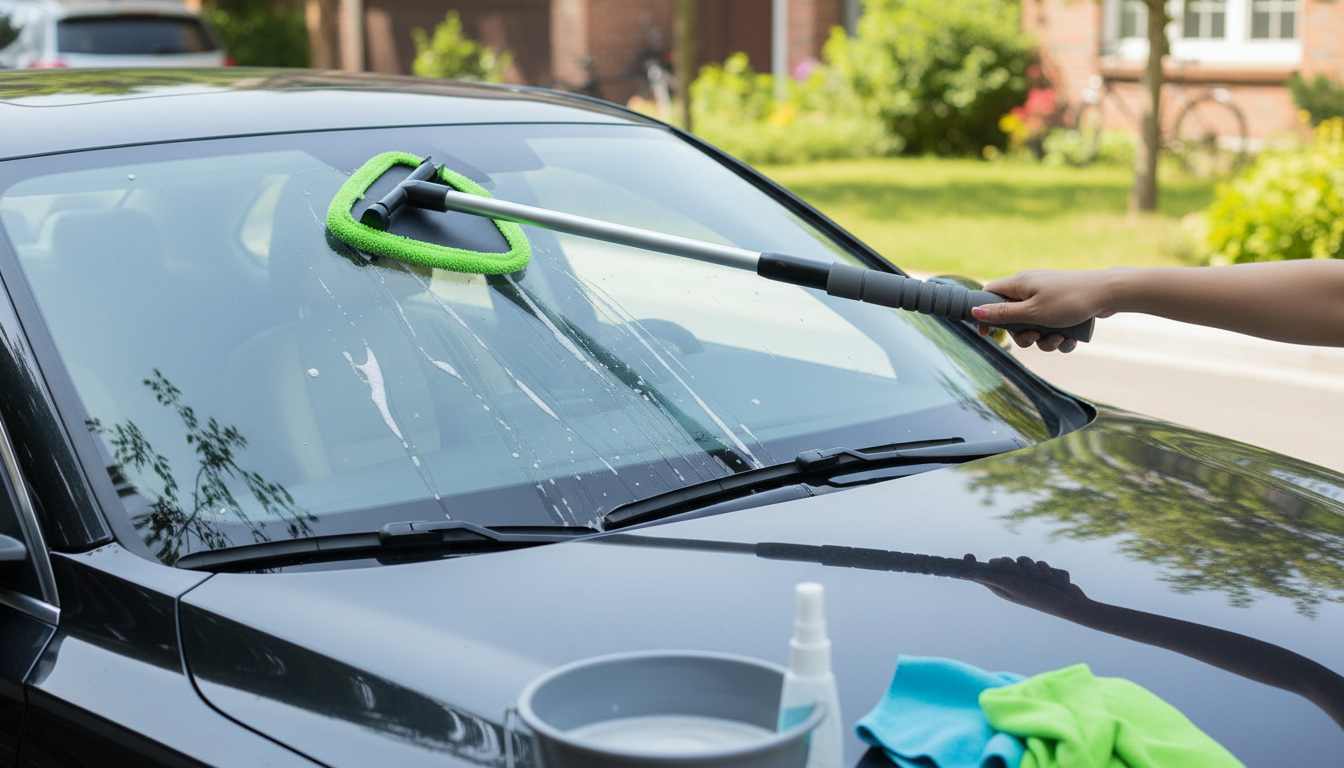
Clear glass improves visibility in rain, glare, and night driving, but the hardest area to reach is often the inside of the windshield—especially the lower corners and the dash-side edge. An extendable handle paired with microfiber pads helps lift haze, film, and fingerprints without awkward stretching, making routine cleanups faster and more consistent. For more guidance, see Kqiang Extendable Squeegee Cleaning Windshield reviews and….
For day-to-day upkeep, a dedicated interior-glass tool makes it easier to clean the entire windshield (including the parts that usually get skipped). That consistency is what keeps haze from building into a stubborn layer that only shows up when headlights hit at night. For further reading, see Carlisle 36286800 Flo Pac Windshield Squeegee reviews and….
A flat head is especially useful on curved windshields because it helps keep pressure even across the surface. When pressure varies (common with hand-wiping near the dash), streaks often appear in arcs—clean in one spot, hazy in another. Microfiber pads also help reduce lint compared with paper towels, which can be frustrating on tinted film.
| Situation | Best approach | Finish pass |
|---|---|---|
| Light interior haze/film | Damp wipe with microfiber pad in overlapping strokes | Dry buff with a clean pad |
| Fingerprints and smudges | Small mist on pad; focus on spots first, then blend outward | Dry buff in straight lines |
| Bug residue (exterior) | Dampen and dwell briefly, then wipe; repeat instead of scrubbing hard | Dry buff after final wipe |
| Winter condensation marks | Dry pass first, then a lightly damp pass | Dry buff to remove remaining moisture |
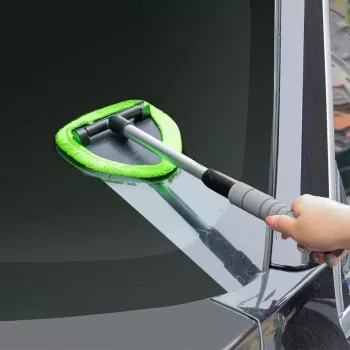
If you want a simple, repeatable setup, the Windshield Cleaning Tool with Extendable Handle & Microfiber Pads is designed for that “two-pass” method: a controlled damp wipe followed by a dry buff to eliminate leftover moisture and film.
One practical habit: keep glass pads separate from the rest of your detailing supplies. Interior protectants and dressings can transfer onto microfiber and leave a hard-to-remove smear on the next cleaning pass. A clean, glass-only pad is often the difference between “looks okay” and truly clear.
A reliable rule is “less liquid, more passes.” A lightly damp pad lifts grime; the dry pad finishes the job. For more background on streak-free technique, the International Window Cleaning Association offers general guidance that applies to auto glass as well.
| Method | Strengths | Trade-offs |
|---|---|---|
| Extendable tool with microfiber pads | Better reach; even pressure; quick dry buff | Pads require washing/replacement |
| Handheld microfiber cloth | Low cost; simple | Harder to reach corners and the base of the windshield |
| Paper towels + spray cleaner | Convenient for quick wipes | More lint; can smear oils; more waste |
| Squeegee-style tools | Fast for large areas | May skip tight corners; can chatter on curved glass |
Generally yes—use gentle pressure, avoid harsh ammonia-based cleaners, and keep pads clean so trapped grit doesn’t drag across tinted film.
Common causes include off-gassing from interior plastics, vape/smoke residue, and leftover residues from interior cleaners. Regular light cleaning followed by a final dry buff helps prevent that film from building up.
Wash after a few uses or anytime the pad starts streaking or looks dirty. Skip fabric softener and dry on low (or air-dry) to keep the fibers absorbent.





Leave a comment