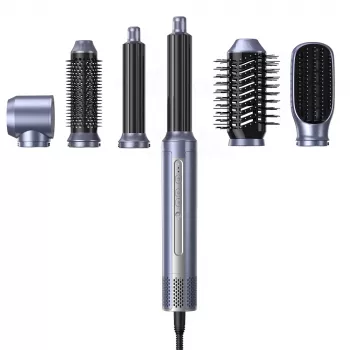
An ionic hair dryer can be better for many hair types because it helps reduce frizz and static while speeding up dry time. Ionic technology releases negatively charged ions that break up water droplets, so moisture evaporates faster and hair is less likely to puff up or look dull after drying.
The biggest “better” factor is finish. If hair tends to frizz, feel rough, or look flyaway after a blowout, ionic airflow often leaves it smoother and shinier with less effort. That can also mean less time under heat, which is a practical win for anyone trying to minimize heat exposure during daily styling.
That said, ionic isn’t automatically best in every situation. Fine or very straight hair that goes limp easily may prefer a dryer with adjustable ion settings (or a lower-ion mode) so the style keeps more natural volume. Curly hair often benefits from ionic drying for frizz control, but results depend heavily on heat level, airflow strength, and the right attachment (like a diffuser) to protect curl pattern.
What matters most is the overall tool design: high-speed airflow, intelligent heat control, and quality attachments usually have a bigger impact than “ionic” alone. If the goal is faster drying plus smoother results, pairing ionic tech with strong airflow and a brush/curler system can simplify the routine. For a deeper breakdown of features to look for in a multi-styler, see this guide to a 6-in-1 high-speed dryer brush with auto-curl and ionic tech.
For Ionic Hair Dryers: Are They Actually Better for Your Hair?, the best answer depends on fit, material, care instructions, and how the product will be used day to day.
Checking those details first helps avoid a poor match and keeps the choice practical after delivery.
No—ionic output itself isn’t damaging. Heat damage comes from high temperature and long exposure, so a faster-drying ionic dryer can actually help reduce total heat time when used on appropriate settings.






Leave a comment