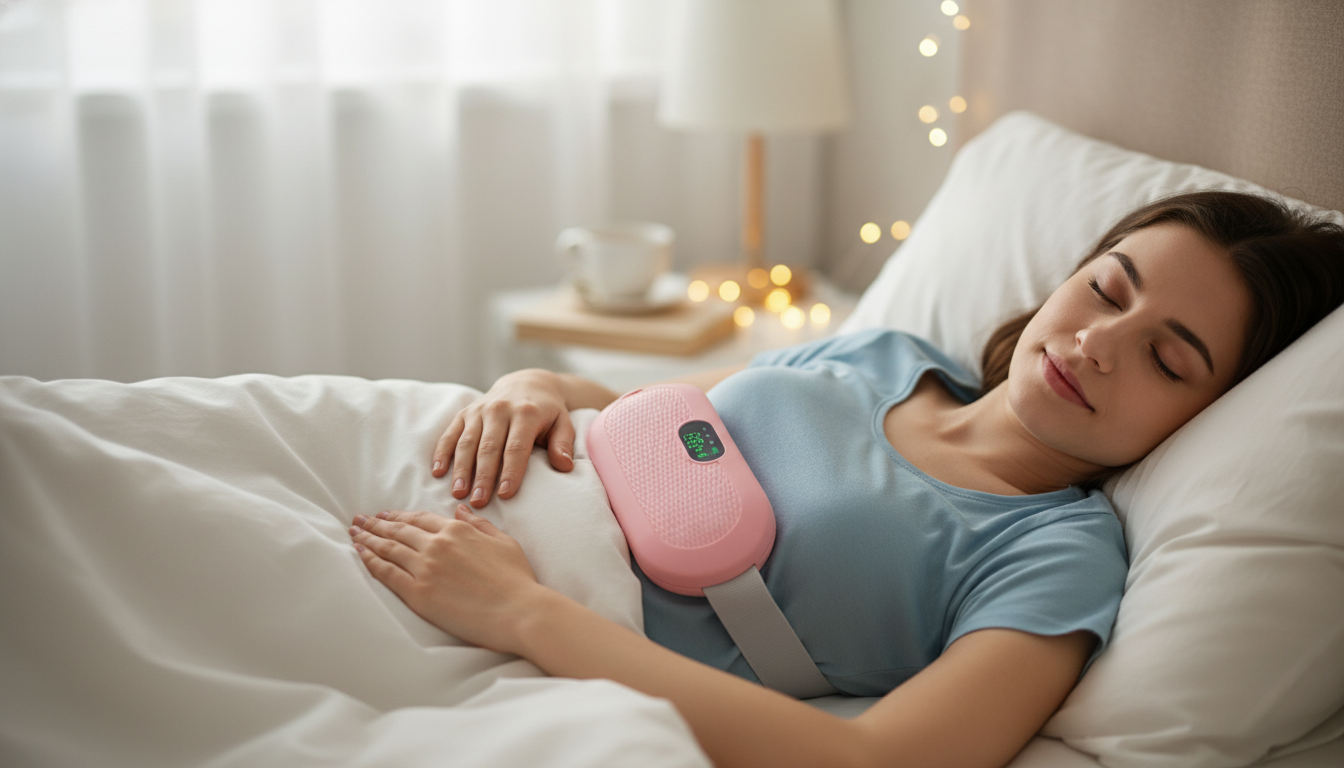
Heat therapy is a simple, drug-free way to ease menstrual cramping by relaxing the lower abdominal muscles and improving comfort. An electric heating pad offers steady warmth with adjustable settings, making it easier to match heat intensity to changing symptoms throughout the day. For many people, it becomes a dependable part of a monthly routine—especially when cramps flare during work-from-home hours, after errands, or while winding down at night.
Menstrual cramps often feel like a tight, gripping ache across the lower belly or a deep soreness that can radiate into the lower back. Gentle warmth helps in a few practical ways:
For medical background on painful periods (dysmenorrhea) and common management approaches, see guidance from ACOG and an overview from the Mayo Clinic.
Several types of heat therapy can help with cramps, but they feel different in day-to-day use. Electric pads stand out for extended comfort sessions because they don’t cool down the way a hot water bottle or microwave pack does.
| Option | Heat consistency | Adjustability | Best for | Things to watch |
|---|---|---|---|---|
| Electric heating pad | High | Usually multiple levels | Home use, longer sessions | Avoid sleeping on high heat; follow auto-off guidance |
| Microwave heat pack | Medium (cools gradually) | Low | Short sessions, travel | Uneven heating; reheat limits |
| Hot water bottle | Medium | Medium (water temp) | Cozy lounging | Leak risk; can be too hot if overfilled |
| Disposable heat wrap | Medium | Low | On-the-go, under clothing | Skin irritation; single-use cost |
If the goal is reliable warmth while you’re at a desk, on the couch, or resetting with a low-effort rest day, an electric pad is often the easiest option to keep “on standby” when cramps begin.
Not all heating pads feel the same. A few design details can make the difference between “nice” and “actually helpful” when cramps fluctuate throughout the day.
A simple routine tends to work best: consistent, comfortable heat without pushing the temperature too high. Try this approach and adjust based on how your body responds.
Heat should feel soothing, not harsh. These quick checks help keep your routine comfortable and low-risk.
For additional clinical context on dysmenorrhea, the Cleveland Clinic offers a helpful overview.
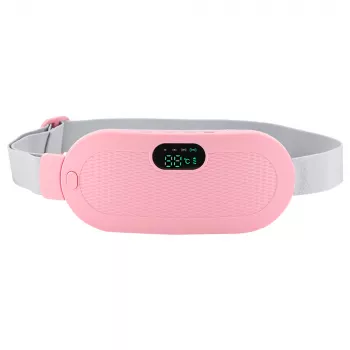
For consistent warmth and adjustable comfort, an electric pad can be a reliable part of a monthly routine—especially when you want steady heat without repeated reheating. A straightforward option to keep on hand is the Electric Heating Pad for Period Cramps, designed for at-home comfort sessions with controllable heat.
If you’re building a calmer reset routine for cramp days—warmth, hydration, and a quieter schedule—some people also like having an easy, low-effort read on hand, such as From Hustle to Holding | eBook for Turning Side Hustles Into Long-Term Assets.
Start with 10–20 minutes on a low-to-medium setting, then reassess. Many people use up to 30–45 minutes at a time with short breaks, checking skin regularly and following the device’s instructions and auto-off guidance.
It’s safer to use low heat with an auto shut-off or timer, and avoid placing the pad directly against sensitive skin or lying on top of it. Stop using it if you feel overheated or notice persistent redness.
Either location can help—start with the lower belly, then alternate to the lower back if pain radiates or feels deeper there. The best spot is the one that provides the most consistent relief and lets you relax comfortably.





Leave a comment