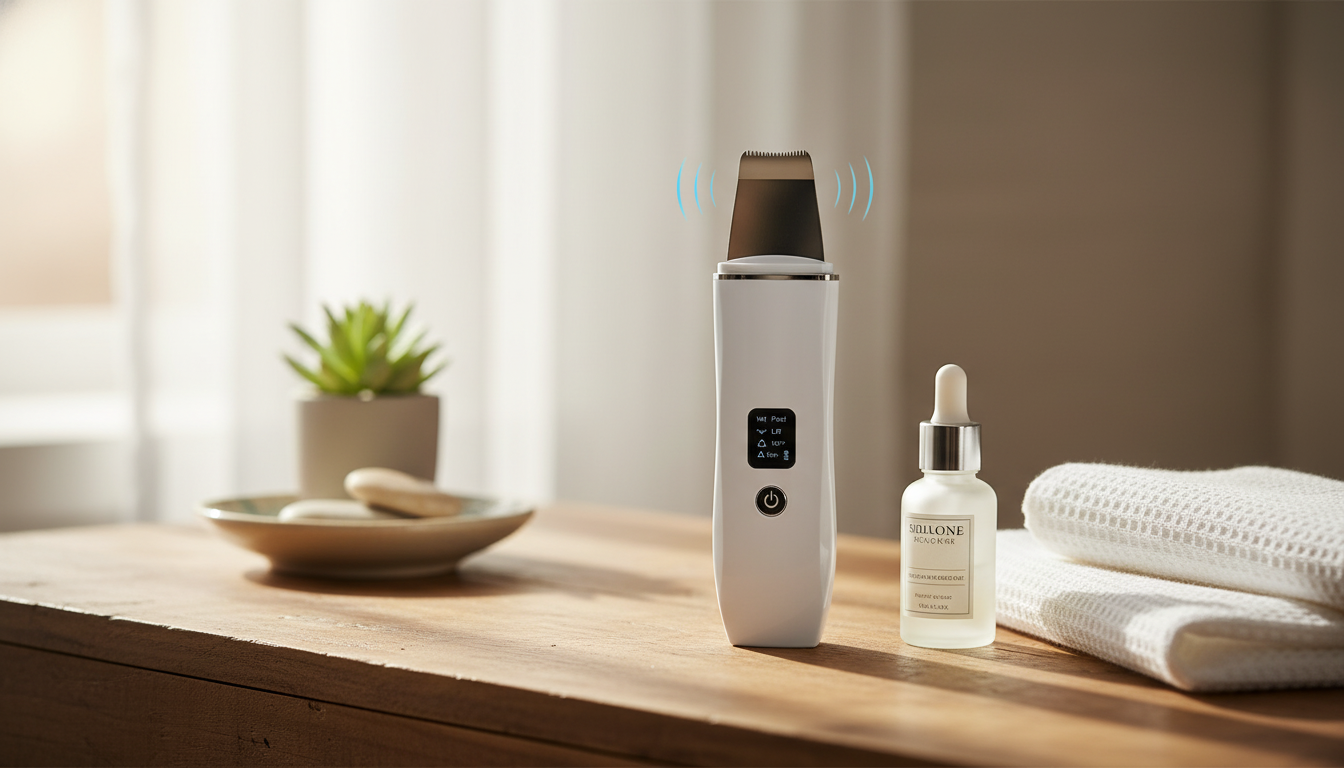
An ultrasonic skin scrubber is designed to help lift away surface buildup—like excess oil, dead skin cells, and debris that can make pores look more noticeable. Used with water or a hydrating toner, it can support a cleaner-feeling, smoother-looking complexion without harsh scrubbing, when used gently and consistently. It’s a practical option for the T-zone (nose, chin, and forehead), where congestion and texture often show up first. For more guidance, see A Cohort Study Using a Facial Cleansing Brush With Acne … – PubMed.
Blackheads form when pores fill with oil and dead skin cells, and the surface oxidizes, darkening the plug. For a helpful overview of causes and care options, see guidance from the American Academy of Dermatology Association and background on comedones from the Cleveland Clinic. For further reading, see Beauty Star Ultrasonic Face Cleaning Skin Scrubber Facial Cleaner ….
Think of an ultrasonic scrubber as a polishing step: it can help loosen what’s sitting at the surface and along the top of the pore opening. For deeper, stubborn congestion, results are typically more gradual and depend on overall consistency—plus how well your routine supports a calm, hydrated skin barrier.
If your skin is currently reactive, the “best” tool is often a simpler plan for a couple of weeks: gentle cleansing, moisturizer, and daily sunscreen—then reintroduce any exfoliating device slowly once your barrier feels comfortable again.
| Step | How long | Tip |
|---|---|---|
| Cleanse | 60–90 sec | Avoid gritty scrubs beforehand to reduce irritation. |
| Hydrate skin | 30 sec | Water/toner should visibly bead—do not work on dry skin. |
| Glide on T-zone | 2–4 min | Light touch; keep the blade moving to avoid hot spots. |
| Target nose/chin | 1–2 min | Short strokes; re-wet often. |
| Rinse & soothe | 60 sec | Finish with moisturizer; sunscreen in the daytime. |
For many people, the biggest “unlock” is pressure control. The device should do the work; your hand mainly guides the spatula. If you find yourself pushing to “get more out,” it usually backfires as redness, tenderness, or flaking.
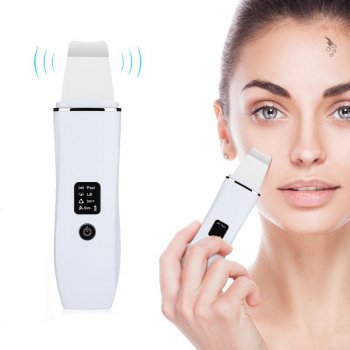
If you want a simple, at-home tool for pore-care, the Ultrasonic Blackhead Remover Scrubber is designed to be used on damp skin with a light hand and short sessions. It’s especially practical for focusing on the T-zone, where buildup commonly collects, and it pairs well with calming hydration afterward to support a smoother feel.
After skincare, styling can make the whole routine feel complete. If you enjoy curating your personal aesthetic, Define Your Style With a Mood Board – Fashion Mood Board Guide for Personal Style Clarity | How to Create a Fashion Mood Board is an easy digital guide to help organize outfit ideas, colors, and overall vibe—useful when you want your smoother-looking skin and your style to feel equally intentional.
It can lift surface debris and help soften the look of congestion, but blackheads can return as pores refill with oil and dead skin cells. Consistent gentle cleansing, balanced exfoliation, and daily sunscreen help keep pores looking clearer over time.
Heavy pressure, using it on dry skin, or holding it in one spot too long can increase irritation risk. Use a light touch on damp skin with short, moving passes, and stop if redness lingers or you feel stinging.
Water or a hydrating toner works best to keep the skin slippery so the spatula can glide comfortably. Avoid scrubbing over foaming cleanser; instead, cleanse first, keep skin wet during use, then finish with moisturizer.





Leave a comment