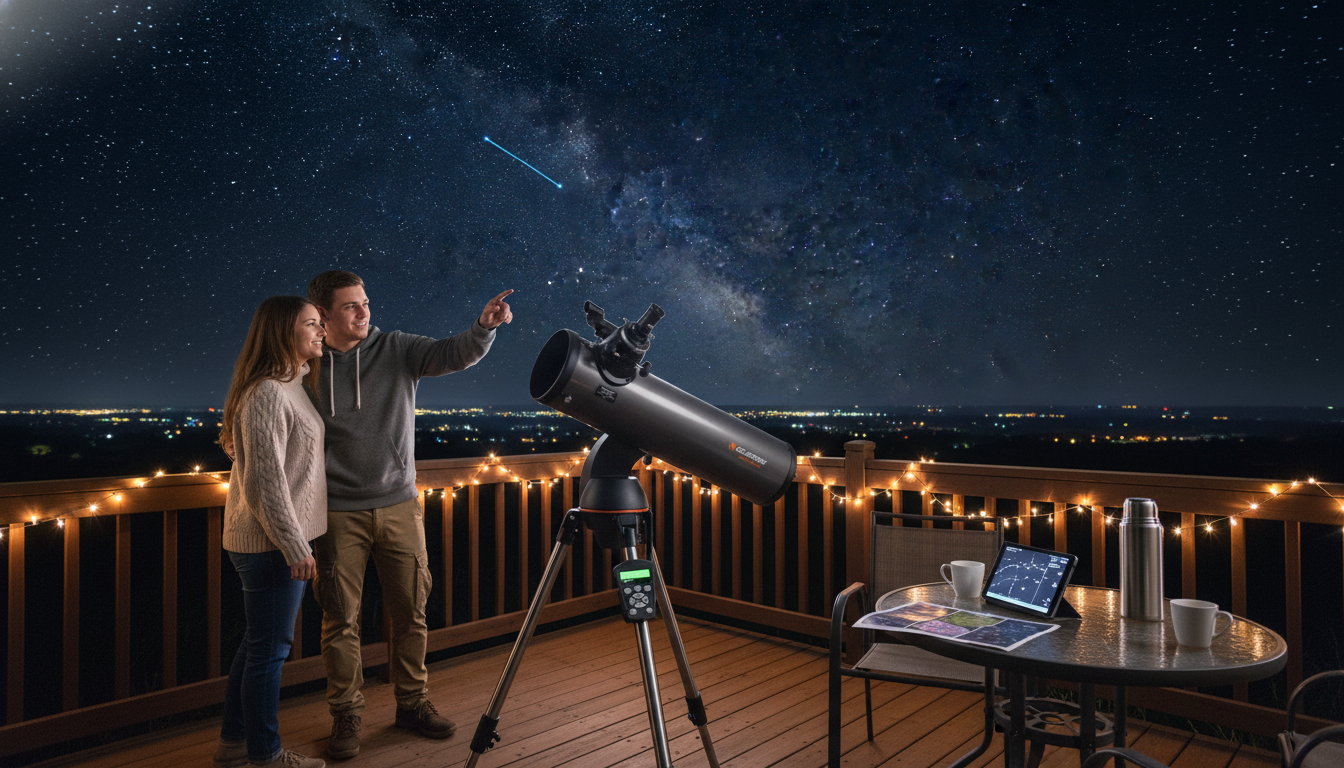
A computerized Newtonian reflector with SkyAlign is built for fast setup, confident tracking, and a portable footprint. The goal is simple: spend less time star-hopping and more time observing, whether that means a quick weeknight look at the Moon or a full tour of seasonal deep-sky favorites. This guide explains what the design is best at, what to expect on the first night out, and how to keep views consistently sharp with minimal fuss.
This style of telescope blends reflector optics (for strong light-gathering value) with a computerized mount (for guided alignment, object locating, and tracking). It’s especially well-suited to casual backyard sessions, outreach events, and anyone who wants a reliable “find-and-follow” experience without a long learning curve of manual navigation.
SkyAlign is designed to reduce guesswork. The mount uses your alignment choices plus accurate time/location data to build a model of the sky, then points and tracks objects for you. Taking an extra minute on the front end saves a lot of frustration later.
If you’re still getting inconsistent results, consult the manufacturer’s documentation and tips in official resources like Celestron’s manuals and support library.
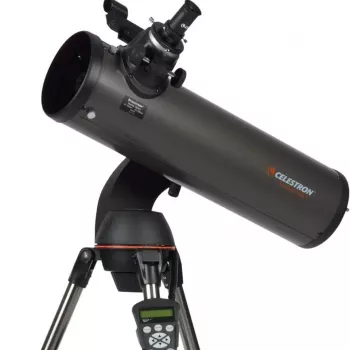
A Newtonian reflector uses mirrors rather than lenses, which helps keep costs efficient while delivering strong contrast and light grasp for the size. The “compact” layout shortens the tube so it’s easier to carry, store, and maneuver—especially helpful if you’re moving from a closet to a patio, or loading gear into a car for darker skies.
Cooldown time depends on the temperature difference between indoors and outdoors. For the sharpest lunar and planetary views, set the scope outside early and let it equalize before pushing magnification.
GoTo and tracking don’t change what’s visible from your location, but they do change how quickly you can move between targets—and how comfortable it is to observe at higher power. A few categories consistently shine with this setup:
For curated observing ideas and seasonal highlights, Sky & Telescope’s observing guides are a dependable reference.
| Symptom | Most common cause | Fast fix |
|---|---|---|
| Alignment fails repeatedly | Incorrect time/location or poor object selection | Re-enter data; choose three bright objects far apart; center carefully at high power |
| GoTo lands off-target | Loose setup or inaccurate centering during alignment | Tighten clamps; redo alignment; finish centering with slow-speed controls |
| Tracking drifts quickly | Power issues or poor polar/level setup (mount-dependent) | Use a fresh power source; stabilize base; confirm tracking mode |
| Image won’t sharpen at high magnification | Mirror not cooled or collimation slightly off | Allow cooldown; check collimation; reduce magnification until seeing improves |
For general context on Solar System targets and what’s worth looking for on a given night, NASA’s Solar System Exploration is a solid companion resource.
| Item | Details |
|---|---|
| Product | Computerized Telescope with SkyAlign and Compact Newtonian Reflector Design |
| Price | 1011.95 USD |
| Availability | In stock |
| Product page | View product |
It can, but success depends on correctly identifying three bright objects that are well separated. Light pollution, haze, or low-altitude targets can reduce reliability, so accurate time/location and careful centering make the biggest difference.
Check it regularly, especially after transport. Minor touch-ups can be quick; a full adjustment is typically only needed after a bump or when stars look soft and asymmetrical at higher magnification.
A stable, adequately rated external battery pack or AC adapter (when practical) is usually more reliable than aging internal batteries. Consistent voltage helps both slewing accuracy and steady tracking.





Leave a comment