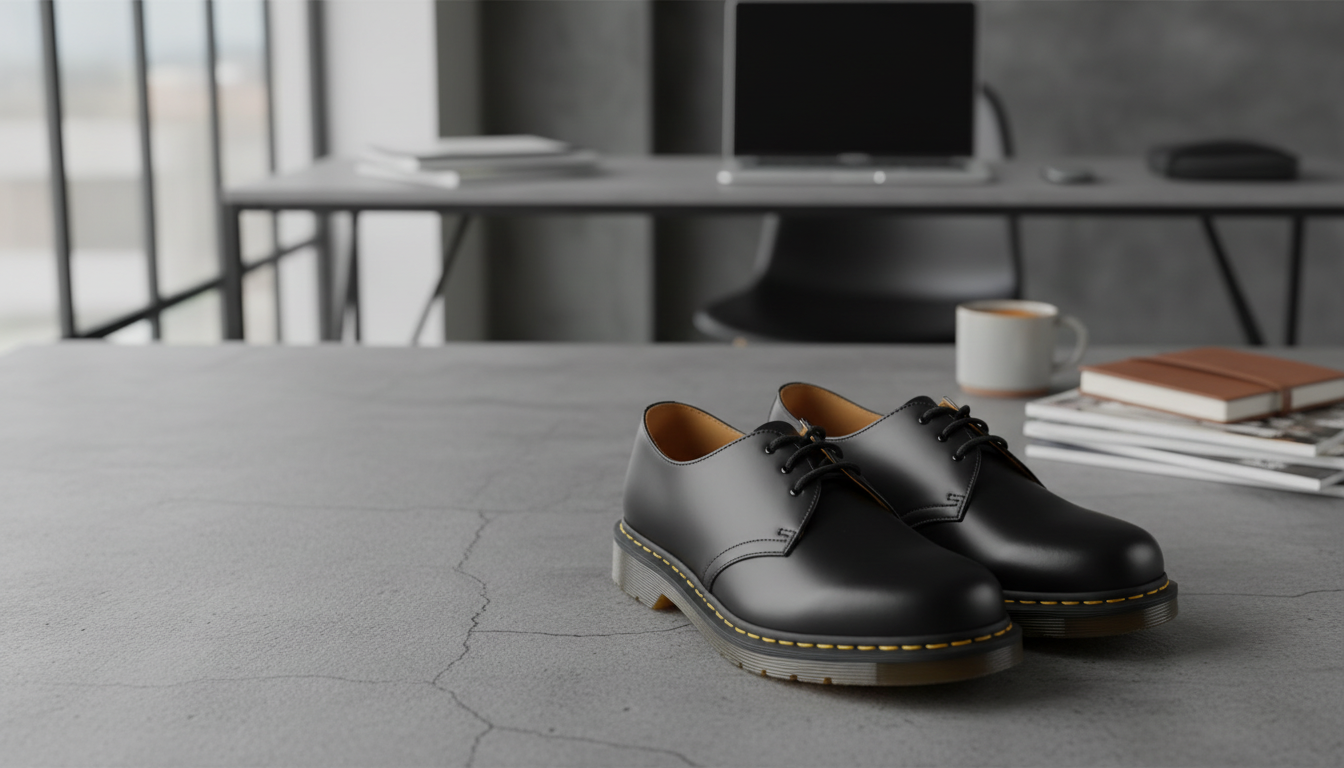
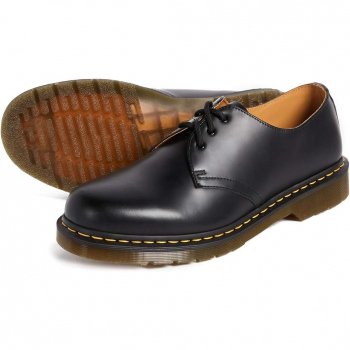
Black leather lace-up shoes with Dr. Martens DNA bring a grounded, durable look that works across casual and smart-casual outfits. The right pair should feel supportive from the first wear, break in predictably, and stay sharp with simple care habits. When you want something more structured than sneakers but less formal than heels, a black leather lace-up is a dependable middle ground—clean enough for office days, confident enough for weekends.
The appeal is in the contrast: a polished black leather finish paired with a tougher, more grounded silhouette. That “edge” helps even simple outfits look intentional—especially if you keep the laces tidy and the leather conditioned so it holds its shape.
Before adding a pair to your cart, confirm a few practical details. Leather lace-ups can feel very different depending on finish, sole firmness, and how you plan to wear them (thin work socks vs. thicker weekend socks).
| Detail | Why it matters | What to confirm |
|---|---|---|
| Leather finish | Affects shine, scuff visibility, and care routine | Smooth vs. textured; coated vs. natural look |
| Toe room | Prevents rubbing and pressure during longer walks | Enough space to wiggle toes with your usual socks |
| Heel hold | Reduces blisters during break-in | Secure without slipping when laced snugly |
| Sole feel | Determines comfort on hard floors | Firm vs. cushioned feel; weight preference |
| Sock pairing | Changes fit and comfort immediately | Thin work socks vs. thicker casual socks |
For general fit principles—especially toe room and heel stability—footwear fit guidance from the American Podiatric Medical Association is a useful reference point.
A practical first-week routine: wear them around the house, then on short errands, then for a half day. Pay attention to where the leather creases—especially across the ball of the foot—and re-lace to reduce pressure points. If your heel lifts, try a snugger top-lace tension or a different lacing technique; if your toes feel compressed, loosen the forefoot and switch to thinner socks.
If you like the “polished-but-not-precious” look, keep the rest of your outfit simple and let the shoes bring the structure. A clean belt, minimal jewelry, and a jacket with a defined shoulder line echo the same grounded feel as a lace-up leather shoe.
For brand-specific product recommendations and step-by-step routines, the Dr. Martens Official Shoe Care Guide is a solid starting point. For broader leather best practices (including responsible production standards and general care context), visit the Leather Working Group.
Sizing can vary by model and last, so it’s best to follow the store’s size guidance for the specific pair. Aim for secure heel hold without toe pressure, and account for whether you’ll wear thin work socks or thicker casual socks.
Most structured leather lace-ups take several wears to a couple of weeks to feel fully comfortable, depending on how often you wear them. Start with short sessions, use thicker socks if needed, fine-tune the lacing, and protect hot spots with blister patches early on.
Wipe them down after wear to remove dust, then condition occasionally to keep the leather supple and reduce stress from creasing. Let wet shoes dry naturally at room temperature and store them with shape support to help maintain a crisp profile.





Leave a comment