
Clothing choices can function like a daily switch—nudging attention, confidence, and follow-through when the outfit aligns with a specific role or task. This 3-in-1 bundle turns that idea into a repeatable routine using step-by-step guidance and ready-to-use checklists, so getting “in the zone” feels intentional rather than accidental.
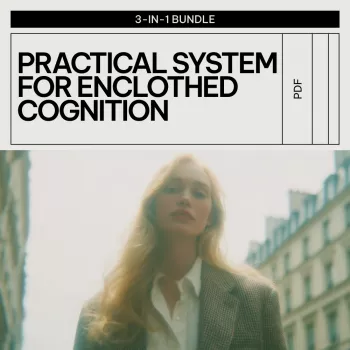
If you’re ready to build a dependable “what to wear for what to do” system, explore the Practical System for Enclothed Cognition: 3-in-1 Bundle of Guides, eBooks & Checklists.
Enclothed cognition is the practical idea that what you wear can influence how you think and behave—primarily through the meaning you assign to the clothing and the lived experience of wearing it. It’s not magic; it’s association and attention. When an outfit consistently signals “presentation mode” or “study mode,” your mind often follows that cue with more focus and readiness.
Two levers make the effect more reliable:
This shows up in everyday situations: stepping into a work presentation, grinding through a study session, starting a creative sprint, heading to the gym, prepping for an interview, or resetting after a low-energy day.
The reason “just dress better” rarely sticks is simple: without a system, decision fatigue takes over. If the cues change constantly, your brain doesn’t get consistent signals—and the impact gets diluted.
For background on the concept, see the widely cited research on enclothed cognition (Adam & Galinsky, 2012) and a foundational definition of cognition from the APA Dictionary of Psychology.
The bundle is built for people who want results without overthinking. Guides and eBooks teach the method; checklists turn that method into quick, repeatable actions—especially on days when time and energy are limited.
Instead of chasing endless “perfect outfits,” you’ll create a small set of reliable outfit formulas tied to outcomes like focus, leadership, calm, or creativity. The goal is repeatability: fewer decisions, more consistent signals, and less unnecessary shopping.
| Component | Primary purpose | Best for | Typical time to use |
|---|---|---|---|
| Guides | Teach the core method and decision rules | Setting up a personal clothing-to-outcome map | 60–90 minutes initial setup, then occasional refresh |
| eBooks | Deeper framework, examples, and scenarios | Understanding why certain cues work and how to adapt | 30–60 minutes reading, then reference as needed |
| Checklists | Turn the method into quick actions | Daily execution, travel packing, and consistency | 3–10 minutes per use |
To pair the system with clearer aesthetic direction (without copying someone else’s vibe), the Define Your Style With a Mood Board – Fashion Mood Board Guide for Personal Style Clarity helps you identify visual themes that genuinely feel like “you,” so your cue outfits stay authentic.
A lightweight weekly rhythm keeps enclothed cognition from turning into another complicated self-improvement project.
If you also run a side project or business, it can help to connect your “work mode” outfit formula with an execution routine. For additional structure beyond clothing, From Hustle to Holding | eBook for Turning Side Hustles Into Long-Term Assets pairs well with the idea of making progress repeatable rather than mood-dependent.
The most effective cues start with meaning, not aesthetics. A blazer doesn’t work because it’s a blazer; it works because it represents “I’m prepared” (and because it adds structure you can feel).
For a performance-focused perspective on why what you wear can shape how you operate, see the overview from Harvard Business Review.
To turn the concept into a ready-to-run routine, the Practical System for Enclothed Cognition: 3-in-1 Bundle of Guides, eBooks & Checklists provides the structure, prompts, and checklists that make consistency feel realistic—even during busy weeks.
Research suggests clothing can influence psychological processes through symbolic meaning and the act of wearing it, including effects on attention and self-perception. Findings like Adam & Galinsky’s work are widely cited, though the strength of the effect varies by person and context.
No—meaning, fit, and consistency usually matter more than price. A small set of well-fitting basics plus one or two “anchor” pieces can be enough to create reliable cues.
Some people feel an immediate shift when they wear a clearly task-specific outfit, especially for presentations or workouts. More consistent, noticeable results typically show up after a week or two of repeating the same outfit-to-task pairings.



Leave a comment