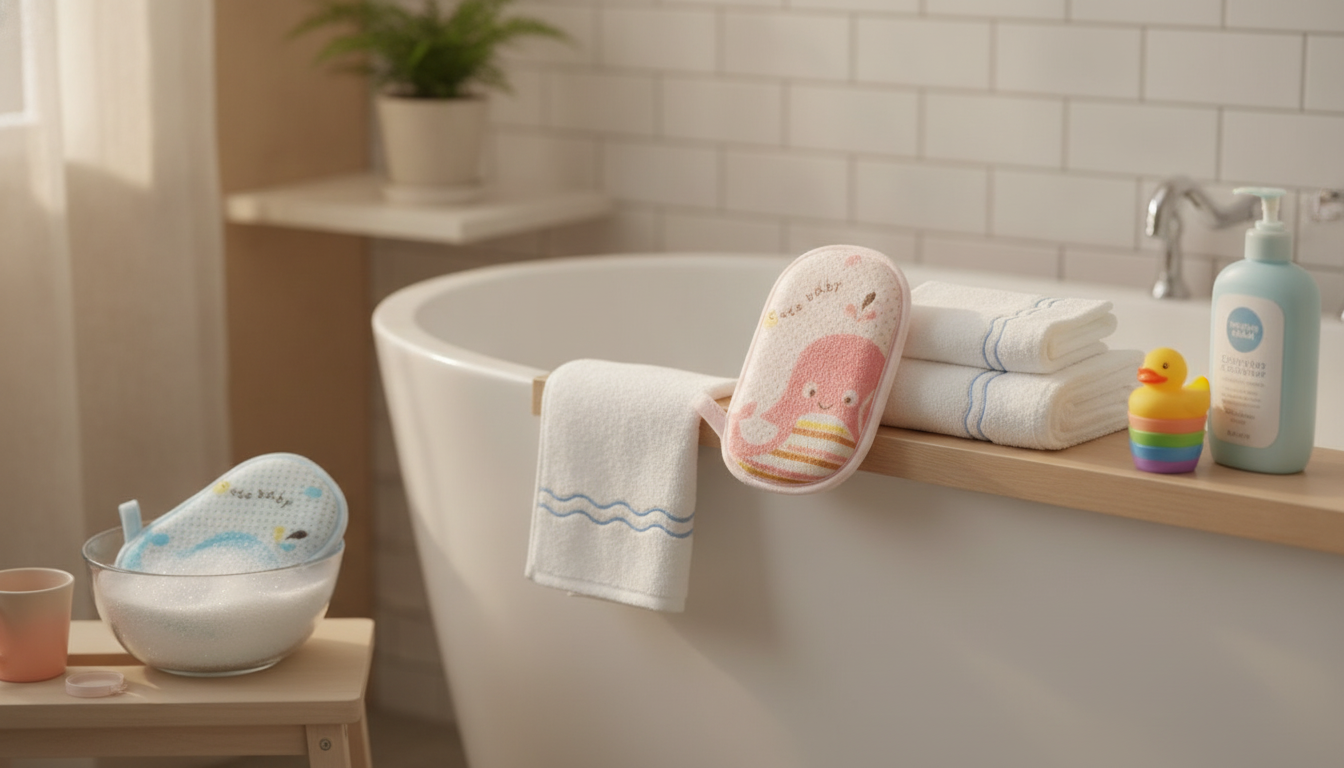
A soft bath sponge can make baby bath time smoother by improving grip, cushioning delicate skin, and helping caregivers control water and soap application. Whether you’re doing a quick “top-and-tail” washup or a full tub bath, the right sponge can help you stay gentle and consistent—while keeping cleanup simple. Below are practical tips on choosing a baby-safe sponge, using it with good technique, and keeping it clean and fresh between baths.
Baby skin is delicate, and a wet, wiggly baby can be surprisingly slippery. A sponge adds a little “give” that can make bathing feel more controlled and comfortable.
For general baby bathing guidance and frequency, trusted resources like American Academy of Pediatrics (HealthyChildren.org) and Mayo Clinic offer helpful newborn-care overviews.
Not every sponge is suited for baby skin. Aim for something soft, simple, and easy to keep clean.
| Feature | Why it matters | What to check at home |
|---|---|---|
| Very soft surface | Reduces friction on delicate skin | Rub on inner wrist when wet; it should feel plush, not scratchy |
| Fast rinsing | Less residue that can irritate skin | Rinse under running water; soap should clear quickly |
| Dries thoroughly | Helps reduce odor and microbial buildup | Squeeze and air-dry; it should not stay damp for hours |
| Comfortable grip | Improves control and safety | Hold with one hand; it should not twist or slip easily |
| No hard trim or sharp seams | Avoids scratches and pressure points | Inspect edges; nothing should feel stiff or rough |
A sponge works best when it’s damp (not dripping) and when you use light, steady strokes rather than scrubbing.
For broader water-safety and hygiene principles, the CDC Healthy Swimming guidance is a useful reference point (even though baby bathing happens at home, the emphasis on cleanliness and avoiding contamination still applies).
Most “musty sponge” problems come down to trapped soap and staying damp too long. A consistent rinse-and-dry routine makes a noticeable difference.
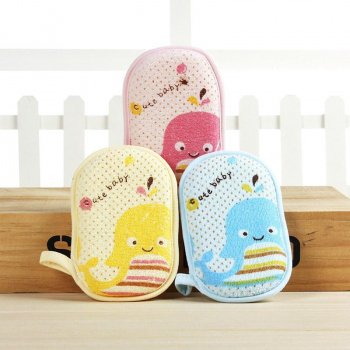
If you want a straightforward tool for daily routines, the Baby Bath Sponge is designed for gentle cleansing and comfortable handling during bath time. It can work well for quick washups and full baths—especially when a soft, controlled wipe is preferable to a washcloth that bunches up.
For caregivers juggling busy mornings, the High-Protein Ideas for Muscle Recovery Checklist (Digital Download) is another in-stock option on the site for quick meal planning support when time is tight.
Replace it at the first signs of musty odor, slimy feel, discoloration, or tearing. If it stays clean-smelling and dries fully between uses, many families still choose to replace periodically for hygiene—especially during illness or if the sponge was accidentally stored damp.
Yes, as long as it’s very soft, clean, and used gently. Use water-only for the face, keep cleanser minimal unless needed, and avoid areas with irritated or broken skin unless a pediatric clinician advises otherwise.
Rinse until the water runs clear, squeeze out excess water, and air-dry it fully in a well-ventilated spot. Avoid storing it in closed containers while damp, and consider rotating between two sponges so each can dry completely.






Leave a comment