
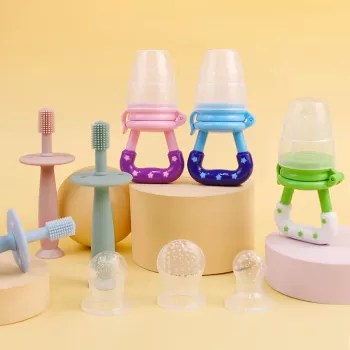
Silicone baby food feeders let babies safely explore soft foods while reducing the risk of big chunks. They typically have a silicone pouch (with small holes) attached to an easy-grip handle, often with a cover for storage and travel.
Wash all parts with warm, soapy water and rinse well. Check the silicone pouch for any tears, thinning, or damaged holes. If anything looks worn, replace the pouch before using it with food.
Start with soft, mashable options that break down easily: ripe banana, steamed apple slices, very soft pear, avocado, or well-cooked sweet potato. For teething relief, chilled fruit or breast milk/formula frozen into small portions can work well, as long as it fits easily in the pouch.
Open the feeder, then add a small amount of food to the silicone pouch—avoid overfilling so it can close securely. Press the food down gently so it sits inside the pouch rather than smearing around the rim, then lock the feeder closed according to its design (snap, twist, or ring seal).
Give the feeder to your baby in an upright, seated position (high chair or supported sitting). Stay within arm’s reach while they chew and suck the pouch. If your baby seems frustrated, demonstrate by holding the handle and guiding it to their mouth for a few seconds.
Disassemble the feeder, rinse off residue, and wash thoroughly—especially the inside of the pouch and any grooves around the seal. Let all parts air-dry completely before reassembling or storing with the protective cover.
For a deeper walkthrough on parts, cleaning tips, and using covered multi-packs, see the full guide here: silicone baby fruit feeder guide.
Stick to soft, ripe, or well-cooked foods that break down easily, like banana, avocado, steamed pear, or cooked sweet potato. Avoid hard chunks, nuts, or anything that could splinter or stay firm inside the pouch.





Leave a comment