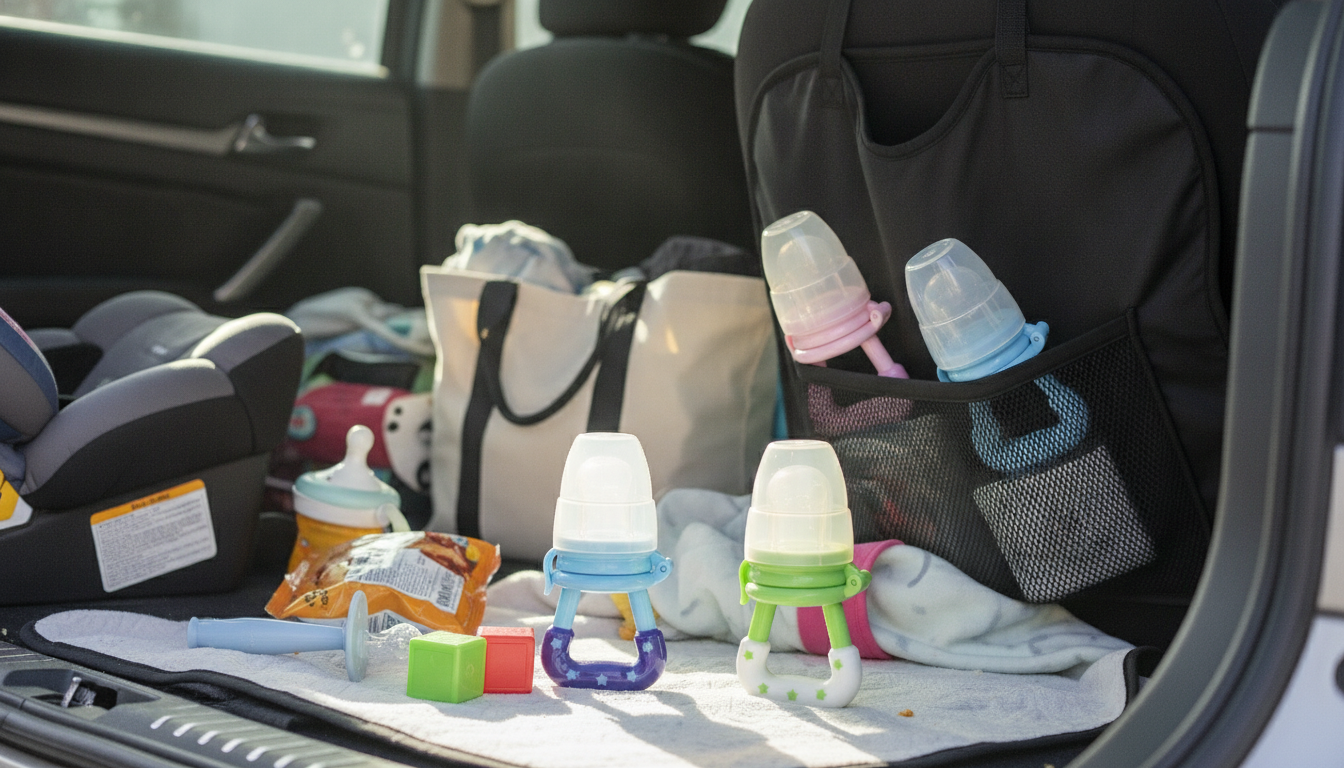
Silicone feeders are often recommended for introducing soft foods and frozen treats because they’re gentle on gums, easy to grip, and typically simple to clean. For many families, they’re a practical step between purees and finger foods, especially during teething when cold fruit or breastmilk pops can be soothing.
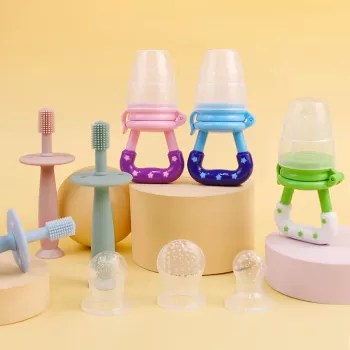
Food-grade silicone is flexible and has a soft feel that can be more comfortable than hard plastic, particularly for babies who are still learning to mouth and chew safely. Many silicone feeders are designed with small openings that let tiny bits of food through, helping reduce the chance of large chunks breaking off. They also tend to be lightweight, which can make self-feeding easier.
Not all silicone feeders are the same, so a few details matter. Choose a feeder labeled food-grade silicone and make sure it has a secure locking mechanism to keep the food compartment closed. A protective cover can help keep the nipple clean when traveling. It’s also useful to pick the right size for your baby’s age and mouth, since an overly large feeder can be awkward and an overly small one may not hold enough food to be worthwhile.
Even though silicone feeders are designed for safety, they still require supervision during use. Always check for tears, thinning, or damage before each feeding and replace the feeder if the silicone shows wear. Clean thoroughly after every use, paying attention to seams and tiny holes where residue can build up. If the product is dishwasher-safe or can be boiled/steam-sterilized, follow the manufacturer’s instructions to avoid degrading the silicone.
If your baby is ready for soft finger foods, a feeder can sometimes slow down texture progression. Some babies also get frustrated if food doesn’t flow easily. In those cases, offering appropriately sized soft foods (with pediatric guidance) may be a better next step.
For a deeper look at choosing, using, and cleaning silicone fruit feeders, see the complete guide here: https://blysseria.com/guide-5-pack-silicone-baby-fruit-feeders-with-covers-guide/.
Soft ripe fruits (like banana or pear), steamed apple pieces, and chilled or frozen options (like berries or breastmilk/formula pops) are commonly used. Avoid hard chunks, sticky foods, or anything that could break into sharp pieces.






Leave a comment