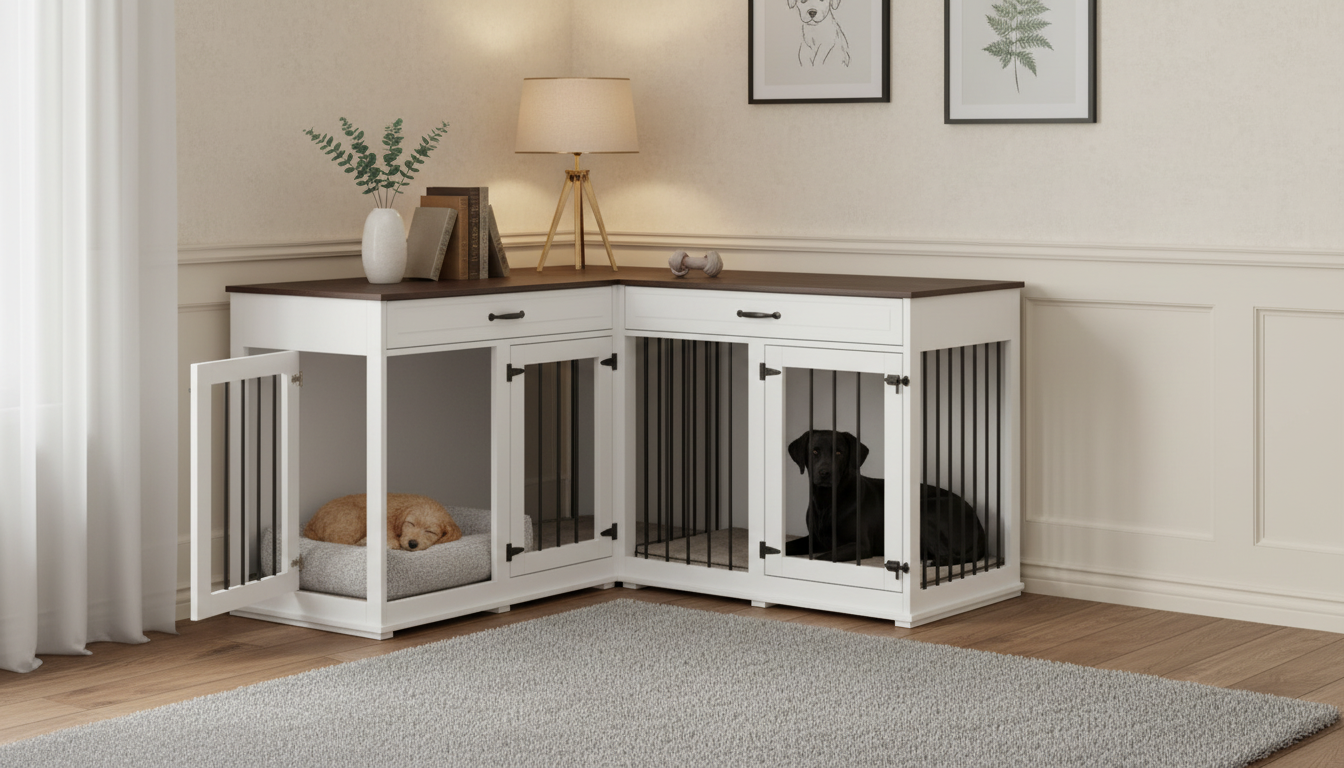
A double dog crate that also works as furniture can make daily routines smoother in multi-dog homes—especially when it adds storage and gives each dog a defined resting space. The right setup helps reduce friction around food, visitors, and downtime, while keeping everyday gear from piling up on counters. Below is a practical guide to choosing, sizing, and arranging a two-dog wooden crate with drawers and a divider so it stays comfortable for the dogs and convenient for the household. For more guidance, see 74.8” Dog Crate Furniture, Wooden Dog Crate with 2 Drawers and ….
Two-dog households often run into predictable pinch points: doors and deliveries, mealtimes, high-energy post-walk moments, or guests who unintentionally hype everyone up. A double crate creates consistency and structure without needing separate, space-hogging setups. For further reading, see Dog crates: When to use them and how to pick one.
For crate-training basics and humane routines, reputable guidance from the American Kennel Club and The Humane Society of the United States can help reinforce calm, positive associations.
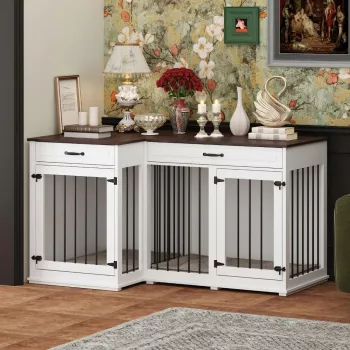
If the goal is separation plus storage in a single footprint, a furniture-style double crate is a strong middle ground between “pure utility” and “home-friendly.” The 59″ Wooden Dog Crate Furniture for 2 Dogs, Double Rooms with Drawers & Divider is designed around that idea: two distinct compartments, a center divider, and drawers for the items that otherwise end up scattered around entryways.
| Feature | Why it matters in daily use |
|---|---|
| Double rooms | Allows each dog to rest without crowding or tension |
| Center divider | Supports separation during feeding, training, or decompression |
| Drawers | Keeps essentials organized and reduces visual clutter |
| Wooden furniture build | Pairs with home décor and can function as a console surface |
| 59″ overall size | Offers a wider footprint that may suit medium-size dogs better than single crates |
The biggest mistake with double crates is treating “two rooms” as automatically “right for two dogs.” Each compartment must fit the dog using it—comfortably and safely—without forcing awkward posture or constant contact with the divider.
A divider isn’t only about preventing squabbles. It also supports calmer habits by making expectations clear: each dog has their own door, their own resting area, and their own “pause button” moment.
For additional perspective on canine behavior and stress signals, the American Veterinary Medical Association (AVMA) is a helpful starting point.
| Drawer zone | Examples |
|---|---|
| Daily grab-and-go | Leash, harness, waste bags, travel water bowl |
| Training | Soft treats, clicker, long line, muzzle (if used) |
| Care and cleanup | Wipes, towel, brush, lint roller |
If short training sessions are part of the daily rhythm, having a designated enrichment item ready can help channel energy before crating. The Dog Training Toy can be kept with training supplies so it’s easy to rotate into reward-based routines.
Yes, as long as each dog has enough space in their own compartment and both dogs remain relaxed during daily use. Separation is especially useful for meals and high-value items, and stress signals (pacing, whining, pawing, or refusal to enter) should guide adjustments.
Furniture-style crates prioritize aesthetics and built-in storage, while wire crates typically maximize airflow and visibility. Training results depend more on gradual conditioning, correct sizing, and consistent routines than on the crate’s exterior style.
Store daily walking and training essentials like leashes, waste bags, treats, and grooming basics in the drawers for quick access. Keep medications, toxic items, and high-value chews that could trigger guarding in a separate secured cabinet.




Leave a comment