A closet that turns into outfits, not clutter
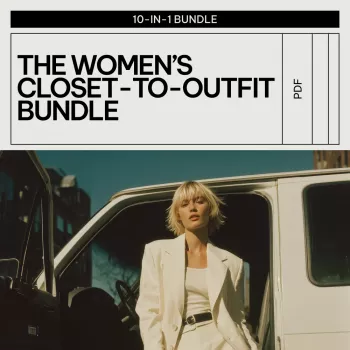
A streamlined wardrobe starts with clarity: what fits, what flatters, what works for the life being lived, and what actually gets worn. The Women’s Closet-to-Outfit Bundle: 10 Digital Guides, eBooks & Checklists is built for that exact goal—helping turn a crowded closet into a reliable outfit system you can repeat week after week. Instead of chasing trends or starting from scratch, the bundle focuses on practical steps: edit what you own, define an easy style direction, and build outfit formulas that remove the daily guesswork.
What this bundle helps solve
- Closets packed with items but “nothing to wear” because outfits aren’t planned as complete looks
- Decision fatigue on busy mornings; reduces time spent trying on and changing
- Impulse shopping that doesn’t match existing pieces; encourages intentional additions
- Inconsistent personal style; helps define go-to silhouettes, colors, and outfit formulas
- Unworn items lingering due to fit issues, duplication, or missing basics
It’s also a strong companion to healthier closet habits—protecting what you keep and letting go of what doesn’t serve you. For clothing care and storage best practices, the American Cleaning Institute has practical guidance that pairs well with seasonal resets.
What’s inside the Closet-to-Outfit system
- Digital guides for closet editing and wardrobe planning that can be used sequentially or as stand-alone references
- eBooks that walk through style discovery, wardrobe foundations, and outfit-building principles
- Checklists for fast decluttering decisions, shopping gaps, and outfit planning routines
- Designed for digital use; can be printed for a binder workflow if preferred
- Works well for seasonal resets (spring/fall) and for lifestyle changes (new job, postpartum, relocation)
Common modules in a closet-to-outfit workflow and how they’re used
| Module type |
Typical focus |
Best time to use it |
| Closet edit checklist |
Keep/donate decisions, duplicates, fit, condition |
First pass declutter; seasonal reset |
| Style guide workbook |
Colors, silhouettes, lifestyle needs, outfit goals |
Before shopping; when style feels unclear |
| Wardrobe essentials list |
Core basics and versatile pieces |
After decluttering; to identify gaps |
| Outfit formula guide |
Repeatable outfit templates for work/weekend/events |
Weekly planning; mornings |
| Shopping checklist |
Planned purchases aligned with gaps and outfits |
Before buying anything new |
How to use the bundle in 7 days (repeatable plan)
- Day 1: Quick closet scan—pull out “definitely no” items and anything that needs repair/alteration
- Day 2: Sort by category (tops, bottoms, dresses, layers, shoes) and remove duplicates that compete for the same role
- Day 3: Fit and comfort check—keep only what fits the body and the lifestyle (including real shoes for real days)
- Day 4: Identify a color palette and 2–3 signature silhouettes to simplify mixing and matching
- Day 5: Build 10 go-to outfits using outfit formulas (work, casual, errands, evening, weather variations)
- Day 6: Gap analysis—list what’s missing to complete outfits (not what’s trending)
- Day 7: Set a weekly maintenance routine (15 minutes) to plan outfits and keep the closet functional
This week-long approach is intentionally realistic: it prioritizes momentum over perfection. If you plan to donate or resell items, it can also help to review basic consumer guidance for online transactions and marketplaces from the Federal Trade Commission (FTC) — Consumer Advice.
Outfit-building that actually gets worn
- Start with anchor pieces. Choose a favorite jean, blazer, dress, or sneaker and build around it so outfits feel like “you” from the start.
- Use a simple 3-part formula. Base + structure + finishing (example: tee + blazer + shoes/bag/jewelry). This keeps looks polished without extra effort.
- Plan for real life. Consider commute time, walking, office temperature swings, childcare routines, travel days, and weather shifts.
- Create a mini uniform rotation. Two to four “default” outfits for the busiest days prevents last-minute panic and impulse purchases.
- Photograph completed outfits. Save them by category (work, weekend, events) so repeats are fast and confidence is higher.
- Track what you actually wear for two weeks. Comfort, fit, and versatility should win over “maybe someday” items every time.
Who this bundle is best for
- Anyone rebuilding a wardrobe after a lifestyle shift (new role, new city, body changes)
- Minimalists who want fewer items but more outfit options
- Busy schedules that benefit from outfit formulas and planned combinations
- Shoppers who want to buy less and wear more by focusing on gaps tied to complete outfits
- Closets that feel chaotic due to mixed seasons, duplicates, or lack of organization
What to expect (and what not to expect)
- Expect practical guidance, worksheets, and lists that support decision-making and planning.
- Expect a repeatable process you can reuse each season—especially helpful for spring/fall resets.
- Not a replacement for tailoring or professional fit help when needed.
- Not dependent on buying an entirely new wardrobe; results come from making current items usable first.
- Best results come from doing the steps in order at least once, then revisiting as maintenance.
Getting started: set up your closet-to-outfit workspace
Recommended digital downloads to pair with this routine
FAQ
Is this bundle suitable for beginners who feel overwhelmed by decluttering?
Yes. Start with the checklists and do a quick first pass of obvious no’s, then follow the day-by-day plan to keep decisions simple and contained.
Does it require buying new clothes to work?
No. The process starts by making outfits from what you already own, then identifying only the gaps that would complete those outfits.
Can the guides be printed?
If the files are provided in printable formats (commonly PDF), pages can be printed for a binder workflow; otherwise, they can be used digitally on a phone, tablet, or computer.
Recommended for you





Leave a comment