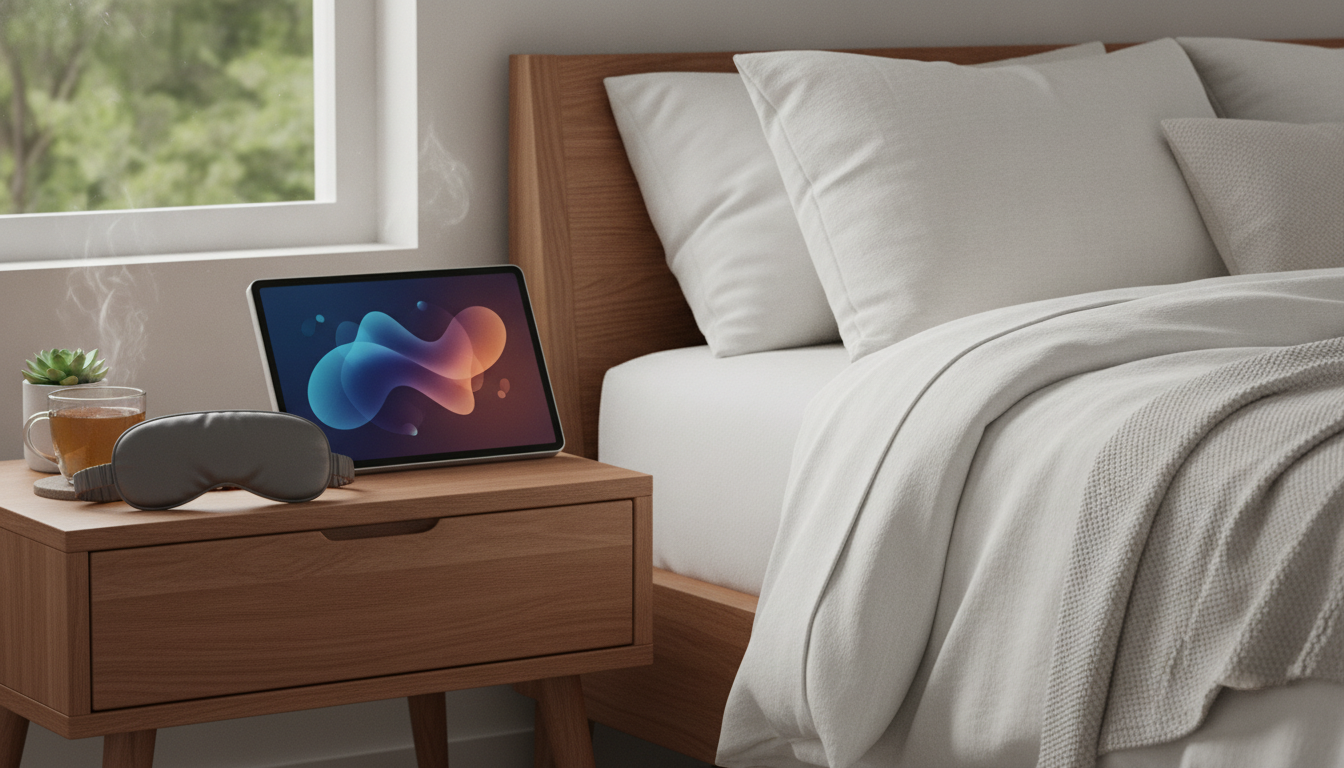
Sleep and mood influence each other in a tight loop: poor rest can heighten irritability and stress, while emotional strain can make it harder to fall asleep or stay asleep. A lightweight daily checklist helps turn vague “how was today?” reflections into clear patterns that can be improved. This guide explains how to use an AI-assisted tracker to spot triggers, strengthen routines, and build steadier energy and emotions over time.
The Sleep & Mood AI Mastery Checklist is a structured daily tracker that captures the essentials: sleep quality, mood shifts, energy, stress, and the context that often explains “why today felt different.” Instead of trying to remember what happened three days ago, you build a simple record that makes patterns easier to see.
For general sleep health guidance and why sleep matters for emotional well-being, see resources from the National Institute of Mental Health and the CDC.
The easiest way to make tracking sustainable is to anchor it to two predictable moments: a fast morning check-in and a short evening recap. The goal isn’t perfect data; it’s consistent data.
| Day | Sleep quality (1–10) | Mood stability (1–10) | Key inputs | One change to try next time |
|---|---|---|---|---|
| Mon | 6 | 5 | Late caffeine, heavy dinner | Caffeine cutoff by 2 pm |
| Tue | 7 | 6 | Walk after dinner | Repeat evening walk |
| Wed | 5 | 4 | High stress, screen late | 10-min wind-down + no scrolling |
| Thu | 8 | 7 | Consistent wake time | Keep wake time steady |
| Fri | 6 | 6 | Alcohol, late bedtime | Limit drinks or stop earlier |
| Sat | 7 | 7 | Workout midday | Schedule workout earlier |
| Sun | 8 | 8 | Early wind-down routine | Plan wind-down on weekdays |
Overtracking can backfire by making the habit feel complicated. A clean approach is to start with a small set of variables that commonly explain sleep and mood changes, then add detail only if your week-to-week patterns still look random.
If you already track sleep duration with a wearable, pairing it with “how restorative did it feel?” can help explain why two 7-hour nights can produce completely different mornings.
The real payoff comes when notes turn into experiments. Rather than changing everything at once, treat your checklist like a feedback loop: adjust one lever, watch what happens, keep what works.
For practical sleep habit education (including behaviors that support better sleep), the American Academy of Sleep Medicine offers clear, research-informed overviews.
If you want a ready-to-use template, the Sleep & Mood AI Mastery Checklist is built for quick daily entries and weekly pattern reviews.
And because sleep quality and emotional steadiness are closely tied to recovery, morning energy, and workout resilience, pairing sleep tracking with simple nutrition structure can help. The High-Protein Ideas for Muscle Recovery Checklist can be a helpful companion if training, soreness, or inconsistent meals tend to affect your sleep and next-day mood.
Most people see early clues in 7 days; clearer patterns typically emerge in 2–4 weeks once there are enough repeated scenarios (similar bedtimes, similar stress days) to compare.
Use both signals: objective estimates (duration/awakenings) plus subjective restfulness and mood. Stress, alcohol, late meals, and nighttime rumination can all leave you feeling drained even when total sleep time looks “normal.”
No—this is a self-tracking and habit-support tool, not a diagnostic instrument. If symptoms are persistent, severe, or worsening, it’s important to seek evaluation from a qualified healthcare professional.






Leave a comment