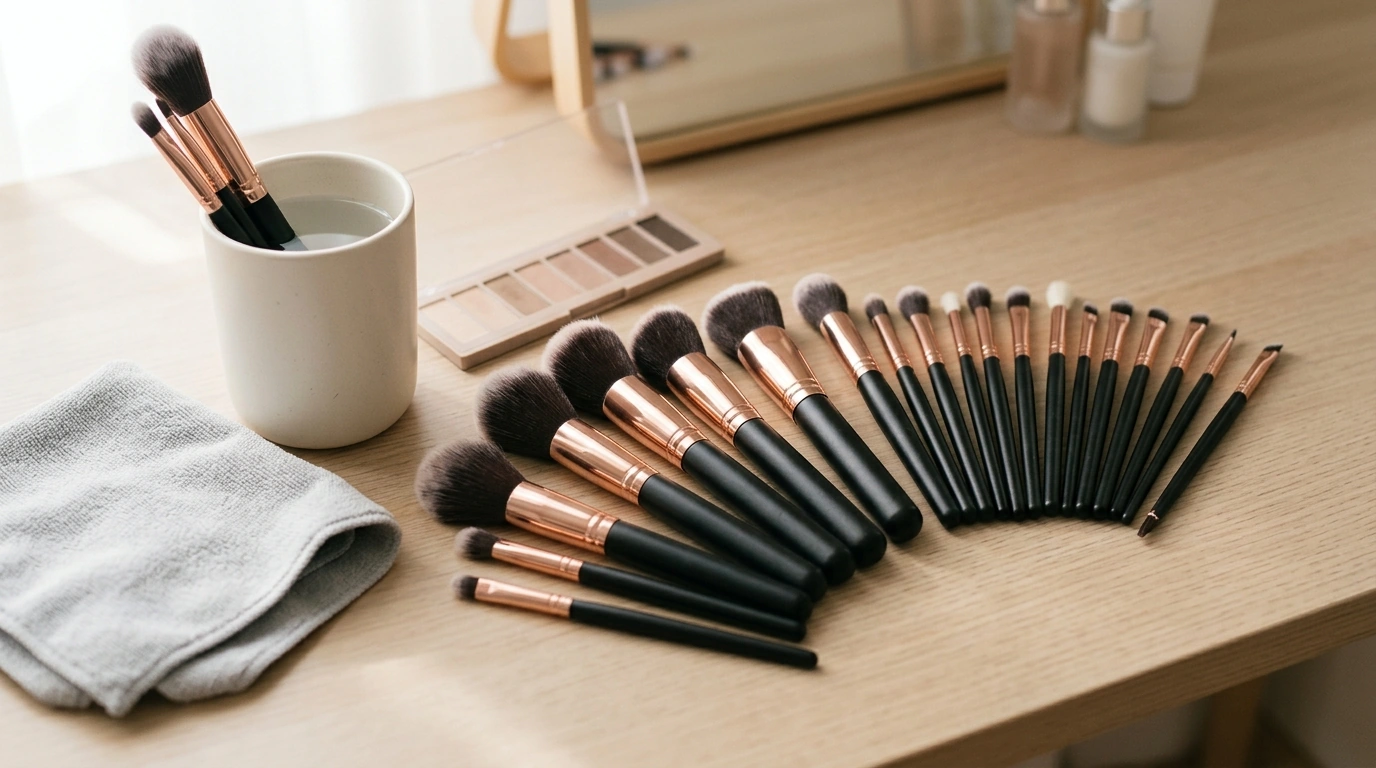
A full brush wardrobe makes makeup faster, cleaner, and more consistent—especially when face and eye steps require different shapes and densities. This 25-piece set is built to cover everyday basics (foundation, powder, blush, highlight) plus detail-focused eye work (crease, lid, liner, brow). It’s also a practical gift because it reduces guesswork: there’s a tool for nearly every step, from soft blending to precise placement. For more guidance, see 4 Best Makeup Brushes of 2026, Tested by Experts.
Face essentials typically include larger, fluffier brushes for powder and bronzer, plus denser shapes for foundation and concealer. Eye tools usually span blending brushes (fluffy), packing brushes (denser), and precision brushes (small and firm) for liner, inner corner, and smudging. A complete set also helps keep cream products and powders separate, which can improve finish and reduce muddy color payoff. Extra duplicates in common shapes (like blenders) come in handy for quick color changes without constant washing mid-look. For further reading, see MAANGE Makeup Brush Set 14-In-7 Double Ended Essential ….
| Brush type | Best for | Pro tip |
|---|---|---|
| Large fluffy powder | Setting powder, finishing powder | Use light pressure and sweep; press only where shine breaks through. |
| Angled cheek | Blush, bronzer, contour | Angle the brush so the longer fibers point toward the hairline for a lifted blend. |
| Dense foundation/buffer | Liquid or cream foundation | Work in thin layers; tap to build coverage, then buff edges. |
| Tapered highlight | Highlighter, targeted setting | Apply highlighter after setting base for more glow; over powder for softer sheen. |
| Fluffy crease blender | Transition shades in crease | Start with a clean blender to soften edges before adding more color. |
| Flat shader/packer | Shimmer or pigment on lid | Press product onto the lid; blend the edge with a separate fluffy brush. |
| Small pencil/detail | Lower lash line, inner corner, spot conceal | Use short strokes to keep placement controlled. |
| Angled liner/brow | Gel liner, brow powder/pomade | Wipe often; a clean edge makes brows and wings sharper. |
This kind of all-in-one kit works well across skill levels. Beginners get clear “grab-and-go” options instead of forcing one brush to do every step. Intermediate users can refine their routine with a more seamless base, softer edges, and better control around the eyes. Makeup lovers who rotate colors often will appreciate having multiple blending and detail brushes ready. For gifting—birthdays, holidays, graduations—it’s practical for anyone who wears makeup regularly, even if their style stays minimal.
For foundation, a dense brush offers coverage while staying controllable: apply in thin layers and build only where needed (usually around redness and the center of the face). For concealer, a smaller dense brush places product precisely—blend the edges outward so coverage stays concentrated where it counts. Powder sets the base without turning it heavy: use a large fluffy brush, press gently in oil-prone zones, then sweep the leftover veil across the rest of the face.
Blush and bronzer look most natural when they’re built gradually. An angled cheek brush helps keep placement lifted (start higher than you think and blend upward). For highlighter, a tapered brush is ideal for cheekbones and cupid’s bow; use a lighter hand to keep the finish skin-like rather than metallic.
Eye looks get easier when the tools match the job. Start with a fluffy blender to lay down a soft transition shade; it gives deeper colors a smoother runway. Pack shimmer or pigment with a flat brush, then switch to a clean blender to blur the edge without diluting intensity. Detail brushes are the quiet heroes for inner-corner brightness, lower-lash smudging, and targeted depth at the outer corner.
For liner and brows, an angled brush gives control: use short strokes, and clean the edge often so lines stay crisp instead of cloudy.
Regular cleaning reduces buildup and can support healthier-looking skin, especially for brushes used around the nose, chin, and under-eyes. As a practical rule, wash liquid/cream brushes more often than powder brushes. Use lukewarm water and a gentle cleanser, and try to keep water away from the ferrule (the metal part) to protect the glue. Dry brushes flat or angled downward, reshaping bristles while damp, then store upright once fully dry.
Wash foundation and concealer brushes about 1–2 times per week (more if used daily), while powder face brushes can often go every 1–2 weeks. Eye brushes are typically best weekly or whenever you switch colors frequently, and liner/brow brushes should be cleaned as soon as product buildup starts.
It’s possible, but it’s not ideal because leftover creams can grab powder and make blending patchy or muddy. For the cleanest finish, keep separate brushes for creams and powders, or do a quick clean and fully dry before switching textures.
A small core group is usually enough: a large powder brush, an angled blush/bronzer brush, a fluffy crease blender, a flat lid brush, and an angled brow/liner brush. That combo covers base setting, quick warmth and color, soft eye definition, and tidy brows in just a few steps.






Leave a comment