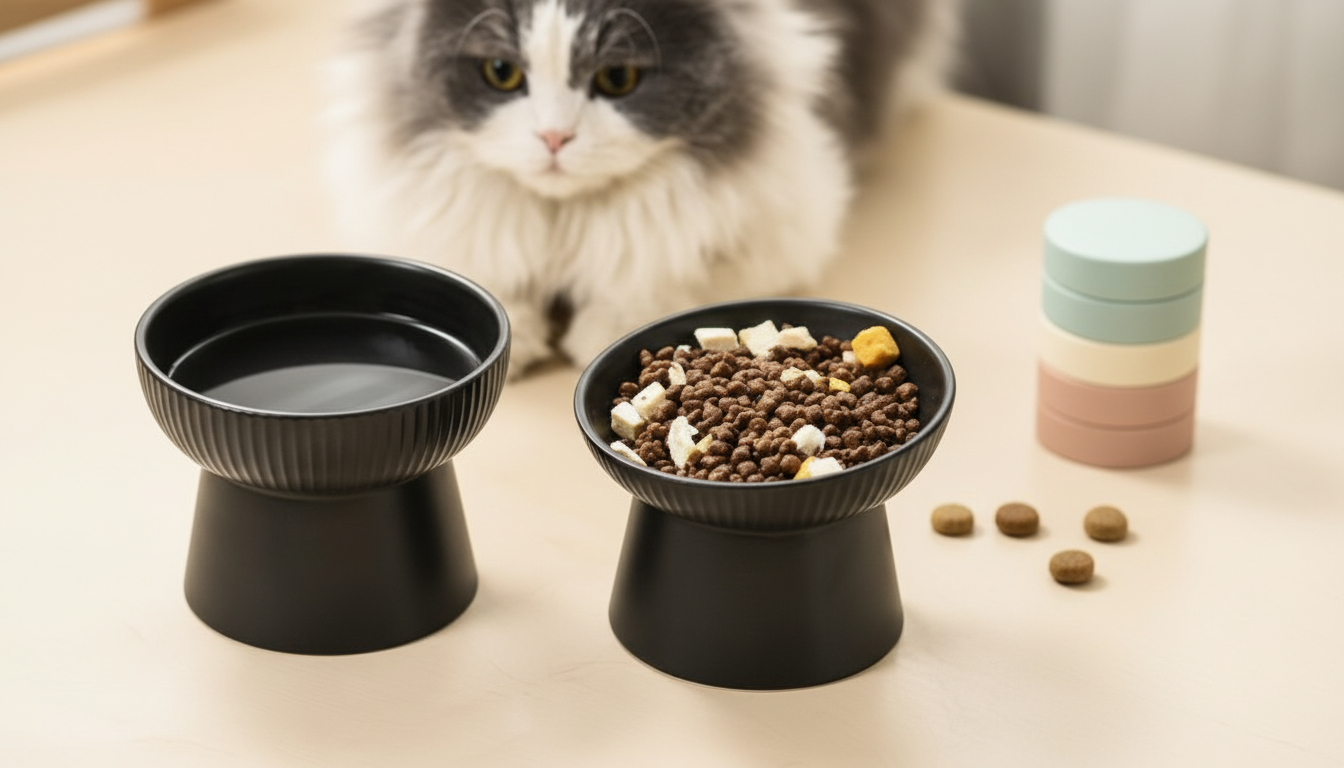
Tilted, raised bowls can make eating and drinking feel more natural for many cats and small dogs by bringing food closer to mouth level and reducing the need to hunch over. A gentle 15° tilt paired with an elevated stand is designed to improve access to food and water, support a calmer posture, and keep more kibble (and splashes) inside the bowl where they belong. Below is a practical guide to how a 15° tilt works, which pets tend to benefit most, what features matter day to day, and how to set up and clean your feeding station for long-term use.
A slight angle can make a bigger difference than it seems. Compared with bowls placed flat on the floor, a 15° tilt encourages a more forward, natural head position for many pets, which may help some eat with less mess—especially if they tend to push food forward with their nose.
That gentle incline also helps dry kibble and wet food settle toward the lower edge of the dish. Instead of “chasing” the last bits around the rim, pets often have an easier time gathering mouthfuls, which can be useful for picky eaters that lose interest when the bowl gets low.
Importantly, a mild tilt is typically easier for cats and small dogs to adapt to than steeply angled designs. The goal is subtle assistance, not forcing an unfamiliar posture.
Elevation supports comfort by reducing the distance from mouth to food and water. Many cats and toy-breed dogs do well with a modest lift that lets them stand or sit with less bending. For seniors or pets with mild mobility limitations, that reduction in “reach down” can make mealtime feel less taxing.
For cats, elevation can pair nicely with a wide, shallow bowl shape that reduces whisker contact on the sides. Some cats are sensitive to tight, deep bowls and may eat more willingly when their face isn’t brushing the rim.
Raised stands can also help keep feeding areas cleaner. Bowls are easier to keep centered on a mat, and a stable base is less likely to skate across the floor when a pet nudges it.
| Pet type | Typical fit | What to look for | Notes |
|---|---|---|---|
| Adult cat | Low-to-moderate elevation with gentle tilt | Wide, shallow bowl; stable base | Adjust if cat crouches or stretches neck too far |
| Kitten | Lower elevation | Smaller bowl volume; easy-to-clean surface | Reassess as the kitten grows |
| Small dog (toy breeds) | Moderate elevation | Non-slip base; easy-to-lift bowl | Avoid overly tall stands that force reaching up |
| Senior cat/dog | Comfort-focused elevation | Stable stand; accessible rim height | Monitor comfort and consult a vet for specific conditions |
Tilted, elevated bowls are often a good fit for cats that prefer wide dishes, small dogs that tend to spill water, and pets that eat slowly and carefully. Many seniors also benefit from less bending during meals and water breaks.
Consider skipping them—or at least testing slowly—if a pet is anxious around new feeding stations, has a history of resource guarding, or seems uncomfortable with any raised posture. A new setup can change how a pet feels about their space, especially in multi-pet homes where mealtime routines matter.
For pets with medical issues (particularly swallowing problems or significant orthopedic pain), individualized guidance from a veterinarian is the safest path before changing feeding height or angle. If vomiting increases after switching bowls, return to the previous setup and consult a vet to rule out underlying causes.
For general feeding and nutrition references, the American Veterinary Medical Association (AVMA) and the Cornell Feline Health Center offer helpful pet-owner guidance.
A wide, anti-slip base helps prevent tipping, especially for enthusiastic eaters or households with more than one pet. If the stand rocks or slides, pets may hesitate to use it—or they may push it around the room, defeating the purpose.
If you’re looking for a daily feeding station that combines a gentle angle with a raised setup, 15° Tilted Elevated Cat and Small Dog Bowls are designed to support easier access to food and water while helping keep mealtime neater. They’re suitable for dry food, wet food, or water, depending on your household routine.
To round out mealtime routines—especially for dogs that eat fast or need more engagement between meals—an interactive option like the Dog Training Toy can help channel energy and reinforce good habits away from the feeding area.
Some pets may do better with improved posture and easier access to food, but vomiting has many possible causes. If vomiting starts, worsens, or continues after changing bowls, switch back and consult a veterinarian.
Aim for a comfortable, neutral neck position with minimal crouching or reaching. The ideal height varies by size, body shape, and mobility, so observe posture during meals and adjust if your pet seems strained.
Yes, they can be used daily when they’re stable and easy to clean. Wash food bowls daily, refresh water often, use a non-slip mat, and regularly inspect bowls for scratches or damage.



Leave a comment