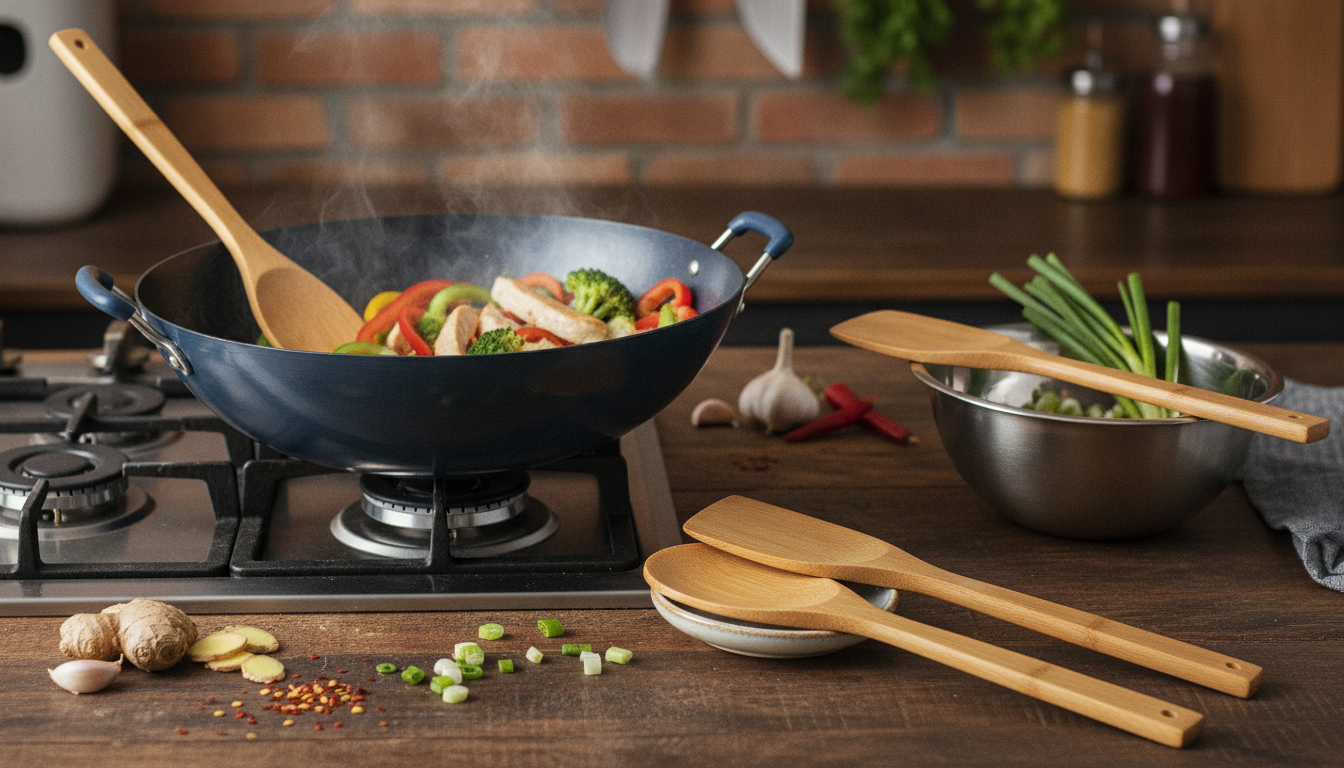
A reliable spoon set should glide through sauces, handle high-heat sautéing, and protect delicate cookware. A 3-piece bamboo cooking spoon set covers the most common stovetop tasks—stirring, mixing, folding, and serving—while staying gentle on nonstick surfaces and comfortable in the hand. For many kitchens, it’s the small upgrade that makes everyday cooking feel smoother and keeps pans looking newer longer.
Most stovetop cooking comes down to a few repeated motions: stirring, scraping, tossing, and serving. A 3-piece set is built around those fundamentals, so you’re not hunting for “the right utensil” mid-recipe.
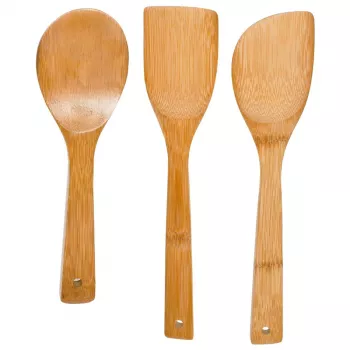
While shapes vary by brand, most 3-piece bamboo spoon sets include a primary all-purpose spoon, a wider or flatter spoon for faster movement in the pan, and a smaller spoon for finishing steps.
| Cooking task | Best spoon role | Why it works |
|---|---|---|
| Stir-frying vegetables | Wider/flatter spoon | Moves ingredients quickly without scraping nonstick coatings |
| Simmering sauces | Primary spoon | Stirs steadily and reaches pot corners |
| Cooking rice/grains | Primary spoon | Mixes without crushing grains too aggressively |
| Tasting and finishing | Smaller spoon | Better control for small quantities and plating |
| Serving from pan to plate | Primary or wider spoon | Scoops cleanly and reduces mess |
Nonstick pans perform best when the coating stays intact. Bamboo’s naturally smooth surface helps it glide rather than scrape, making it a practical match for coated cookware.
For general safety context around materials used near food, it’s helpful to understand how food-contact materials are evaluated; the U.S. Food & Drug Administration outlines its framework for Food Contact Substances.
Bamboo utensils are designed for active cooking—stirring, flipping, folding, and serving—rather than sitting in a hot pan like a resting ladle. A few habit tweaks go a long way toward keeping bamboo smooth and long-lasting.
If you’re comparing bamboo to other plant-based materials, the USDA Forest Service provides background information on bamboo and its broader characteristics.
Great bamboo care is simple: minimize long water exposure, dry promptly, and condition occasionally. That keeps the surface sealed and reduces the chance of lingering odors from garlic, onions, or spices.
For practical cleaning best practices, the American Cleaning Institute shares guidance on everyday home care and hygiene routines: Cleaning and Disinfecting in the Home.
| Material | Nonstick-safe | Best for | Trade-offs |
|---|---|---|---|
| Bamboo | Yes | Stir-fry, stirring, serving | Needs drying/conditioning; avoid long soaking |
| Silicone | Yes | Baking, scraping bowls, folding | Can feel too flexible for fast stir-fry motion |
| Metal | No (for coated nonstick) | Stainless/cast iron, deglazing | Can scratch coatings; noisier |
Yes. Bamboo is generally gentle on coated surfaces, as long as the utensil stays smooth and undamaged. Avoid leaving a bamboo spoon resting in a hot pan for extended periods, and replace it if it becomes rough or splintered.
Hand-wash with mild soap, rinse, and dry promptly rather than soaking. If odors linger, rub with lemon or a baking-soda paste, then rinse and dry thoroughly; occasional conditioning with food-safe mineral oil helps reduce drying and cracking.
They can handle typical stir-fry use when the utensil is moving and not left sitting against a hot pan surface. Use common-sense heat management, and restore or replace utensils that become overly dry, rough, or splintered.





Leave a comment