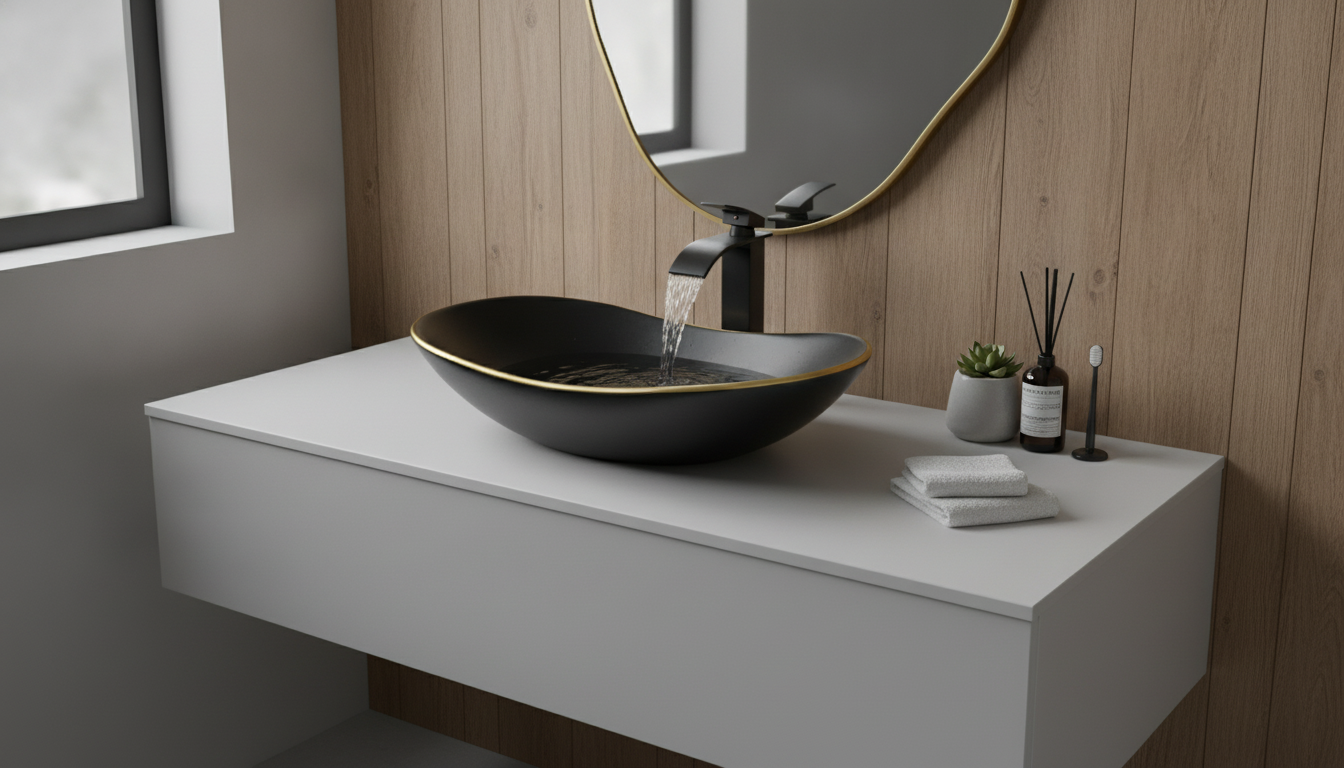
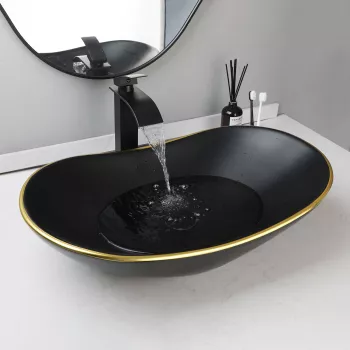
A European-inspired ceramic sink paired with a matte-black waterfall faucet and a matching pop-up drain creates a clean, modern focal point for a bathroom vanity. The combination is especially striking against light stone, white quartz, or crisp tile. Below is what to expect from the set, how to confirm fit with existing plumbing and countertops, and simple habits that keep ceramic and black hardware looking sharp year after year.
This setup is designed to look intentional and coordinated right out of the box—no mismatched finishes or guessing which drain “kind of” matches the faucet.
If you’re ready to build the vanity around a bold, high-contrast focal point, shop the complete set here: European Style Ceramic Bathroom Sink with Black Waterfall Faucet & Pop-Up Drain.
European-style bath design often leans toward clean geometry, minimal clutter, and high-contrast materials. A glossy ceramic basin keeps the countertop area feeling bright and fresh, while matte-black hardware gives the vanity a modern edge without the glare of polished chrome.
For households thinking about water efficiency while upgrading fixtures, the EPA’s guidance on bathroom faucets is a helpful reference: EPA WaterSense — Bathroom Faucets.
Ceramic remains a go-to sink material because it’s smooth, durable in daily use, and simple to keep looking bright when it’s cleaned consistently. A well-glazed basin resists staining and helps reduce the chance of pigments soaking in—especially important around cosmetics, tinted soaps, and hair products.
For general cleaning best practices (including safe product handling), see: American Cleaning Institute — Cleaning and Disinfecting Basics.
A waterfall faucet changes the “feel” of the sink more than many people expect. Instead of a narrow, aerated column of water, you typically get a broader sheet that reads as calmer and more spa-like—both visually and acoustically.
For the smoothest daily experience, aim for the stream to land near the drain—not on the front slope of the basin. If your household prefers higher flow, that alignment matters even more.
The pop-up drain isn’t just about matching the faucet finish. It also adds convenience for quick basin filling (for shaving, rinsing, or gentle hand-washing items) and makes it easy to release water without fiddling with a loose stopper.
| What to check | Why it matters | How to confirm |
|---|---|---|
| Countertop/vanity space | Prevents overhang and cramped use | Measure available width/depth and compare to sink footprint |
| Faucet mounting holes | Avoids incompatible hardware | Count holes and note spacing/type on the countertop or sink |
| Spout reach vs. drain position | Reduces splash and improves drainage | Dry-fit or measure from faucet centerline to drain centerline |
| Drain connection to P-trap | Ensures leak-free hookup | Confirm pipe size and available vertical clearance |
| Wall clearance & backsplash | Prevents faucet handle interference | Measure distance from faucet base to wall/back lip |
They can, but splash is mostly about basin depth, spout reach, and where the stream hits. Align the spout so the water lands close to the drain and keep the flow at a reasonable setting for your sink shape.
Most pop-up drains connect to standard P-traps, but it’s important to confirm the sink’s drain opening compatibility, your pipe size, and the available clearance inside the vanity. Follow the included instructions on whether to use a gasket or plumber’s putty to help ensure a watertight seal.
Use mild soap and a soft cloth, then rinse well to prevent residue. Avoid abrasive pads and harsh chemicals, and dry the surfaces to reduce mineral spotting and water marks—especially on matte-black finishes.





Leave a comment