Brighten Your 9-to-5: Practical Ways to Stay Positive at Work (Even on Hard Days)
Workdays can feel heavy when deadlines pile up, energy dips, or office dynamics get tense. A more positive mindset isn’t about pretending everything is fine—it’s about using small, repeatable habits that protect focus, mood, and motivation. The goal is steadiness: responding with intention, recovering faster after setbacks, and building routines that make optimism feel realistic.
What positivity at work actually looks like
- Staying constructive under pressure: when stress spikes, pause long enough to choose a response instead of reacting on autopilot.
- Keeping perspective: a rough meeting is a bad moment—not automatically a bad day.
- Building psychological safety for yourself: use boundaries, clarity, and self-advocacy so your nervous system isn’t constantly “on alert.”
- Choosing influence over control: focus effort on what can be improved today, and release what you can’t change right now.
One practical way to support this mindset is cognitive reappraisal—reframing an event to change its emotional impact. The APA defines it as a strategy that can help shift how a situation is interpreted, which can reduce stress and improve coping: APA Dictionary of Psychology: Cognitive Reappraisal.
Common positivity drains (and the small fixes that help)
- Constant interruptions: create time blocks for focused work; batch replies during set response windows.
- Ambiguous expectations: confirm priorities in writing and ask, “What does success look like?”
- Negative coworkers: limit exposure when possible, redirect to solutions, and set topic boundaries.
- Perfectionism: define “good enough” standards and ship progress in stages.
- Decision fatigue: build defaults for email, planning, meals, and breaks so your brain makes fewer tiny choices.
If stress is showing up as headaches, irritability, or constant worry, consider grounding your approach in evidence-based basics like sleep, movement, and recovery. Two helpful overviews: Mayo Clinic: Stress management and NIOSH (CDC): Stress at Work.
A quick reset plan for tough moments
Hard moments don’t need a big pep talk—they need a fast reset that protects your next decision.
- Pause and label what’s happening: stress, frustration, overload, disappointment. Naming it reduces mental noise.
- Do a 60–90 second breathing reset: slow your exhale before you reply to a message or speak up.
- Ask one grounding question: “What’s the next smallest helpful step?”
- Shift the environment: stand up, change rooms, step outside, or get water to interrupt spiraling.
- Close the loop: write a 2–3 line action plan so your brain feels control returning.
Daily habits that make positivity easier (not forced)
- Start-of-day intention: choose one outcome (finish draft, clear inbox) and one attitude (calm, curious, patient) to practice.
- Micro-breaks: take 2–5 minutes each hour—stand, stretch, look away from screens—to reduce irritability and mental fog.
- Energy management: schedule high-focus tasks during peak hours; save admin work for energy dips.
- End-of-day closure: capture loose ends, note one win, and define the first task for tomorrow.
- Gratitude with specifics: identify what helped (a person, a tool, a habit) so you can repeat it.
When energy is a consistent issue, a simple nutrition routine can support mood and stamina. If meal ideas are a bottleneck, a quick reference can reduce decision fatigue: High-Protein Ideas for Muscle Recovery Checklist | Digital Download.
Positive communication without being a pushover
- Swap vague optimism for clear collaboration: “Here are two options and a recommended next step.”
- Use boundary language: “I can do X by Thursday or Y by Tuesday—what’s the priority?”
- Handle criticism cleanly: ask for examples, separate tone from content, and confirm expectations for next time.
- De-escalate tense moments: reflect back the shared goal (“We both want this launched smoothly”) and move to a plan.
- Protect focus: set response windows and communicate availability proactively to reduce surprise demands.
When work feels toxic: protecting your mindset and options
A simple weekly positivity system (10–20 minutes)
Quick tools for staying positive during a workday
| Situation |
What it feels like |
Try this in 2 minutes |
Longer-term fix |
| Overwhelmed by tasks |
Racing thoughts, paralysis |
Write the next 1–3 actions only |
Weekly planning + task batching |
| Tense interaction |
Defensive, angry |
Pause, breathe, restate shared goal |
Boundary script + feedback structure |
| Low motivation |
Dragging, avoidance |
Start a 5-minute timer and begin |
Align tasks to strengths + reward cues |
| Negative environment |
Cynicism, dread |
Limit exposure, redirect to solutions |
Support network + exit plan options |
| End-of-day rumination |
Can’t switch off |
Brain dump + tomorrow’s first step |
Shutdown routine + after-work ritual |
A guided resource to keep the habits consistent
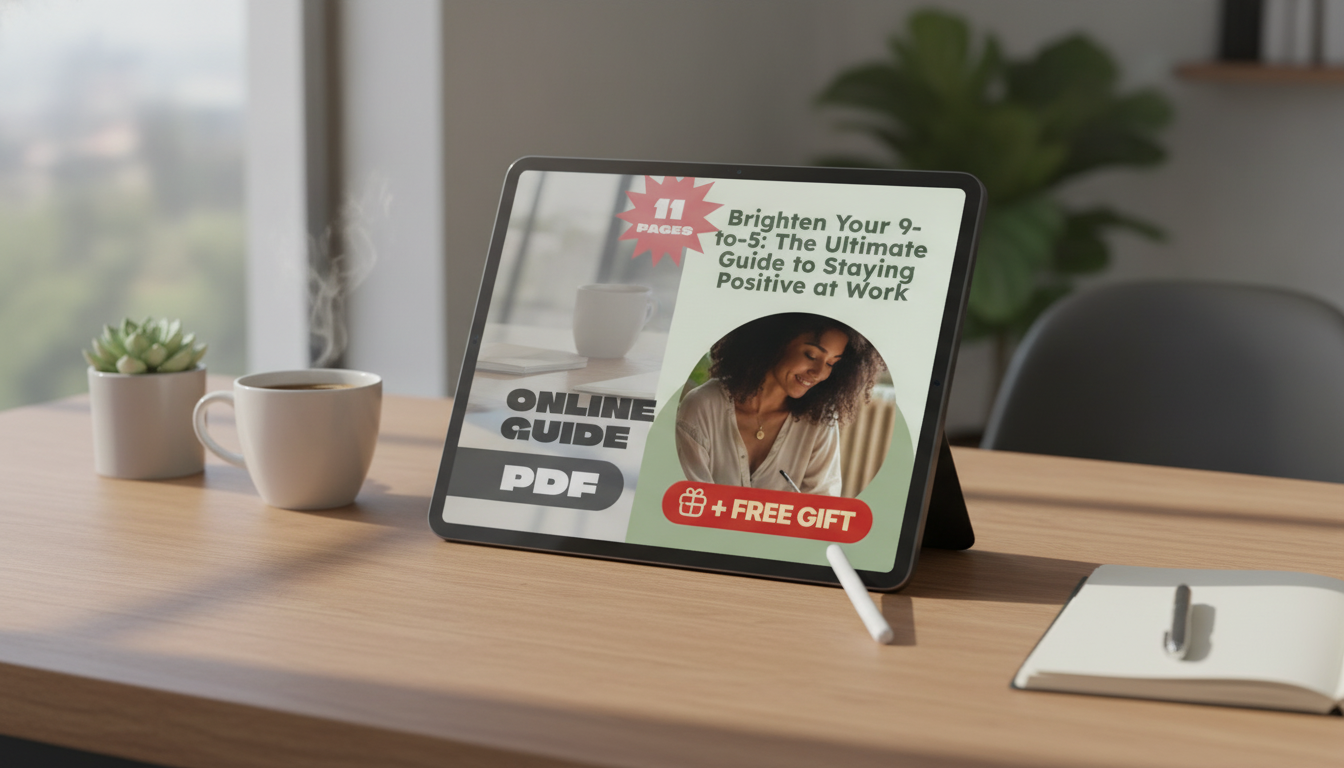
If you want a ready-to-use framework with mindset shifts, stress resets, communication scripts, and reflection exercises, see: Brighten Your 9-to-5: The Ultimate Guide to Staying Positive at Work (Digital Guide).
FAQ
How do I stay positive at work when I’m stressed?
Use a quick reset: label the emotion, take 60–90 seconds to slow your breathing, then choose the next smallest helpful step. After the moment passes, clarify priorities in writing, time-block focus work, and communicate a boundary or timeline so stress doesn’t keep compounding.
What if my coworkers are negative all the time?
Limit exposure where possible, redirect conversations toward solutions, and set topic boundaries when venting becomes a loop. Build a supportive circle (even one colleague or mentor), and if the negativity becomes harmful or escalates into harassment, document patterns and consider formal channels or a team change.
How can I be positive without ignoring real problems?
Practice constructive realism: acknowledge what’s wrong, focus on what you can control, and propose options with clear next steps. If issues persist, document patterns and take action—positivity is a tool for problem-solving, not a requirement to be cheerful.
Recommended for you







Leave a comment