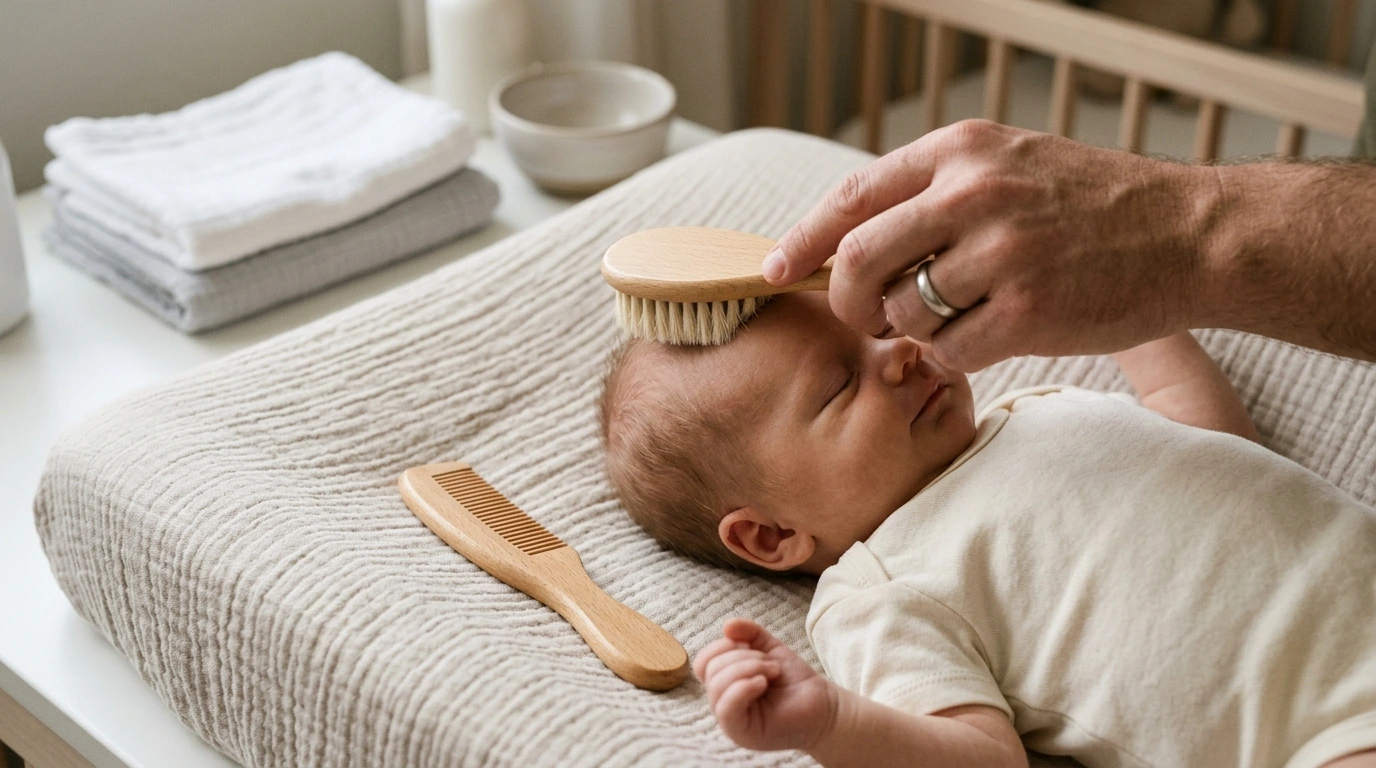
Babies don’t strictly “need” a hair brush to be healthy, but a gentle baby brush can be a helpful part of everyday care. Brushing can smooth fine hair, distribute natural oils, and keep tangles from forming as hair grows. It’s also an easy way to build a calming routine—many babies relax with the soft, repetitive sensation.
One of the most common reasons parents reach for a baby brush is cradle cap (seborrheic dermatitis). While a brush won’t cure it on its own, light brushing can help loosen flakes after softening the scalp with a bit of baby-safe oil or a pediatrician-approved approach. The key is pressure: the goal is to lift loosened flakes, not scrub the skin.
A brush is especially handy if your baby has more hair, tends to wake up with “bedhead,” or has mild flaking on the scalp. It can also help keep hair away from the eyes and make daycare mornings faster. For newborns with very little hair, brushing is still fine, but it’s more about scalp care and routine than styling.
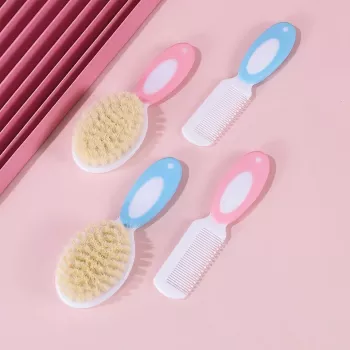
Look for soft bristles (often natural goat hair or ultra-soft synthetic) and a comfortable handle for controlled, gentle strokes. Avoid stiff bristles or adult brushes that can irritate delicate skin. A simple set with a soft brush and a fine-tooth comb can cover most needs from newborn to toddler.
For a deeper guide on choosing and using a gentle brush set, visit this baby hair brush set care guide.
For Do Babies Need a Hair Brush? Gentle Grooming Guide, the best answer depends on fit, material, care instructions, and how the product will be used day to day.
Once a day or a few times a week is plenty for most babies. If your baby has cradle cap, short, gentle sessions after softening the scalp can help.





Leave a comment