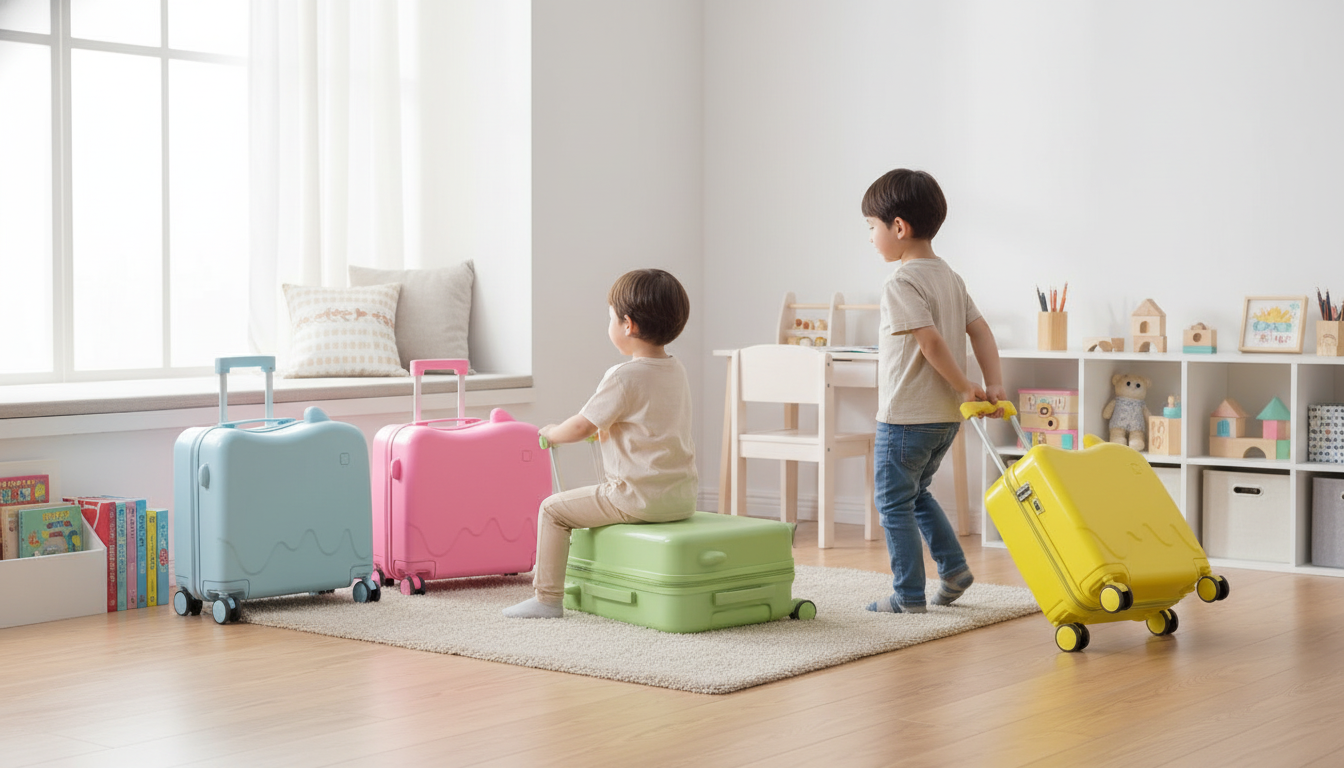
An 18-inch ride-on suitcase can turn airport waits and long terminals into something easier for kids and simpler for parents. Instead of pushing a stroller through crowds or carrying a tired child while juggling bags, a ride-on suitcase gives little travelers a place to perch and a job to do—stay with the family and roll along. The details matter, though: size, maneuverability, safety, packing space, and how it holds up to real travel days.
Travel with kids often comes down to momentum. When everyone keeps moving, the day feels smoother; when a child melts down mid-terminal, everything slows. A ride-on suitcase supports the “keep moving” plan without making kids feel rushed.
It’s also a practical boundary: “Your stuff goes in your suitcase.” That one rule prevents loose toys and snacks from migrating into every pocket you own.
An 18-inch kids suitcase is typically best viewed as a short-trip companion. It can work for a weekend, a sleepover, or as a kid-focused carry-on alternative—especially when you want your child to manage their own basics.
| Consideration | What to check | Why it matters |
|---|---|---|
| Airline carry-on limits | Published carry-on size for the airline and route | Avoid gate-check surprises |
| Child height/weight | Comfort sitting and pushing along without tipping | Improves stability and control |
| Trip length | 1–3 nights vs. longer trips | Sets realistic packing expectations |
| Storage needs | Space for shoes, bulky items, and toiletries | Prevents overstuffing and zipper strain |
Not all ride-on suitcases feel the same in motion. Small design choices can make a big difference when you’re navigating tile floors, carpet transitions, and tight corners near a gate.
For parents, one underrated detail is how easy it is to guide with one hand. The best travel gear still works when your other hand is holding a boarding pass, a coffee, or another suitcase handle.
Ride-on luggage is a tool—not a toy to use anywhere. Airports and stations are busy, and kids move fast when they’re excited. A few ground rules keep things predictable.
For security checkpoints and carry-on rules, it also helps to review official guidance before you fly, including TSA’s traveling with children information and the FAA Pack Safe page for items that shouldn’t be packed.
The “sweet spot” for an 18-inch ride-on suitcase is packing enough to feel prepared without stuffing it so full that it’s hard to close—or unstable while rolling.
If you’re trying to avoid overpacking, a simple outfit plan can help. Some families like mapping a small travel “capsule” ahead of time; for a visual approach to coordinating looks, Define Your Style With a Mood Board – Fashion Mood Board Guide for Personal Style Clarity can be a handy way to pre-decide colors and combinations before anything goes into the bag.
If you’re flying internationally or just want a clearer sense of baggage terminology, the IATA baggage overview is a helpful reference point.
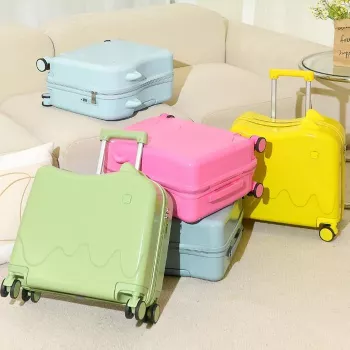
If the goal is one piece that functions as both kid luggage and a travel-day distraction, 18 Inch Kids Ride-On Suitcase with Wheels fits the brief.
It depends on the airline’s carry-on size rules and the suitcase’s exact dimensions. Check your airline’s published limits before travel, and be prepared to gate-check if the crew determines it doesn’t fit requirements on that route.
Many kids do well once they have steady balance, basic steering control, and can follow “slow riding” rules—often in the preschool to early elementary range. Always use close supervision in crowded areas and follow any age/weight guidance provided by the seller.
Clean wheels regularly by removing hair, threads, and debris, and avoid rough outdoor surfaces when possible. After outdoor use, do a quick wheel check—grit and wrapped fibers are common causes of sudden wheel drag.




Leave a comment