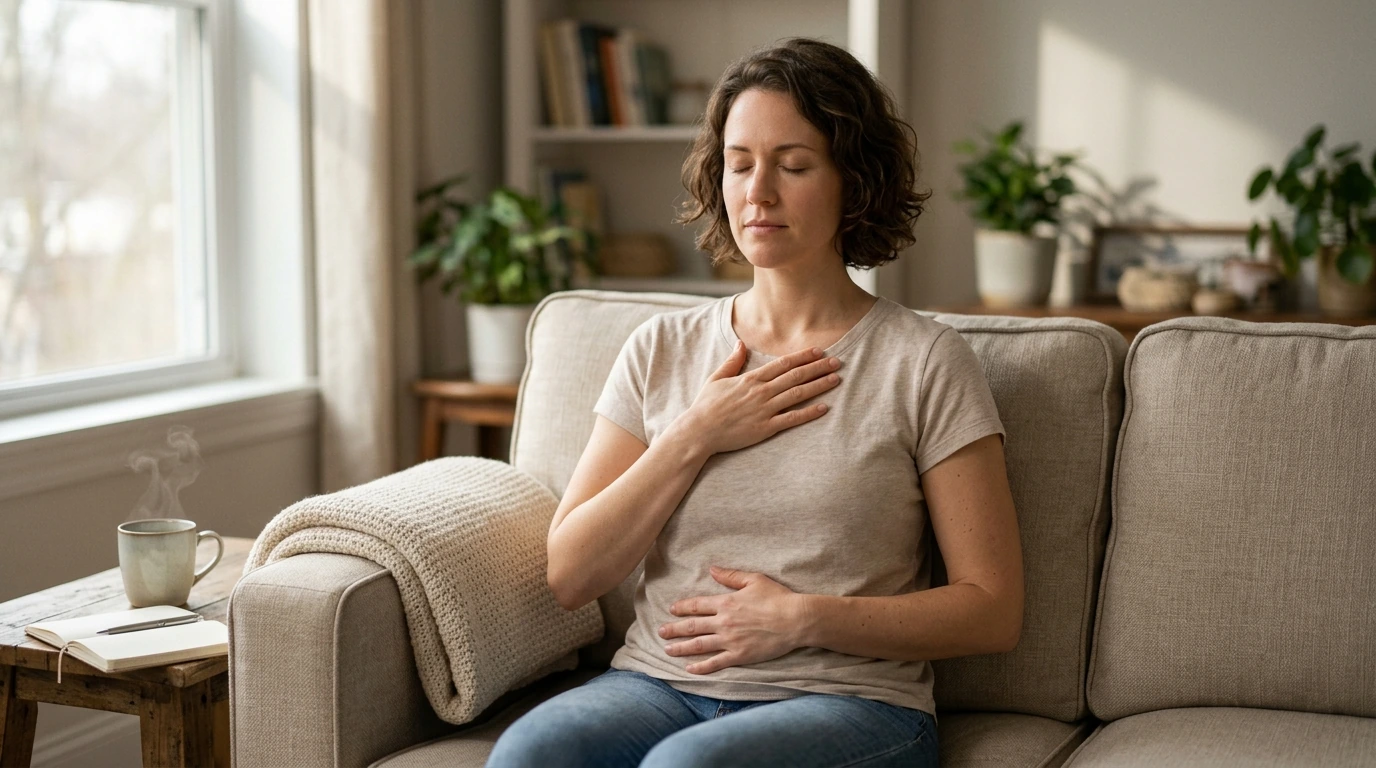
Anxiety can make the body feel like it’s stuck in “high alert.” Slow, intentional breathing helps signal safety to the nervous system, easing racing thoughts, tight chest sensations, and the urge to panic. The practices below are organized into a quick routine you can use at home, at work, or in the middle of a stressful moment—plus simple ways to make the habit stick.
When anxiety spikes, breathing often shifts toward fast, shallow breaths. That pattern can amplify physical sensations such as dizziness, tingling, and chest tightness—symptoms that can feel scary and feed the anxiety loop.
A simple way to nudge the body toward calm is to make the exhale a little longer than the inhale. Longer exhales support the body’s calming response by reducing physiological arousal and helping the system downshift out of “alarm mode.” For a deeper look at how breath control can influence the stress response, Harvard Health offers a helpful overview: Relaxation techniques: Breath control helps quell errant stress response.
Breathing practices also work best when paired with a gentle posture: relax the jaw, let the shoulders drop, and keep a soft gaze. Results can be subtle at first; consistency is what builds faster access to calm during stress spikes.
This sequence is designed for “right now” relief—when your body feels keyed up and you need a quick, steadying rhythm.
Helpful cue: Place one hand on your belly and one on your chest. Invite more movement into the belly hand, even if it’s subtle.
Different situations call for different “doses.” During panic-like symptoms, keep counts short and gentle. For everyday stress relief, you can lengthen the exhale or add a brief pause if it feels comfortable. If breath-holding feels activating, skip holds entirely and emphasize a slow exhale instead. Practicing once daily when calm makes the technique easier to access under pressure.
| Technique | How to do it | Best for | Avoid/modify if |
|---|---|---|---|
| Extended Exhale (3–4 in / 5–7 out) | Inhale 3–4 seconds, exhale 5–7 seconds for 2–5 minutes. | Racing thoughts, physical jitters, pre-meeting nerves. | Lightheadedness—shorten counts and breathe normally for a few cycles. |
| Box Breathing (4–4–4–4) | Inhale 4, hold 4, exhale 4, hold 4; repeat 4 rounds. | Stress spikes, focus, grounding before a task. | Panic symptoms—reduce holds (e.g., 4–0–6–0) or skip holds entirely. |
| 4–7–8 (gentle version) | Inhale 4, hold 2–4, exhale 6–8; repeat up to 4 cycles. | Wind-down, bedtime anxiety, tension release. | Any discomfort with holds—keep holds short or remove them. |
| Physiological Sigh | Two short inhales (second tops up), one long slow exhale; repeat 3–5 times. | Sudden overwhelm, on-the-spot calming. | Hyperventilation tendency—do fewer rounds and slow the final exhale. |
| Diaphragmatic Breathing | Slow nose inhale, belly expands; slow exhale, belly softens; 3–10 minutes. | Daily baseline calm, gentle recovery after a stressful day. | If hard to feel belly movement—try lying down with knees bent. |
Breathing works even better when paired with small signals of safety and release. Try layering one or two of these while you breathe:
If you like having something structured to follow, a simple guide can reduce decision fatigue when you’re stressed. Consider saving a quick routine and checklist you can pull up anytime: Simple Breathing Exercises to Calm Anxiety and Reclaim Your Peace (digital download).
Daily calm also supports recovery, energy, and workouts. If stress affects your appetite or routines, a straightforward nutrition checklist can help simplify decisions: High-Protein Ideas for Muscle Recovery Checklist (Digital Download).
Some people notice a shift in 1–3 minutes, especially when the exhale is longer than the inhale. With daily practice over days to weeks, it often becomes easier to access calm quickly because the body learns the rhythm as a familiar safety cue.
Extended exhale breathing or a few rounds of the physiological sigh are often the most tolerable starting points. Keep counts short, skip long breath holds, and prioritize a slow, steady exhale while grounding your attention on counting or a neutral object in the room.
Yes—especially if you’re sensitive to changes in carbon dioxide levels or tend to hyperventilate, which can cause dizziness or tingling. Use gentler counts, avoid holds, and return to natural breathing for a few cycles anytime discomfort increases.





Leave a comment