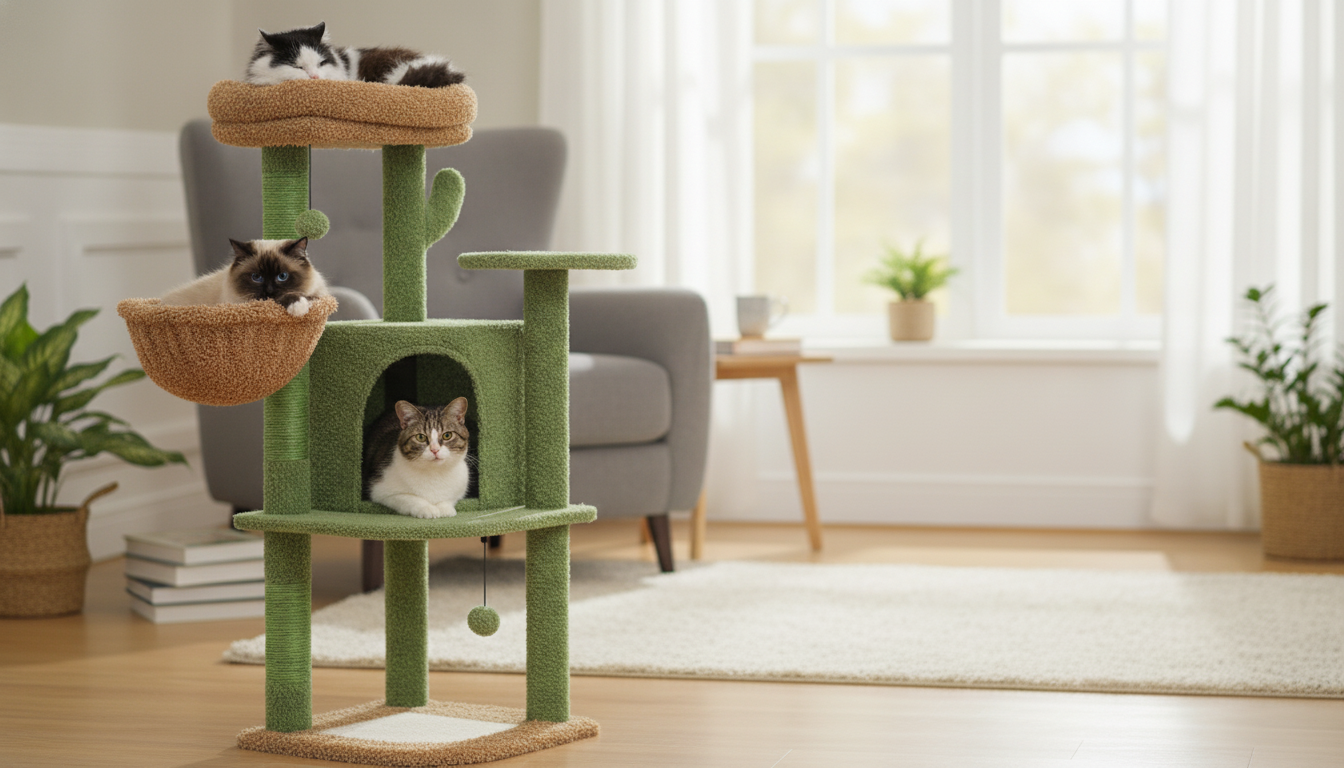
A cactus-shaped cat tree can add a playful accent to a room while giving cats a dedicated place to climb, scratch, nap, and hide. This 42-inch design pairs multiple scratching surfaces with a hammock lounge and an enclosed condo, helping redirect scratching away from furniture and giving indoor cats more vertical territory in a compact footprint.
If you’re looking for a mid-height activity center that feels substantial without taking over the room, the 42-Inch Cactus Cat Tree with Scratching Posts, Hammock, and Condo is built around the routines most cats repeat daily: stretch and scratch, climb and perch, then settle into a cozy rest spot.
Cats are natural climbers and scratchers, and a well-designed tree supports both behaviors in a way that’s easier to live with indoors. The cactus silhouette isn’t just decorative—it typically means multiple “arms” or vertical segments that create varied scratching angles and step-up points.
The best cat trees work because they mirror what cats seek out around the home: textured surfaces to claw, soft spots to nap, and enclosed hideaways to decompress.
Multiple scratching posts give cats more than one option for stretching and clawing—different angles, different heights, and different “targets.” This variety helps preserve carpets and sofas by making the cat tree the most rewarding place to scratch. If scratching has become a furniture habit, pairing the posts with strategic placement (near the problem area) is often more effective than moving the tree to a quiet corner.
A hammock-style bed supports curled-up naps and offers a slightly “hugged” feel many cats prefer. The gentle cradle can also be an appealing alternative to human seating, especially when the hammock is kept free of fur clumps and crumbs that can build up over time.
An enclosed cubby creates a secure retreat for shy cats or those that need quiet downtime. This can be especially helpful during busy household moments—guests, vacuuming, or high-energy play—when a cat wants to observe without being approached.
Stepping surfaces create an easy route upward and a stable place to sit and survey the room. Cats often rotate between “up high and alert” and “down low and relaxed,” so having multiple platforms supports those quick mood shifts throughout the day.
A 42-inch tree is tall enough to feel like a destination while still fitting comfortably in apartments, bedrooms, and living rooms. Placement turns it from “new furniture” into a daily hangout.
| Room Setup | Why It Helps | Simple Tip |
|---|---|---|
| Near a window | Adds entertainment and reduces boredom | Keep blinds cords secured and out of reach |
| Next to a scratching target (sofa/rug) | Encourages switching to the posts | Rub catnip on the scratch areas for the first week |
| Corner placement | Stability feel and efficient use of floor space | Ensure the base sits flat with no wobble |
| Away from litter box | Improves comfort and use | Give at least a few feet of separation |
For deeper guidance on keeping indoor cats mentally engaged, helpful enrichment overviews are available from International Cat Care and the ASPCA.
If you’re working on alternatives to declawing and want veterinary context, the American Veterinary Medical Association (AVMA) declawing policy outlines why scratching outlets and behavior strategies are important.
To round out a pet-focused play area, you can also add an interactive item like the Dog Training Toy for supervised cross-pet enrichment, or consider practical habitat accessories such as the Durable Plastic Bird Nest Cage if your household includes feathered companions.
Yes—many cats enjoy mid-height perches because they still feel elevated without needing big leaps. Placing the tree near a window can increase engagement and make the perch feel even more rewarding.
Place the cat tree right next to the furniture area being scratched, add a small amount of catnip or silvervine to the posts, and reward your cat immediately after using them. Temporarily covering the furniture scratch zone can also help the new habit stick during the transition.
Check for wobble and tighten hardware right after assembly, then weekly for the first month and monthly after that. In multi-cat or high-energy homes, more frequent checks help keep the structure stable and predictable.




Leave a comment