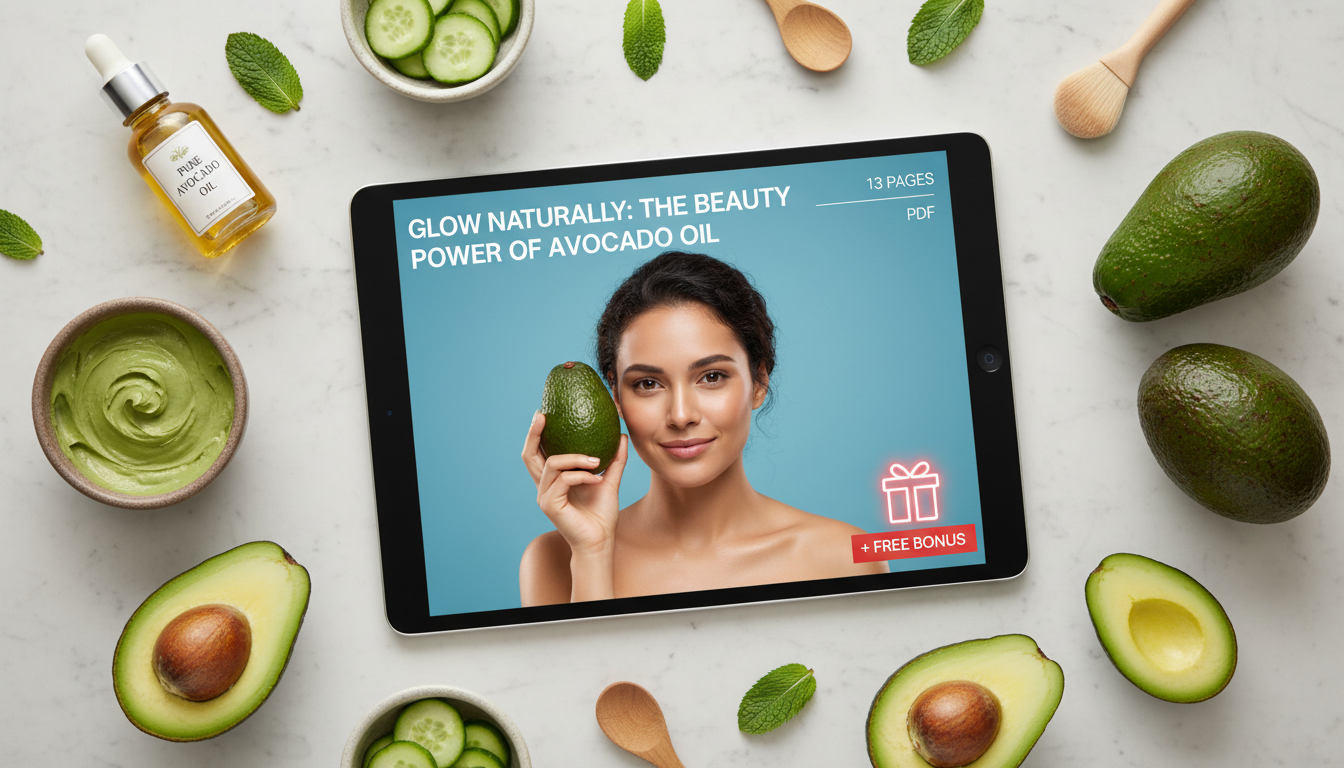
Glow Naturally: The Beauty Power of Avocado Oil for Radiant Skin & Hair
Avocado oil is a nutrient-dense botanical oil valued for its skin-softening lipids and vitamin content. Used thoughtfully, it can support a stronger moisture barrier, smoother texture, and shinier-looking hair—especially for dryness, roughness, and frizz. This guide breaks down what avocado oil contains, who benefits most, how to use it safely, and simple routines to help skin and hair look healthier over time.
What Makes Avocado Oil Different
Not all plant oils feel or perform the same. Avocado oil is often praised for its richer, more “cushiony” texture and its ability to make skin and hair feel immediately more supple.
- Rich in oleic acid (a fatty acid associated with a softer, more supple feel) plus supportive lipids that help reduce moisture loss.
- Contains fat-soluble antioxidants such as vitamin E and carotenoids, which can help defend against environmental stressors.
- Comforting feel compared with very lightweight oils—especially helpful when skin looks dull or feels rough.
- Works well as a “sealant” step over water-based skincare to lock in hydration.
- Commonly used for hair to reduce the look of dryness and add slip for easier detangling.
For foundational dry-skin habits, the American Academy of Dermatology’s guidance on gentle cleansing and moisturizing pairs well with oil sealing when needed: AAD: Dry skin—self-care.
Skin Benefits: Barrier Support, Softness, and Glow
Avocado oil shines most when the goal is comfort and barrier support. It can help reduce the look of flaking and make skin feel less tight—especially after cleansing or showering.
- Supports the moisture barrier by helping fill gaps between skin cells, reducing the look and feel of dryness.
- Softens rough patches on elbows, knees, and hands when used consistently.
- Adds a dewy finish when applied in a thin layer on damp skin.
- Can calm the feel of tightness after foaming cleansers or hot-water showers.
- Pairs well with gentle actives (like niacinamide) by buffering dryness, but don’t use it to dilute prescription treatments unless a clinician directs you.
Best Uses by Skin Type
| Skin type/concern |
How to use avocado oil |
Frequency |
Notes |
| Dry or dehydrated |
Press 2–3 drops onto damp skin after moisturizer |
Daily (AM/PM) |
Use sparingly under sunscreen in the morning |
| Normal/combination |
Apply 1–2 drops to dry areas only |
3–5x per week |
Avoid heavy layering on oily zones |
| Oily/acne-prone |
Patch test; use as a spot seal on flaky areas |
As needed |
Stop if congestion increases |
| Sensitive or barrier-compromised |
Mix 1 drop into fragrance-free cream |
Daily |
Choose cold-pressed, fragrance-free options |
Hair Benefits: Shine, Frizz Control, and Scalp Comfort
On hair, avocado oil is best viewed as a “finish and protect” helper. It can make strands look glossier, feel smoother, and behave better during detangling—especially when hair is dry from heat styling, color treatments, or low humidity.
- Boosts the look of shine by smoothing the cuticle and reducing the appearance of frizz.
- Adds slip for detangling, which can reduce breakage from mechanical stress (brushing, towel drying).
- Works well for protective styles and curly/coily textures that often prefer richer emollients.
- Useful as a pre-wash to reduce the “squeaky dry” feeling after shampoo.
- Scalp comfort: light oiling may help a dry-feeling scalp; oily or dandruff-prone scalps may do better with minimal use.
If you’re combining oils with other aromatic ingredients, review general safety considerations (especially around irritation and sensitivities): NCCIH: Essential Oils (safety and considerations).
How to Use Avocado Oil: Simple Routines That Work
The biggest difference-maker is using less than you think—then adjusting slowly. Oil should be the “seal,” not the entire routine.
Face (seal step)
- After cleansing and moisturizing, press 1–3 drops onto damp skin.
- Avoid aggressive rubbing; a gentle press helps reduce pilling and keeps the finish more even.
Body (post-shower softness)
- Apply to damp skin, then follow with lotion for longer-lasting comfort (oil + lotion is often more durable than oil alone).
Hands and cuticles (overnight support)
- Massage a small drop into cuticles and knuckles before bed; cotton gloves can reduce transfer to sheets.
Hair (pre-wash)
- Apply to mid-lengths and ends for 20–60 minutes, then shampoo thoroughly.
- If hair feels coated, shampoo twice and reduce the amount next time.
Hair (leave-in)
- Warm 1 drop between palms and smooth over ends; add more only if needed to avoid heaviness.
Scalp (optional)
- Use a few drops, massage lightly for 3–5 minutes, and wash out—especially if buildup occurs.
For readers who like digging into lipid research, PubMed is a helpful starting point for summaries on fatty acids and barrier function: PubMed.
Choosing Quality Avocado Oil and Storing It Well
Safety Tips, Patch Testing, and Common Mistakes
A Practical Starter Plan (7 Days)
Shop Favorites to Support Your Routine
FAQ
Can avocado oil be used on the face every day?
Often yes for dry or normal skin when used in small amounts as the final step over moisturizer. Combination or acne-prone skin may prefer occasional use or dry-area-only application, with patch testing and monitoring for congestion.
Is avocado oil good for hair growth?
It won’t directly change growth rate, but it can improve the look and feel of hair by reducing dryness and breakage. That helps retain length and supports a healthier-looking scalp environment over time.
Should avocado oil be applied to wet or dry hair?
For a pre-wash treatment, apply to dry hair for easier distribution through mid-lengths and ends. For a leave-in, use a tiny amount on damp ends to seal in moisture and reduce frizz without heaviness.
Recommended for you






Leave a comment