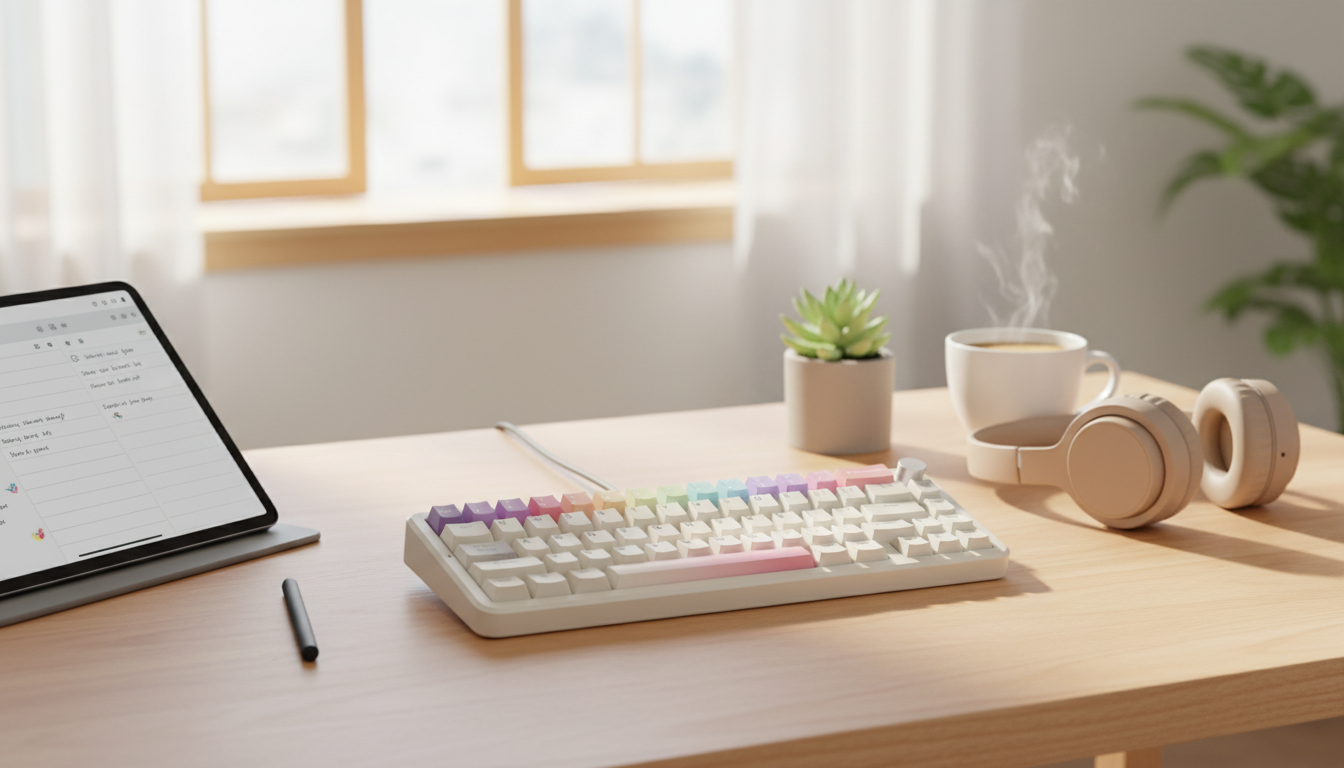
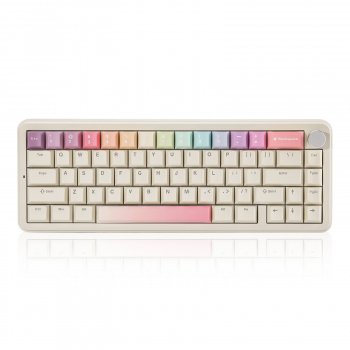
A compact mechanical keyboard can clean up a desk setup without giving up daily usability. This beige 65% model combines tri-mode connectivity, hot-swappable switches, and a layout that keeps arrows and navigation keys within reach for work, gaming, and multi-device routines. The result is a streamlined footprint that still feels practical for everyday shortcuts, long typing sessions, and quick device changes. For more guidance, see [Sponsored] RK-S98 Mechanical Keyboard review – Geekhack.
If you’re looking for a clean, modern desktop with fewer cables and more mouse room—without moving to an ultra-minimal layout—this combination of features is built for that middle ground. For further reading, see YUNZII R100 Wireless Mechanical Keyboard, 1800 Layout Tri-Mode ….
Tri-mode is all about reducing friction between devices. One keyboard can serve a desktop PC, a work laptop, and even a tablet—without constantly replugging cables or keeping multiple boards around.
Wireless performance varies by environment and device, especially with Bluetooth ecosystems. If you want to learn more about how Bluetooth compatibility is standardized, the Bluetooth Core Specifications overview is a helpful reference.
A 65% keyboard trims away the number pad and function row while keeping the cluster that many people miss on smaller boards—especially arrow keys. For many desks, that extra space changes how comfortable mousing feels, particularly in fast-paced games or spreadsheets where cursor movement is constant.
For users who rely on lots of simultaneous inputs (gaming or fast typing with modifiers), understanding concepts like key rollover can be useful; N-key rollover explains how keyboards register multiple keypresses at once.
Hot-swappable sockets make customization approachable. Instead of committing to one switch feel forever (or learning to solder), you can change switches in minutes and shape the keyboard to your preferences.
Use the table below to match common needs to a practical keyboard configuration. Compact layouts generally trade dedicated keys for desk space; tri-mode reduces device friction.
| Need | Recommended Layout | Recommended Connection Approach | Why It Helps |
|---|---|---|---|
| Gaming with lots of mouse movement | 65% | Wired or low-latency wireless mode | More mouse space; reliable input |
| Laptop + tablet switching | 65% | Tri-mode wireless + wired fallback | Fast device changes; tidy desk |
| Office desk with limited space | 65% | Wireless most days; wired for charging | Cleaner setup; flexible placement |
| Trying different switch feels | Any | Any | Hot swap enables quick experimentation |
Mechanical keyboards are popular because they can feel consistent over long sessions, which helps reduce accidental missed inputs when you’re moving quickly between keys. A 65% layout also encourages a closer mouse-to-keyboard distance, which many people find more comfortable on narrower desks.
Tri-mode typically means you can connect three ways: a wired USB connection plus two wireless options. It’s convenient for switching between devices while still keeping a stable wired fallback when you want maximum reliability.
Yes—hot-swap designs are beginner-friendly because you can change switches without soldering. Use a switch puller, pull straight up to avoid bending pins, and power the keyboard off before swapping if the manufacturer recommends it.
A 65% layout works well for both because it saves desk space while keeping arrow keys and common navigation keys. If you’re used to a full-size keyboard, expect to learn a function layer for certain shortcuts, but most people adapt quickly.





Leave a comment