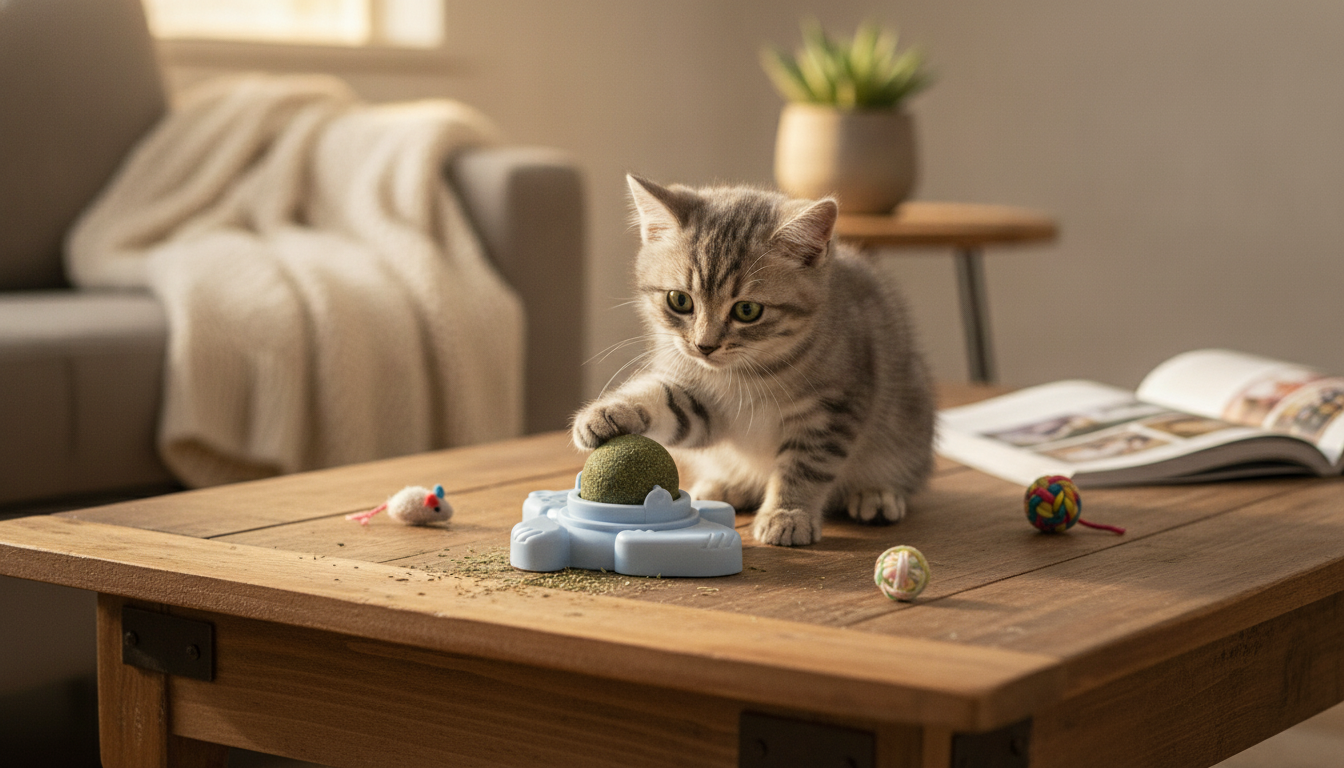
A catnip ball toy can turn short bursts of curiosity into healthy, satisfying play—especially for indoor cats that need extra stimulation. Used thoughtfully, it supports natural feline behaviors, adds novelty to the home, and can even help your cat settle after a more active game. Below is a practical guide to how catnip ball toys work, what to expect from cat behavior, how to use them safely, and simple routines that keep the experience fresh. For more guidance, see Best Cat Toy to Stimulate Cats – Pet Gadget Insider.
Cats are wired to investigate scents and “work” their environment with their face, paws, and teeth. A catnip ball interactive toy taps into those instincts in a compact, easy-to-offer format. For further reading, see 2 Inch Interactive Yarn Balls For Indoor Cats, Kittens & Adults.
Enrichment doesn’t need to be intense to be effective. A few minutes of purposeful interaction can be enough to take the edge off restlessness, especially when paired with a routine.
Catnip (Nepeta cataria) contains a compound called nepetalactone that many cats find compelling. The response varies because sensitivity is inherited, and some cats simply won’t care about it.
For a helpful overview of normal catnip behavior, see ASPCA guidance on catnip.
Most catnip-based toys are low-risk when used appropriately, but placement and supervision matter—especially for enthusiastic chewers or high-energy cats.
If your cat shows signs of stress (flattened ears, swishing tail, dilated pupils, growling) or becomes possessive, remove the toy and reintroduce later with shorter access. For broader behavior and enrichment context, Cornell’s feline resources are a reliable reference: Cornell Feline Health Center: behavior topics.
| Cat play style | Best use of a catnip ball | Simple tweak for better results |
|---|---|---|
| Scent-lover (rubs cheeks, sniffs everything) | Place at head height or near a favorite lounging area | Rotate placement every 2–3 days |
| Pouncer (ambushes feet, hides and springs) | Put near a corner or along a wall for “hunt routes” | Add a short wand session first, then offer the ball |
| Shy or cautious | Introduce in a quiet room with no loud noises | Use 1–2 minute sessions; stop before overstimulation |
| High-energy zoomer | Use to wind down after active play | Give access for 5 minutes, then remove and reset later |
| Not catnip-responsive | Offer as a texture/interaction toy rather than scent-based | Try silver vine or other enrichment toys if safe for the cat |
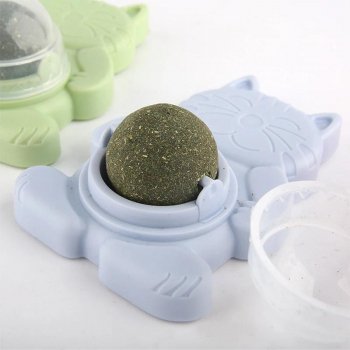
If you’re building a simple indoor enrichment routine, the Catnip Ball Interactive Toy is designed for quick, self-directed play sessions that fit naturally into the day. It works well as a boredom buster between structured playtimes and can be placed near an “enrichment station” (scratcher, perch, or window seat). Price: $16.95 (in stock).
For multi-pet homes, keeping other pets engaged can reduce interruptions during cat play. If you also have a dog that competes for attention during enrichment time, consider offering a separate activity like the Dog Training Toy so each pet has a job to do in a different area.
Most cats respond for just a few minutes, then lose interest. After a cooldown (often 30 minutes to a couple of hours), many cats will respond again; storing the toy between sessions helps keep the reaction strong.
Catnip is generally considered safe for most cats in small amounts. If a cat overeats, mild stomach upset can happen, so it’s best to offer brief sessions and stop using it if vomiting or diarrhea occurs.
Some cats don’t inherit catnip sensitivity, and kittens often don’t respond until they’re older. If your cat never shows interest, try other enrichment options such as silver vine (if appropriate) or toys that match their preferred play style (chasing, pouncing, or food puzzles).





Leave a comment