Clean beauty can feel confusing—especially when “natural,” “non-toxic,” and “clean” mean different things across brands. A more reliable approach is building a simple routine, learning ingredient basics, and tracking what actually works for skin goals like barrier support, hydration, and a calmer-looking tone. Below is a practical way to make clean beauty feel less like guesswork and more like a repeatable routine you can actually stick with.
Clean beauty isn’t a regulated legal standard, so brands can use the label in very different ways. That’s why ingredient literacy (reading and recognizing common irritants and workhorse hydrators) tends to be more helpful than relying on buzzwords alone. The FDA’s cosmetics overview is a useful starting point for understanding how cosmetics are governed in the U.S. (FDA: Cosmetics).
Also, “clean” doesn’t automatically mean gentler for everyone. Essential oils, botanicals, and fragrance—whether synthetic or “natural”—can still cause stinging, flushing, or redness in reactive skin. The most sustainable clean routines are usually the least complicated: fewer products, clearer ingredient lists, and consistency over constant switching.
Two habits matter more than a perfect label: patch testing and introducing new products gradually. This is especially important when trying acids, vitamin C, or fragrance-containing formulas that can surprise even “non-sensitive” skin.
Most clean routines work best when they follow the same backbone morning and night—then you add targeted steps only if your skin tolerates them.
Choose a gentle cleanser that removes sunscreen and daily buildup without leaving skin tight. If skin feels squeaky or stripped, the cleanser is likely too harsh or you’re over-cleansing. Skip rough scrubbing; friction can make redness and dryness look worse.
Layer humectants (like glycerin or hyaluronic acid) under a moisturizer for a plumper, more comfortable look. Humectants pull in water, but they often need a moisturizer on top to reduce that “still dry” feeling—especially in low-humidity environments.
Broad-spectrum SPF is non-negotiable. Clean skincare still needs sunscreen to help prevent the look of dark spots and premature aging. For everyday basics on how to keep routines simple and effective, the American Academy of Dermatology is a solid reference (AAD: Skin care basics).
At night, prioritize barrier-support ingredients (ceramides, cholesterol, fatty acids) and soothing agents (panthenol, allantoin). If your skin is irritated, a “boring” barrier-first routine often delivers the fastest comfort.
Give the routine time: keep your baseline stable for 2–4 weeks before judging results. A surprising amount of irritation and dryness comes from making too many changes at once.
Clean skincare tends to perform best with a barrier-first mindset. Even when the goal is brighter-looking tone or smoother texture, the skin usually looks better when it’s calm, well-moisturized, and not inflamed.
Fragrance awareness is another “quiet win.” “Natural fragrance” can still trigger redness. Fragrance-free or low-fragrance products are often easier to tolerate, especially when you’re also using actives.
For exfoliation, choose gentle chemical options (like lactic acid, mandelic acid, or PHA) 1–3 nights per week instead of daily scrubs. Daily abrasion can lead to a tight, sensitized feel that makes everything sting.
Antioxidants—such as vitamin C derivatives, vitamin E, ferulic acid, and green tea—can support a brighter look and help reduce the visible impact of environmental stressors. And one underrated truth: preservatives aren’t the enemy. Proper preservation helps reduce microbial contamination risk, especially in water-based products.
| Goal | Often-Used Ingredients | Best For | Watch Outs |
|---|---|---|---|
| Hydration | Glycerin, hyaluronic acid, beta-glucan | Dehydrated, tight-feeling skin | Needs moisturizer on top; too-light routines can feel dry |
| Soothing | Panthenol, allantoin, colloidal oatmeal, centella | Redness-prone, reactive skin | Botanical extracts can still irritate some users |
| Gentle exfoliation | Lactic acid, mandelic acid, PHA | Texture, dullness | Overuse can sting and disrupt barrier |
| Brightening | Niacinamide, vitamin C derivatives, licorice root | Uneven tone, post-blemish marks | High % niacinamide may flush some skin types |
| Barrier support | Ceramides, squalane, fatty acids | Dry, compromised barrier | Heavier textures may feel too rich for very oily skin |
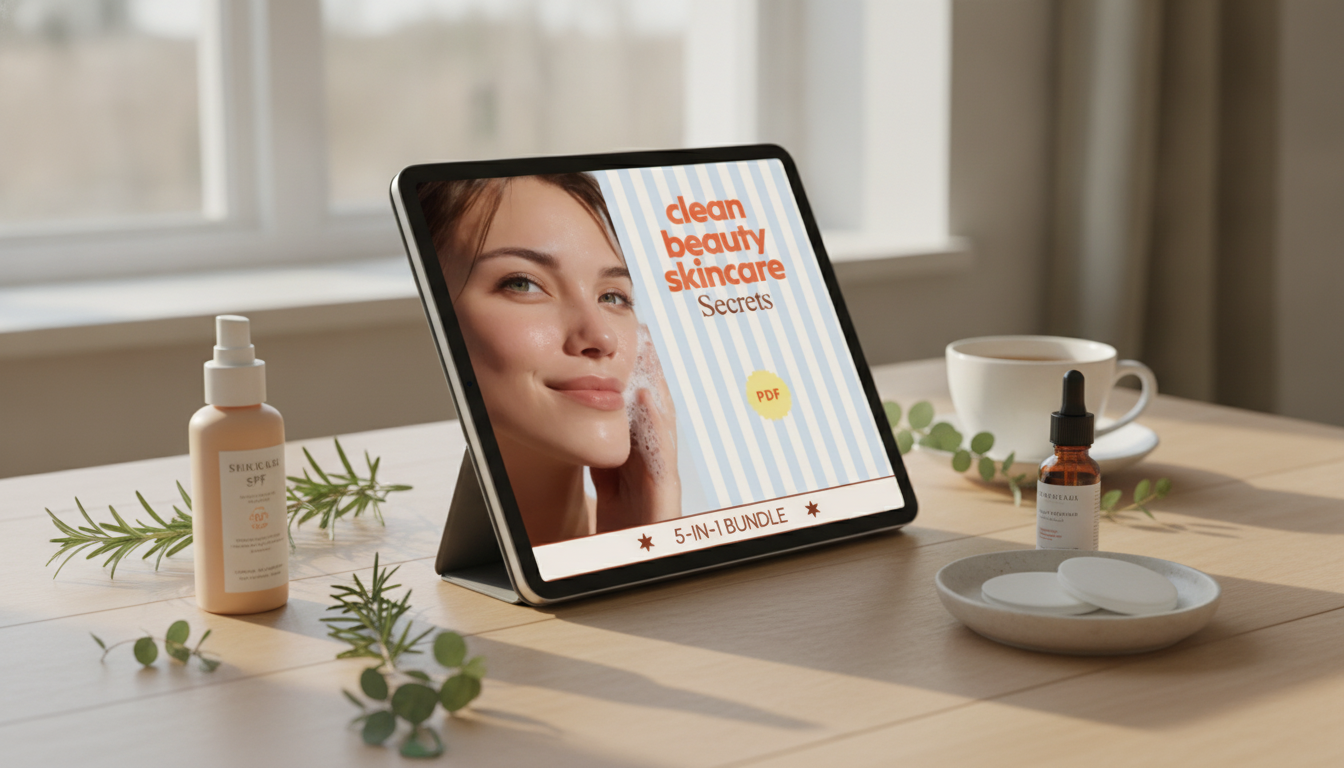
If you want guided structure, the Clean Beauty Skincare Secrets – 5-in-1 Clean Beauty Skincare Digital Bundle is designed to help you plan AM/PM routines, keep ingredient notes, log patch tests, and compare progress photos under consistent lighting.
For anyone who likes pairing skincare improvements with simple wellness habits, a lightweight add-on like the High-Protein Ideas for Muscle Recovery Checklist | Digital Download can support a more consistent routine mindset—because the easiest routine is the one you can repeat.
Often, but not automatically. Fragrance-free options, fewer botanicals/essential oils, patch testing, and introducing one product at a time usually reduce the risk of irritation.
Yes. Broad-spectrum SPF daily is essential for preventing visible signs of sun damage and for maintaining results from any skincare routine, clean or not.
Give a baseline routine about 2–4 weeks to assess comfort and hydration, and 6–12 weeks for tone/texture goals. Adjust sooner if you develop persistent stinging, burning, or worsening redness.







Leave a comment