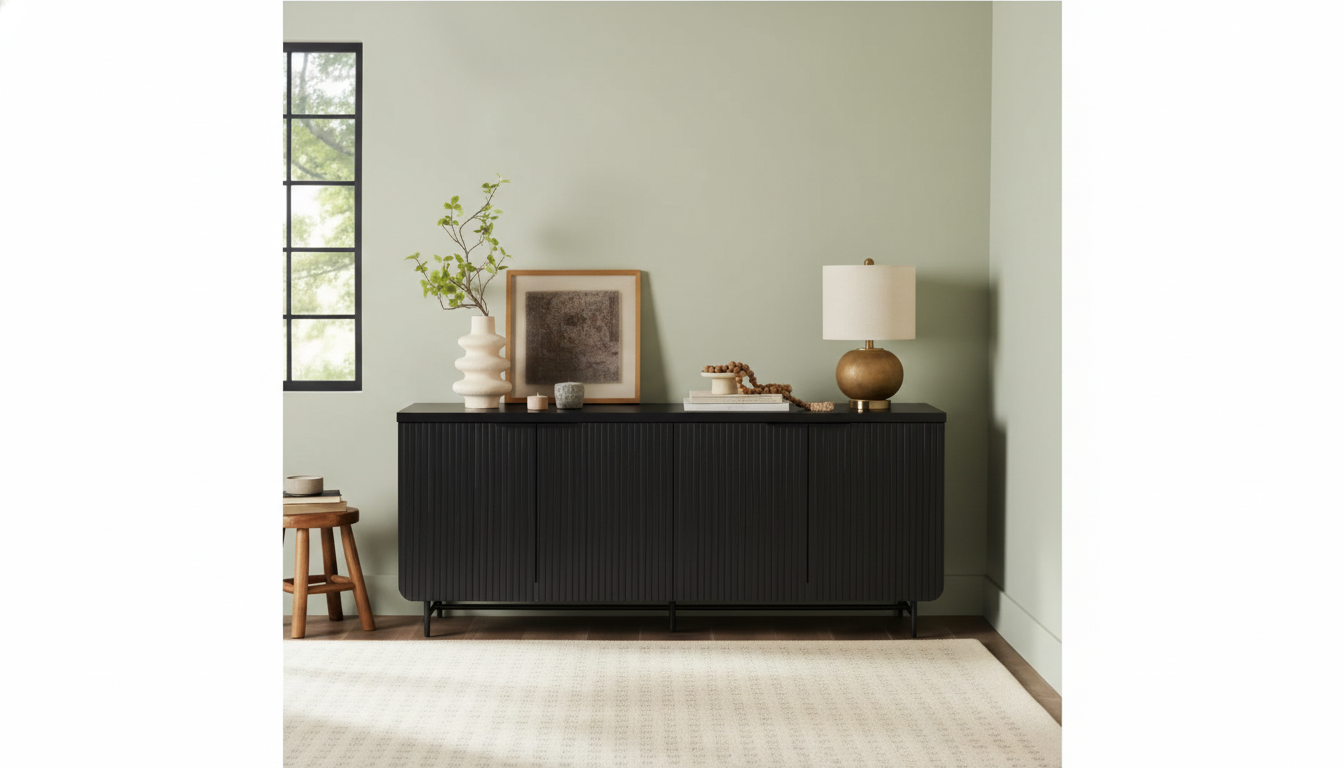
A grooved-door sideboard brings texture and calm structure to a room, balancing clean Scandinavian lines with practical, closed storage. The subtle shadow lines from reeded or fluted fronts add depth without adding visual clutter—especially helpful in spaces that already juggle cables, serving pieces, and everyday essentials. Below is a practical guide to where this style works best, how to style it so it stays airy, what to check before buying, and how to keep those grooves looking crisp over time. For more guidance, see Nordic Oak Large Sideboard.
Grooved (also called reeded or fluted) door fronts create a gentle rhythm across the facade. Even in a minimalist silhouette, the texture adds warmth and movement as light changes throughout the day. In Scandinavian-inspired interiors—where simple forms and quiet materials are doing most of the work—this kind of detail reads intentional rather than decorative. For further reading, see HOMCOM Modern Sideboard Storage Cabinet, Free Standing ….
A four-door layout also tends to be more flexible than smaller two-door options. Wider storage zones let you separate categories (tableware, linens, tech, “misc.”) without stacking everything into one crowded compartment. And because the doors are closed, the room feels calmer: cords, board games, and serving platters disappear, leaving a clean line along the wall.
This silhouette is a natural fit in dining rooms, living rooms, entryways, and even home offices—anywhere you want generous storage with a tidy exterior.
| Placement | Best for | What to measure before buying |
|---|---|---|
| Dining room wall | Serveware + entertaining | Wall length, clearance behind chairs, door swing |
| Behind a sofa | Extra storage + console styling | Sofa height vs. sideboard height, walkway width |
| Media wall | Concealed electronics | Outlet locations, cable routing, component ventilation |
| Entryway | Daily essentials | Door clearance, traffic flow, distance to entry door |
The grooves are already doing visual work, so the best styling is restrained and intentional. A simple “trio” keeps the surface styled but not crowded: one tall element (a lamp or vase), one mid-height piece (framed art leaning against the wall), and one low item (a catchall tray for keys or coasters). Keeping at least one third of the surface open lets the texture remain the star.
If planning a bigger refresh, a quick mood board can help keep finishes consistent (wood tone, metal color, and textile texture) before buying add-ons. The Define Your Style With a Mood Board – Fashion Mood Board Guide for Personal Style Clarity can be a simple way to map the look before you start layering accessories.
Four doors can become a “catch-all” fast unless each area has a job. A quick zoning plan makes daily use smoother and keeps the doors closing easily.
If sustainability and indoor air quality are priorities, it’s also worth understanding wood sourcing and composite-wood standards. The Forest Stewardship Council (FSC) explains responsible forestry certification, and the California Air Resources Board (CARB) Composite Wood Products regulation outlines emissions limits that can affect indoor environments.
If the goal is closed storage that still adds character, the Scandinavian Grooved 4-Door Sideboard is built for that balance: a calm, Scandinavian profile with tactile grooved doors that read warm and modern. It works as a buffet in the dining room, a console in the entryway, or a streamlined credenza in the living room—especially when you want to hide everyday items without sacrificing style.
| Detail | Value |
|---|---|
| Product | Scandinavian Grooved 4-Door Sideboard |
| Price | 1421.80 USD |
| Availability | In stock |
Grooves collect dust a bit faster than flat fronts, but upkeep is simple: dust with a microfiber cloth or soft brush along the groove direction so debris lifts out instead of packing in. For high-traffic rooms, a quick weekly pass keeps buildup minimal, and a slightly damp wipe (followed by drying) handles fingerprints.
Yes, as long as outlet placement and cable routing are planned so cords can reach without pinching in doors. Leave space for ventilation around components, and use one compartment for a power strip and accessories (remotes, controllers) to keep the surface tidy.
Set clear zones: entertaining pieces, everyday tableware, tech/cables, and overflow so items return to the same spot. Use bins for small items, and keep heavier pieces low and centered to improve stability and reduce strain on shelves and hinges.






Leave a comment