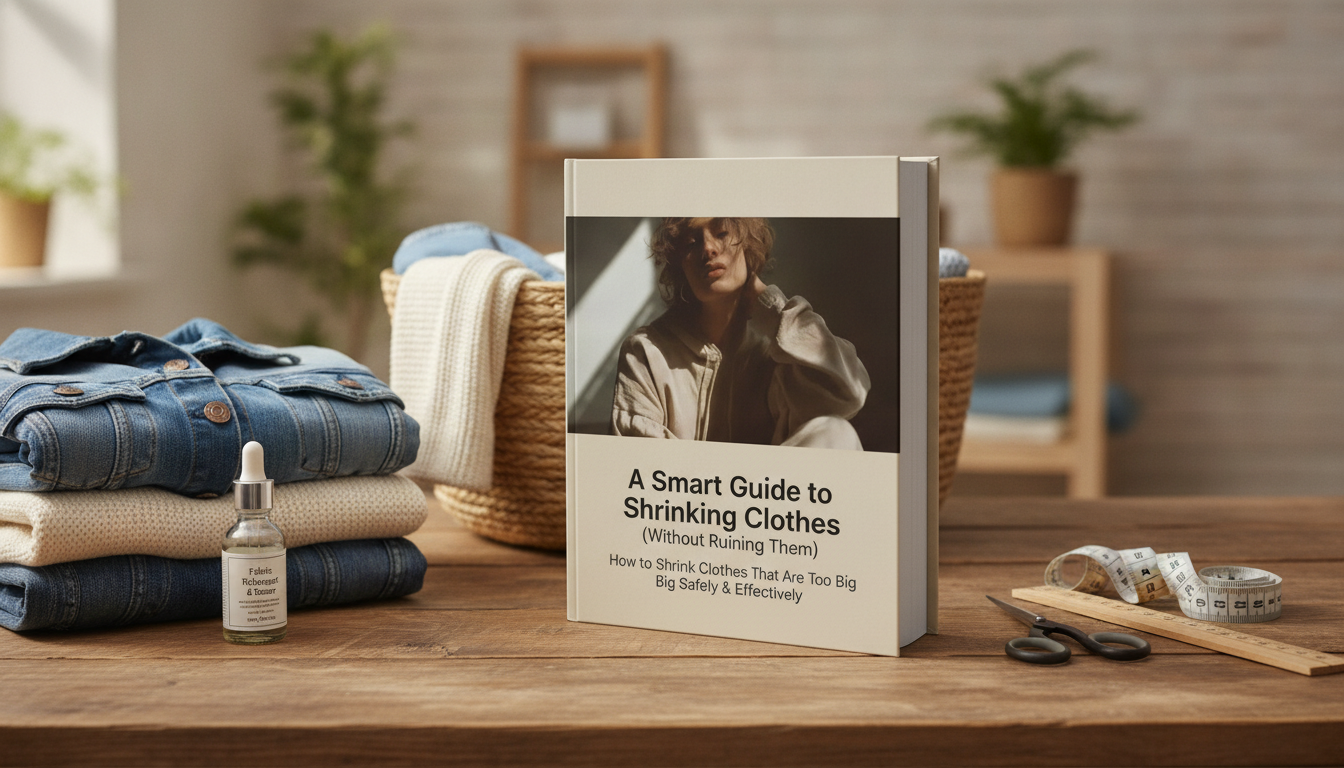
When clothes fit a little too loose, shrinking can be a quick fix—if the fabric can handle it. The safest approach is simple: match the method to the fiber (cotton, wool, denim, synthetics), start with gentle heat and moisture, and check progress often. Done carefully, you can tighten the fit without ending up with twisted seams, wavy hems, faded color, or stiff, “baked” fabric.
If you’re unsure where to begin, start with the label. The FTC Care Labeling Rule explains why care tags matter—and why deviating from them can permanently change size and shape.
Before any heat, water, or steam, take two minutes to do a quick garment “audit.” It prevents most shrinking mishaps.
Different fibers “move” differently. Use the gentlest method that can achieve the change you need.
Warm wash plus a medium dryer cycle is usually enough. If you need more, step heat up gradually and stop when the fit is close—cotton can keep tightening if you overdo the dryer.
Try a warm soak or warm wash, then tumble dry on medium. Turn inside out to reduce fading and help preserve the finish.
Avoid machine agitation to prevent felting. Use a brief warm (not hot) soak, handle gently, then reshape and air-dry flat. For wool-specific handling, follow guidance from Woolmark’s wool care resources.
Rayon can shrink dramatically and permanently. Steam and careful reshaping are usually safer than hot wash/dry cycles, which can cause severe warping.
These are heat-resistant in the “shrinking” sense (they don’t easily get smaller), but they’re heat-sensitive in the “damage” sense. Mild heat can tighten slightly, while high heat risks shine marks, warped seams, or melting.
Heat can harm stretch recovery. If you’re shrinking an athletic or stretch item, use low-to-medium heat and avoid long dryer time.
| Fabric | Best method | Shrink potential | Main risk |
|---|---|---|---|
| 100% cotton | Warm wash + medium dry | Medium–High | Fading, seam twist |
| Denim (100% cotton) | Warm soak/wash + medium dry | Low–Medium | Fading, stiffness |
| Wool | Brief warm soak + reshape + flat dry | Low–Medium | Felting, distortion |
| Rayon/viscose | Steam + careful reshape (avoid hot cycles) | High (often unpredictable) | Warping, severe shrink |
| Polyester/nylon | Low/medium heat, short cycles | Low | Melting/shine, warping |
| Cotton/poly blend | Warm wash + medium dry, check often | Low–Medium | Puckering, uneven panels |
Match the method to the fabric, start with warm water and medium heat, and use short dryer intervals with frequent fit checks. For knits and delicate fibers, rely more on steam, reshaping, and flat air-drying than agitation.
Polyester has low shrink potential, so use low-to-medium heat and short cycles if you want minor tightening. Avoid high heat, which can cause shine marks, warped seams, or melting; blends can also shrink unevenly.
Wash in warm water, then dry on medium heat in 10–15 minute bursts, checking the fit between rounds. Stop when it’s slightly looser than perfect, since cotton can continue to relax and settle with wear.






Leave a comment