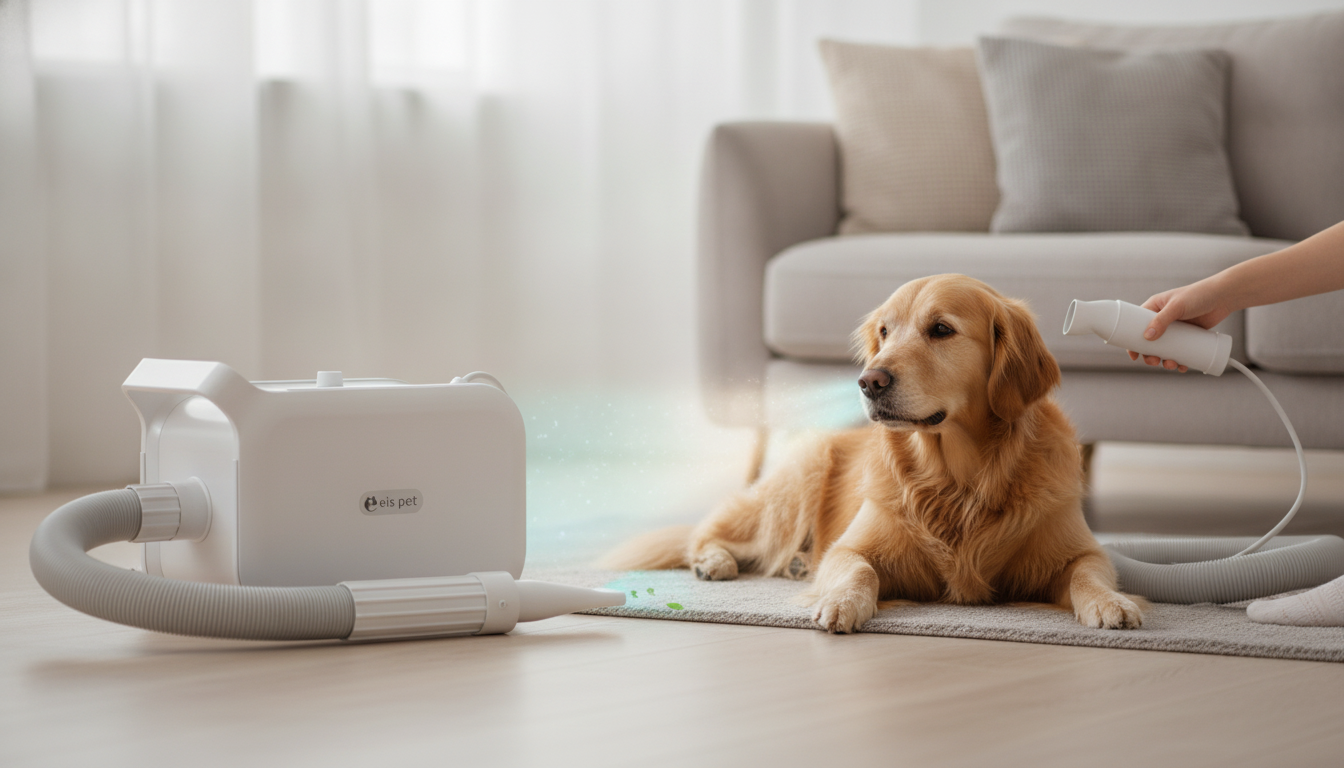
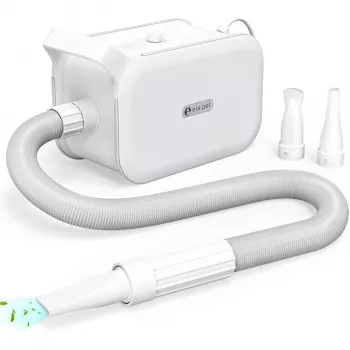
A high-velocity dryer can cut drying time, reduce damp-dog odor, and help prevent hot spots by moving water out of the coat instead of baking it in. This model pairs strong airflow with an LED touch screen for precise control of speed and temperature—useful for everything from thick double coats to sensitive pets that need a gentler approach. If you’re building a more reliable at-home grooming routine, the High-Velocity Pet Dryer with LED Touch Screen and Adjustable Speed & Temperature is designed to make those sessions faster, more consistent, and easier to repeat.
Unlike towel drying (which often leaves moisture trapped near the skin) or household hair dryers (which can run hot with limited airflow control), a high-velocity pet dryer is built to move water out of the coat with concentrated air.
For general grooming best practices—like coat care and why consistency matters—authoritative overviews from the American Kennel Club (AKC) and the ASPCA are helpful references.
Touch controls aren’t just a “nice to have”—they can make home grooming more predictable. An LED touch screen helps you keep speed and temperature consistent between sessions, which can be especially useful when multiple people in the household share grooming duties.
| Coat type | Airflow (speed) | Heat (temperature) | Practical tips |
|---|---|---|---|
| Short coat (smooth) | Low to medium | Low or no heat | Keep nozzle moving; focus on legs and underside where water lingers. |
| Medium coat | Medium | Low to medium | Dry in sections; brush as you dry to prevent tangles. |
| Double coat (thick undercoat) | Medium to high | Low to medium | Use airflow to part the coat; avoid overheating by checking skin warmth often. |
| Curly/wavy (prone to mats) | Low to medium | Low | Stretch-dry while brushing to reduce matting; avoid blasting knots tighter. |
| Sensitive/anxious pets | Low | No heat or low | Start at a distance; reward calm behavior and increase airflow gradually. |
Variable airflow is where a high-velocity dryer earns its keep. Instead of “all or nothing,” adjustable speed helps match the dry to the pet’s tolerance and the coat’s needs.
A practical rhythm is to start with a higher (but comfortable) airflow to “chase” water off the coat, then step down for detail work—legs, feathers, and anywhere that tangles easily.
Heat should be the supporting actor, not the main event. The safest, most effective routine typically relies on airflow first, then adds minimal warmth only if needed for the final dampness that clings in dense areas.
If a pet’s skin feels warm in a way that seems “too much,” treat that as your cue to back off the temperature and increase the nozzle distance rather than trying to finish faster.
A smoother dry starts before the dryer turns on. A little preparation reduces time, noise exposure, and coat friction.
For pets that benefit from a steady distraction during baths and drying, pairing the routine with a reward-based activity like a Dog Training Toy can help shift the focus from noise to engagement.
Yes, when used conservatively: rely on airflow first, then use the lowest heat needed. Keep the nozzle moving, avoid faces and ears, and check skin warmth often; if the pet seems uncomfortable or feels hot, reduce heat and increase distance. Consult a vet for pets with skin conditions.
Start with short sessions on low speed at a distance, pair the sound with treats, and gradually increase duration and airflow over several days. Provide secure footing and avoid restraining in a way that increases stress.
Yes—controlled airflow can lift loose undercoat and dander, especially when combined with brushing during drying. Use moderate airflow and work in sections to avoid tangling or irritating the skin.





Leave a comment