Nature-Inspired Tablescape Checklist: A Printable Guide for Effortless Table Styling
A nature-inspired tablescape feels welcoming because it leans on organic textures, soft color shifts, and simple layers that look collected rather than over-styled. The goal is a table that reads calm and intentional—easy to sit at, easy to serve from, and easy to recreate for dinners, showers, and seasonal gatherings. Use the steps below to make quick decisions on theme, palette, layers, centerpieces, lighting, and finishing touches so setup stays smooth from planning to the final candle light.
Start with a clear theme and a tight color palette
Choose one “nature story” to guide every decision: woodland, coastal, meadow, desert, herb garden, or autumn harvest. Then keep the palette narrow—2–3 core colors plus 1 accent—so the table looks cohesive even when you mix materials.
- Pick the overall feel early: casual picnic, elevated rustic, modern organic, or romantic garden.
- Try a simple palette formula: sage/cream/wood + brass, or sand/white/sea-glass + navy, or terracotta/oat + black.
- Anchor your colors to what’s already on hand (table, chairs, dinnerware, and any statement serving pieces).
Nature themes and easy material cues
| Theme |
Color direction |
Textures & materials |
Simple centerpiece idea |
| Woodland |
Moss, bark brown, cream |
Linen, wood, stone, pinecones |
Low runner of greens + candles |
| Coastal |
Sand, white, sea-glass, navy accent |
Rattan, glass, driftwood |
Clustered bud vases + shells |
| Meadow |
Soft greens, blush, butter yellow |
Cotton, ceramic, wildflowers |
Loose florals in mixed vases |
| Autumn harvest |
Amber, rust, olive, warm neutrals |
Woven chargers, wood, dried stems |
Mini gourds + taper candles |
Gather the essentials before styling (to avoid last-minute scrambling)
Tablescaping gets complicated when supplies are scattered. Pull everything into one “staging area” first, then build the table with only what supports your theme.
- Base layer: tablecloth, runner, or placemats; aim for one dominant texture (linen, jute, cotton, or bare wood).
- Dinnerware: plates and bowls; keep shapes consistent even if colors vary slightly for an organic look.
- Glassware + flatware: pick one “shine” family (all silver, all matte black, or all brass tones).
- Centerpiece components: greenery, flowers, branches, stones, seasonal produce, or found objects.
- Lighting: tapers, tealights, or battery candles; plan enough glow for the length of the table.
- Finishing touches: place cards, napkin ties, small favors, salt cellars, and serving pieces.
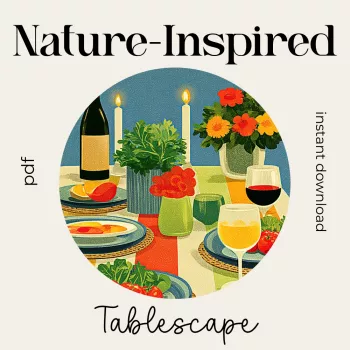
If you like having a repeatable system, a single-page planner can keep decisions consistent from event to event. The Nature-Inspired Tablescape Checklist (printable table styling guide) is designed for quick planning, shopping with purpose, and calm day-of setup.
Build the table in layers: base, place settings, then height
Nature styling works best when it’s layered in a predictable order. Start wide, then refine.
- Step 1 — Base: lay the cloth or runner; add placemats or chargers only if they help define each seat.
- Step 2 — Place settings: stack plates/bowls; add napkins and either a napkin ring or a simple natural tie (twine, thin ribbon, or a sprig).
- Step 3 — Height and structure: add centerpieces last, keeping sightlines clear for conversation.
- Keep tall elements toward the perimeter or in narrow vases; keep the center low and flowing.
- Use odd-number groupings (3 or 5) for candles and small vases so it feels natural rather than overly symmetrical.
Create a centerpiece that looks natural (and stays functional)
A centerpiece should feel like it belongs to the season, but it also has to leave room for food. Pick one focal approach and commit to it.
For woodland or garden tables, a small sculptural accent can add story without adding clutter. The Durable Plastic Bird Nest Cage for woodland or garden table accents works well as a light focal detail—styled on a sideboard, at the ends of a runner, or near place cards—so the dining area stays functional.
Add nature details without creating mess or hazards
- Use elements that won’t shed heavily: sturdy leaves, eucalyptus, rosemary, dried grasses, small fruits, or smooth stones.
- Skip anything that flakes into food areas (loose moss, dusty dried pods) unless sealed and placed away from plates.
- Candle safety: place flames away from greens and napkins; consider hurricanes or battery tapers when needed. Helpful guidance is available from NFPA — Candle Safety.
- Avoid strongly scented botanicals when food is the focus; subtle herbs are usually safer than heavy florals.
- If children or pets are present, avoid small loose items and choose non-toxic plants; cross-check with ASPCA — Toxic and Non-Toxic Plants.
Day-of setup plan for hosts (fast, calm, and repeatable)
Printable planning tools that make tablescaping easier
- A checklist keeps your theme, palette, layers, centerpiece plan, lighting, and finishing touches in one place.
- A printable planner supports repeat hosting by saving color ideas, measurements, and a shopping list for future events.
- For a quick start, use a step-by-step guide that combines layout prompts with a supply list and day-of timeline—like the Nature-Inspired Tablescape Checklist.
FAQ
How do natural tablescapes look elevated without feeling cluttered?
Limit the palette, repeat one material (like linen, wood, or glass), and keep the centerpiece footprint narrow. Add elevation with a few intentional height changes (candles and bud vases) instead of many small objects.
What is the easiest centerpiece for beginners?
A greenery runner with spaced candles is simple and forgiving, especially when it stays low. Another easy option is a cluster of 3–5 bud vases with a few stems each for a light, airy look.
Are there safety tips for candles and greenery on a dining table?
Keep open flames away from leaves and napkins, and use sturdy holders or hurricane glass when possible. Battery candles are a practical alternative for households with kids, pets, or tight table spacing.
Recommended for you





Leave a comment