Calm With Smart Tools: A Tech-Supported Home Routine for Stress Relief, Mindfulness & Relaxation
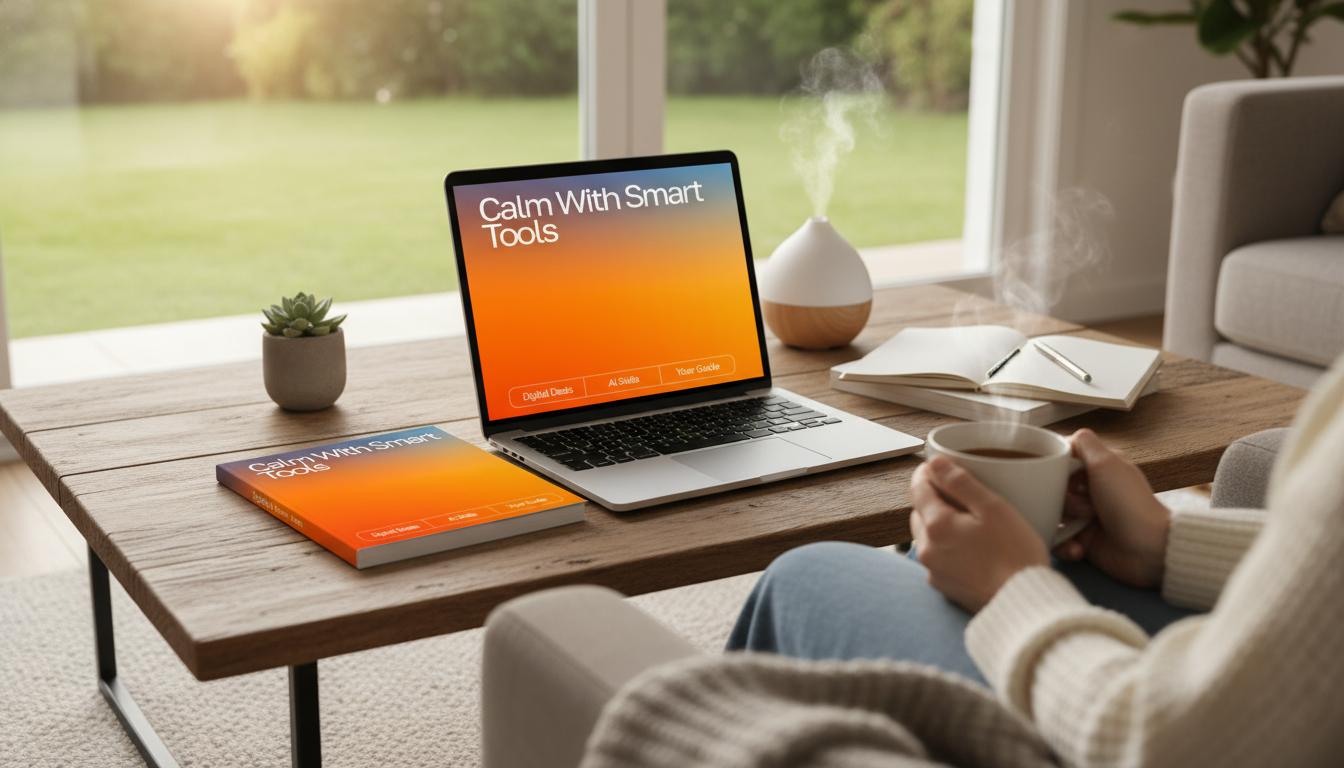
Stress can build quietly—through busy schedules, constant notifications, and the feeling of never fully switching off. Calm With Smart Tools is a practical ebook designed to help shape calmer days at home using simple mindfulness and relaxation habits supported by AI-friendly tools. The focus is on small, repeatable routines that fit real life: quick resets, guided reflection, gentle structure, and smart prompts that reduce decision fatigue.
What “smart tools” can add to a calming routine
When life is full, “just relax” isn’t helpful advice. Smart tools can make calming practices easier to start and easier to repeat—without turning rest into another performance metric.
- Reduce mental load: Turn vague goals (“relax more”) into clear, doable steps you can complete in minutes.
- Build consistency: Use prompts and reminders so calm practices happen even when motivation is low.
- Notice patterns gently: Track sleep, mood, and common stress triggers to learn what helps—without over-optimizing.
- Support self-guided mindfulness: Keep short scripts ready for breathing, grounding, and reflection when your mind feels noisy.
For a research-backed overview of how mindfulness supports stress relief, see the American Psychological Association’s resource on mindfulness meditation and stress.
Who this guide fits best
Calm With Smart Tools is built for everyday stress, not perfect silence or hour-long routines.
- People who want stress relief at home without complicated equipment or long sessions
- Anyone who likes structure: checklists, routines, and step-by-step exercises
- Busy professionals or caregivers needing short “reset” practices between tasks
- Beginners to mindfulness who prefer guidance over open-ended meditation
- Tech-comfortable readers who want AI-assisted journaling prompts and routine planning
A calm-at-home framework: micro-practices that stack
The most sustainable routine is the one you can repeat on a regular day. Micro-practices are small enough to fit into transitions—morning start, midday pressure, after-work decompression, and pre-sleep wind-down.
- Start with a 2–5 minute baseline reset: A breath practice plus a quick body scan can lower activation fast.
- Add a transition ritual: Separate “work mode” from “home mode” with a stretch, a music cue, or a device boundary.
- Use a nightly wind-down sequence: Dim lights, a short reflection prompt, and consistent bedtime cues.
- Choose one calming anchor per day: Tea ritual, short walk, guided audio, or a gratitude note.
- Keep it repeatable: Fewer steps done consistently beat perfect routines done rarely.
Examples of micro-practices for different moments
| Moment |
Practice (2–10 minutes) |
Helpful smart-tool support |
| Morning start |
3-minute grounding + intention |
Daily prompt or scheduled reminder |
| Midday pressure |
Box breathing + shoulder release |
Breathing timer, focus mode |
| After work |
Transition ritual + short walk |
Habit tracker, playlist shortcut |
| Evening unwind |
Gentle stretch + guided reflection |
Journal prompts, bedtime automation |
| Overthinking spiral |
Name-5-senses exercise |
Quick note template, calming audio cue |
How AI-enhanced prompts can support mindfulness (without replacing it)
Mindfulness is a human skill: attention, awareness, and compassion in real time. AI-enhanced prompts can support that skill by providing structure when you’re tired or emotionally flooded—especially for journaling and reframing thoughts.
- Reflection prompts that guide attention: “What felt heavy today? What needs less energy tomorrow?”
- Reframing questions that interrupt rumination: “What else could be true about this situation?”
- Compassion scripts for self-talk: Short statements that soften harsh inner commentary.
- Decision simplifiers: A quick evening plan (one task, one rest activity, one connection) reduces decision fatigue.
- Healthy boundaries: Keep sessions short, avoid doom-scrolling, and prioritize real rest over productivity.
If you want a broad set of relaxation options (including breathing and progressive muscle relaxation), the National Center for Complementary and Integrative Health offers a helpful overview of relaxation techniques.
What’s inside Calm With Smart Tools
This ebook is designed to make calm more accessible—especially on days when your nervous system feels “on” and your brain wants to keep solving problems.
- Guided stress-relief routines suitable for home wellness and busy schedules
- Mindfulness and relaxation exercises that can be repeated daily or used as quick resets
- Practical templates and prompt ideas that pair well with AI tools or simple journaling apps
- A structured approach to building consistency: small actions, clear cues, and gentle accountability
- A supportive tone geared toward progress, not perfection
If a calm routine is the foundation, this digital guide can be the plan: Calm With Smart Tools guide.
How to use the guide for a 7-day reset
A reset works best when it’s lightweight. The goal is to prove to your brain that calm is available in small moments—not only on vacation days.
Common obstacles and gentle fixes
For additional practical strategies, the Mayo Clinic’s overview of stress management pairs well with a routine-based approach.
Related digital guides that pair well with calmer routines
- For better boundaries and long-term planning energy: From Hustle to Holding supports structure that can reduce overwhelm when your to-do list feels endless.
- For creative self-care and identity clarity: Define Your Style With a Mood Board adds a visual, low-pressure practice that can make daily choices feel more intentional.
FAQ
Is this ebook suitable for beginners to mindfulness?
Yes. The practices are simple, guided, and designed for short sessions, so no prior mindfulness experience is required.
What kinds of AI tools work best with the exercises?
Low-friction tools work best: journaling or reflection templates, habit reminders, breathing timers, and short guided checklists that keep the routine easy to follow.
How fast can results be noticed?
Some people feel calmer after a single breathing reset, especially during a stressful moment. Longer-lasting benefits typically show up with consistent practice over days to weeks.
Recommended for you





Leave a comment