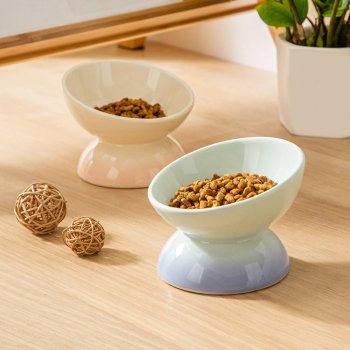
A tilted bowl can make daily meals cleaner, calmer, and more comfortable—especially for cats and small dogs that eat close to the ground. The right angle brings food forward, reduces the need to crouch, and can help keep meals contained instead of scattered across the floor. Below is a practical guide to what a tilted ceramic bowl does well, who benefits most, and how to use it safely for wet food, kibble, and water. For more guidance, see Ceramic Anti-Whisker Fatigue Cat Bowls, Shallow Wide Flat, Non ….
Many pets eat with their head low and their neck bent, which can be awkward—particularly for smaller bodies and shorter legs. A gentle tilt changes the “reach” to the food, often making it feel more natural. For further reading, see Necoichi Raised Cat Food Bowl 15° Tilted & Water Bowl.
Material affects cleanliness, stability, and day-to-day upkeep. Ceramic is popular for homes feeding wet food regularly because it can stay fresher between washes—assuming the glaze is intact and the bowl is cared for properly.
| Material | Pros | Trade-offs | Best for |
|---|---|---|---|
| Ceramic | Stable, easy to wash, less odor retention when glazed | Can break if dropped; avoid chips/cracks | Wet food, mixed feeding, pets that tip bowls |
| Stainless steel | Durable, lightweight, hygienic | Can slide unless it has a non-slip base; some pets dislike clinking | Water bowls, high-traffic homes |
| Plastic | Inexpensive, light | Scratches can trap residue; may retain odors; can slide | Travel or temporary use |
A tilt isn’t mandatory for every pet, but it can be a noticeable upgrade for certain eaters—especially those that leave a ring of food behind or look uncomfortable mid-meal.
For nutrition basics and meal routines, trustworthy references like the Cornell Feline Health Center and the American Veterinary Medical Association (AVMA) offer helpful guidance on feeding practices.
Comfort comes from the full shape—not only the angle. A great tilted bowl is wide enough to prevent face/whisker pressure, deep enough to contain food, and stable enough to stay put.
Once the bowl is in place, small adjustments to portions and placement can make meals tidier and easier to finish.
For a simple, home-friendly upgrade, the Tilted Ceramic Pet Bowl for Cats & Small Dogs offers a stable ceramic option designed for cats and small dogs that benefit from a gentle feeding angle. It’s a practical pick for everyday use with wet food or kibble, and it blends neatly into modern spaces. Check current availability and product details before ordering.
They can be, especially if a cat seems uncomfortable crouching low or frequently leaves food around the rim. Preferences vary, so watch for a relaxed posture, steady pace of eating, and fewer messes around the bowl.
Sometimes—mainly when the bowl is also wide and relatively shallow so whiskers don’t press against the sides. Tilt alone may not fix whisker discomfort if the dish is still narrow or deep.
Replace it right away if it’s chipped, cracked, or the glaze looks crazed/rough, since damage can harbor bacteria or cause cuts. If it stays intact and is cleaned consistently, a quality ceramic bowl can last for years.





Leave a comment