
Many household foods that seem harmless to people can seriously harm cats—even in small amounts. Cats are curious, quick, and often silent about what they’ve sampled. The result is that a dropped ingredient, a lick of a plate, or a “tiny taste” from a well-meaning guest can turn into a real emergency. Below is a practical guide to the most common toxic foods, what symptoms to watch for, what to do if exposure happens, and simple routines that reduce risk during cooking, eating, and cleanup.
Cats don’t process foods the same way people do. Certain everyday ingredients can trigger serious problems such as organ damage, anemia, or neurologic signs because cats metabolize some compounds differently. Risk also climbs during busy moments—cooking, serving, holidays, and parties—when plates are left unattended and counters are crowded.
Another often-missed issue is repetition: small exposures can add up. A few licks of gravy that contains onion powder over multiple meals may be more dangerous than one obvious incident. Finally, toxicity is not “one size fits all.” The ingredient, dose, cat size, and health status (like kidney disease or diabetes) all influence how severe the outcome may be.
Some foods are well-known hazards, while others hide inside mixed dishes. Pay special attention to seasoning blends and prepared foods where you can’t easily see what’s inside.
| Food/ingredient | Where it shows up | Possible signs | Immediate action |
|---|---|---|---|
| Onion/garlic/chives/leeks | Soups, sauces, seasoning blends, deli meats, baby food | Lethargy, pale gums, vomiting, fast breathing | Remove access; contact vet/poison hotline promptly—powdered forms can be potent |
| Chocolate/cocoa/caffeine | Candy, brownies, cocoa powder, coffee, energy drinks | Vomiting, hyperactivity, tremors, abnormal heart rate | Call for urgent advice; prevent further ingestion; do not “wait it out” |
| Grapes/raisins | Trail mix, baked goods, cereal, fruit bowls | Vomiting, poor appetite, abdominal pain, lethargy | Seek same-day guidance due to kidney risk and unpredictable sensitivity |
| Alcohol (incl. unbaked fermented dough) | Beer/wine/spirits, desserts, raw dough, spilled drinks | Disorientation, low body temperature, weakness, collapse | Emergency-level exposure; get immediate veterinary direction |
| Xylitol (sugar-free sweetener) | Gum, mints, peanut butter, “sugar-free” baked goods | Weakness, vomiting, low blood sugar signs | Treat as urgent; call vet/poison hotline with product label details |
| Cooked bones / fatty scraps | Chicken wings, rib bones, holiday leftovers | Choking, constipation, vomiting, painful abdomen | Stop feeding; contact vet if any vomiting, pain, or breathing trouble |
When a cat is exposed to a risky food, symptoms can be subtle at first. Any of the following signs warrant prompt veterinary guidance—especially if more than one appears.
For additional references on risky foods and poison guidance, consult the ASPCA Animal Poison Control Center and Pet Poison Helpline. For background on xylitol safety alerts, see the FDA.
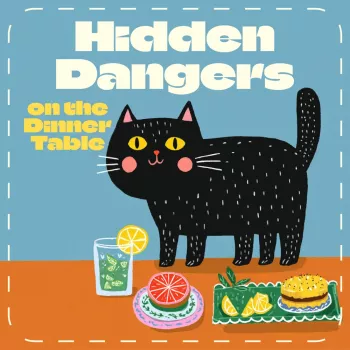
A downloadable reference is especially useful for travel, pet-sitting, and shared households where multiple people handle meals and cleanup. A structured list of risky foods—plus hidden ingredient sources—supports quick checks when you’re scanning labels or dealing with leftovers. For a ready-to-save reference, see Hidden Dangers on the Dinner Table | Cat Safety Guide | Digital Download on Poisonous Foods for Cats | Pet Owner Must-Have eBook.
If you share your home with a dog as well, keeping mealtime chaos under control can also reduce dropped-food opportunities for cats. A simple distraction option some multi-pet households use during cooking or gatherings is a designated enrichment item like Dog Training Toy (used appropriately and supervised).
Major high-risk categories include alliums (onion/garlic/chives/leeks), chocolate/caffeine, grapes/raisins, alcohol (and raw fermented dough), and xylitol. Hidden sources—especially onion/garlic powder in soups, gravies, seasoning blends, baby food, and deli items—are a common reason cats get exposed without anyone realizing it.
No—do not induce vomiting unless a veterinarian or poison professional specifically instructs you to. It can be harmful depending on what was eaten, how long ago it happened, and your cat’s health, so the safest step is to call for guidance right away.
It varies: some exposures cause signs within hours (like stimulants or alcohol), while others may take 12–72 hours (including some kidney-related concerns). Contact a professional with the timing details and monitor closely, even if your cat seems normal at first.






Leave a comment