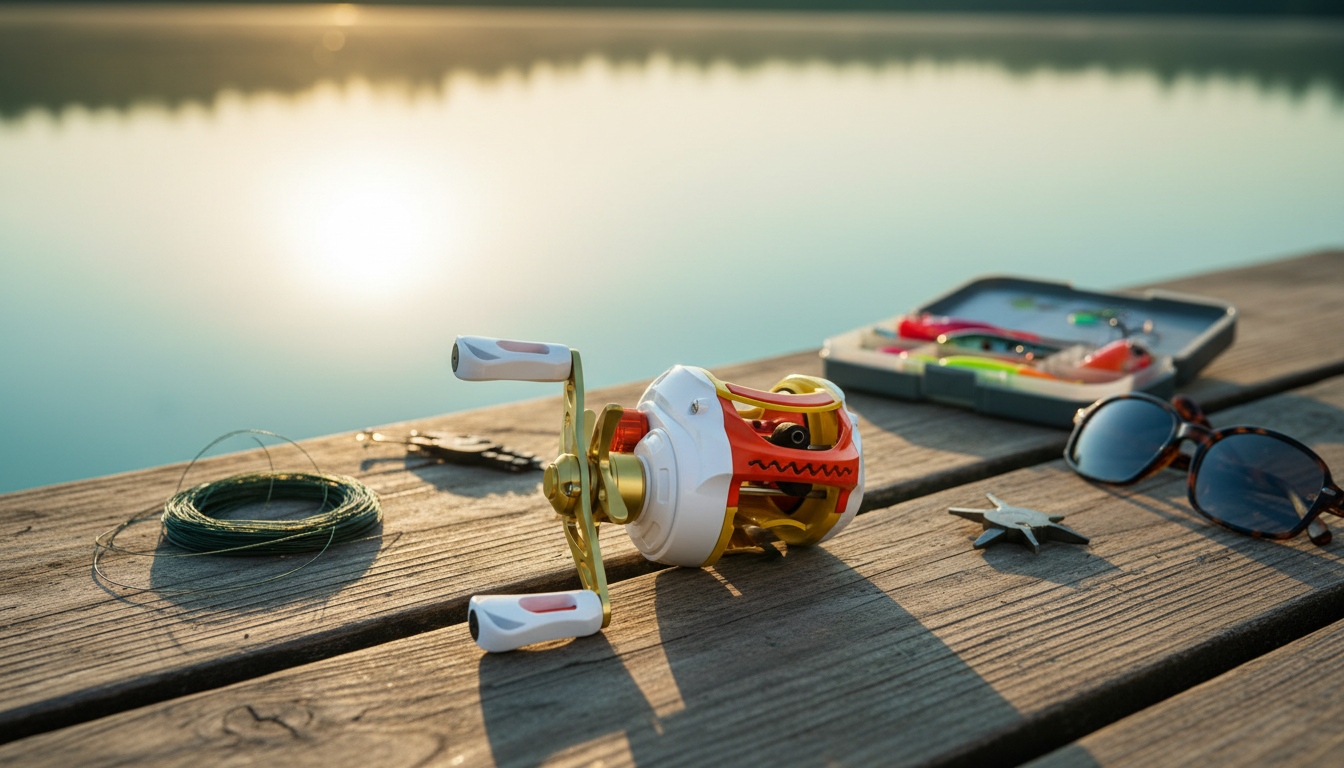
A fast 7.2:1 baitcasting reel is built for picking up slack quickly, working reaction baits, and controlling fish around cover. This model pairs a high-speed retrieve with a metal line cup designed for consistent line lay and dependable performance across common bass and inshore techniques. When you want quick response after a bite, tighter control on short-line fights, and a reel that stays composed under frequent casting, a high-speed baitcaster like this can be a practical everyday choice. For more guidance, see 3.8oz Carbon Frame, 5+1 BB, 5.2:1 Gear Ratio, 6.6lb Drag, ….
A 7.2:1 gear ratio is often chosen for efficiency. Each handle turn recovers line quickly, which matters most when presentations create slack or when fish change direction fast. It’s not “too fast” by default—retrieve speed is still controlled by your hands—but it gives extra headroom when you need it. For further reading, see Intermediate Fishing: Tackle and Techniques – NY.gov.
For a deeper look at how gear ratios translate to on-the-water use, Shimano’s guide is a helpful reference: Understanding Gear Ratios.
The spool (often described as a line cup) is where consistency starts. A metal line cup can feel more solid during fast retrieves and hard hooksets, and it’s designed to hold up over time when you’re casting, retrieving, and occasionally pulling fish out of cover.
High-speed reels feel their best when casting controls are set correctly. Most backlash problems come from a mismatch between spool tension, brakes, lure weight, and casting force—especially with new line or wind.
If you want a step-by-step refresher on baitcaster setup, this overview is a strong baseline: Take Me Fishing — How to Use a Baitcasting Reel. For additional setup tips focused on dialing in controls, Bassmaster also offers a clear walkthrough: How to Set Up a Baitcasting Reel.
A 7.2:1 baitcaster is at home across a wide range of “do-it-all” bass tactics. It shines most when you need fast pickup and accurate casting around targets like grass edges, laydowns, dock posts, or riprap transitions.
| Scenario | Brake setting | Spool tension | Line/lure notes |
|---|---|---|---|
| Learning on open water | Medium to high | Moderate (no spool play) | Use a 3/8–1/2 oz lure; avoid overfilling spool |
| Windy conditions | High | Moderate to slightly higher | Heavier lure helps; keep thumb ready at splashdown |
| Pitching/short targets | Medium | Moderate | Short controlled swings; stop spool early for quiet entry |
| Skipping | High | Slightly higher | Smooth low release; prioritize control over distance |
No—beginners can use a 7.2:1 successfully by starting with higher brakes, using mid-weight lures (about 3/8–1/2 oz), and focusing on smooth casting and controlled retrieve cadence. The gear ratio mainly increases line pickup per turn; it doesn’t automatically make the reel harder to handle.
Braid is a strong match for frogs and heavy cover, fluorocarbon works well for jigs and plastics, and monofilament is a reliable choice for topwater. More than spool material, correct spool fill level and proper tension/brake settings have the biggest impact on clean casting.
Set spool tension to remove side-to-side play, run the brakes higher while you learn (or when it’s windy), and avoid overfilling the spool. Use lure weights that load the rod well, make smoother casts, and keep your thumb lightly engaged near the end of the cast to stop the spool at splashdown.






Leave a comment