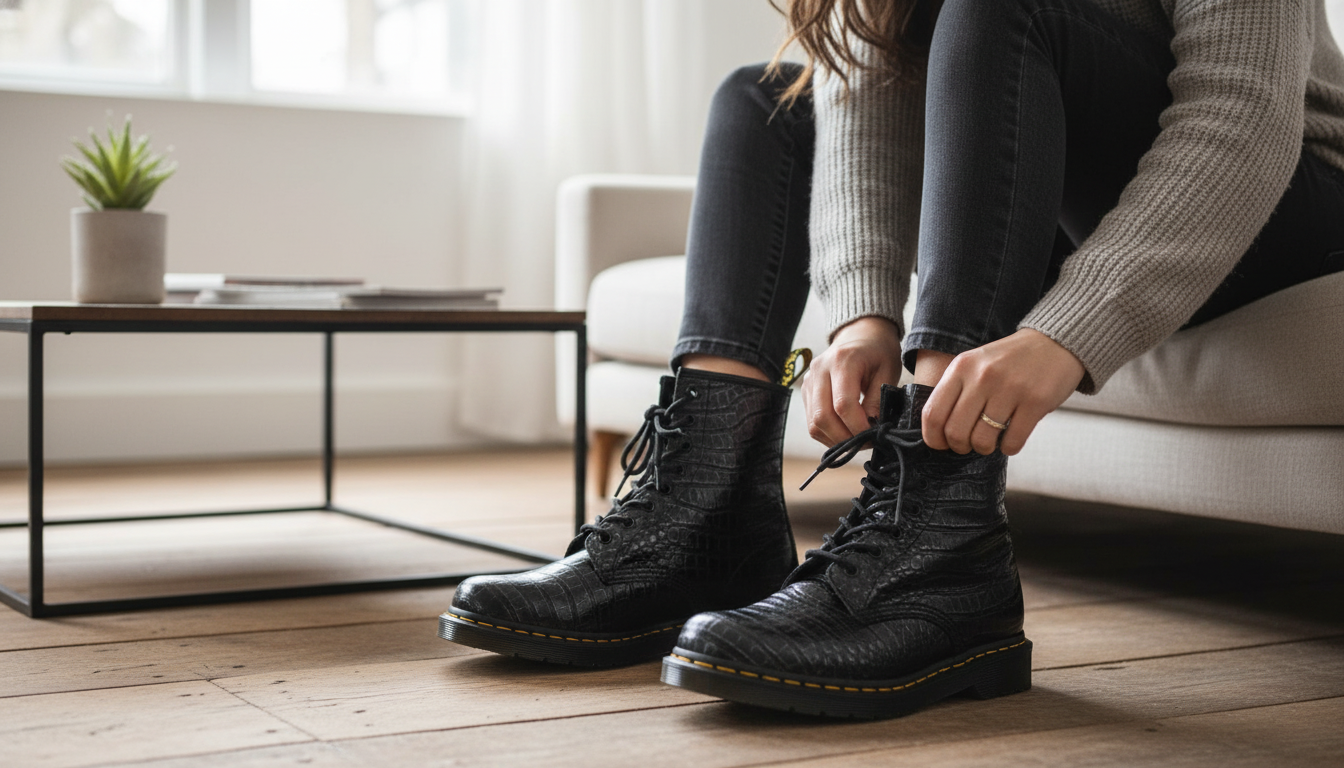
Dr. Martens-style boots are known for their sturdy build, grippy soles, and unmistakable silhouette. Choosing a faux leather pair adds a different set of considerations—how the material breaks in, how it handles scuffs, and what care products are safe. This guide focuses on what to look for, how to get the best fit, and how to keep black faux leather boots looking sharp through regular wear.
| Feature | Faux Leather Boots | Leather Boots |
|---|---|---|
| Break-in feel | Often less stretch; comfort improves as the boot loosens slightly | Typically stretches and molds more to the foot over time |
| Water handling | Surface can resist light splashes; seams still matter | Depends on treatment; can absorb water without conditioning/protection |
| Scuffs and scratches | May show surface scuffs; polishing options are limited | Can often be buffed, conditioned, and refinished more easily |
| Care products | Use gentle soap/water and faux-leather-safe protectants | Conditioners, waxes, and leather creams are commonly used |
| Long-term flex points | Risk of cracking at repeated crease points if stored/cared for poorly | Creasing is normal; cracking risk rises if leather dries out |
Quick fit check: lace the boots, walk up and down a hallway, and do a few slow heel raises. If your toes stay relaxed and your heel movement is minor (not popping up with every step), you’re close to the right fit.
If you’re building outfits around a new pair of boots, a quick way to stay consistent is to plan a mini “capsule” of two bottoms (jeans + trousers), one skirt or dress, and two outer layers. For a guided way to pull references and refine your aesthetic, consider Define Your Style With a Mood Board – Fashion Mood Board Guide for Personal Style Clarity | How to Create a Fashion Mood Board.
For brand-specific maintenance guidance, refer to Dr. Martens – Care Guides. For clarity on labeling terms related to leather and imitation leather, see the FTC – Guides for Select Leather and Imitation Leather Products.
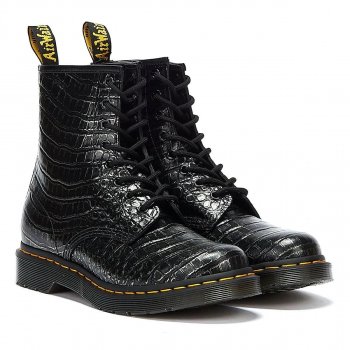
If you want the iconic silhouette in a neutral finish that works with almost everything, Dr. Martens Women’s Black Faux Leather Boots are an easy starting point. Black faux leather is especially convenient for everyday outfits because it reads polished even with simple styling.
Faux leather typically stretches less than real leather. Most of the “break-in” comfort comes from the lining and footbed settling, so it’s better to size for toe room and use socks or a thin insole than to rely on stretch.
Start with a soft damp cloth to remove dust and grit, then use mild soap diluted in water for deeper cleaning. Let them air-dry away from direct heat, and avoid oils or harsh solvents that can break down the coating.
They can handle light rain better than some untreated leather surfaces, but seams and prolonged soaking can still cause problems. Dry them properly after wet wear, and prioritize traction when sidewalks are icy.





Leave a comment