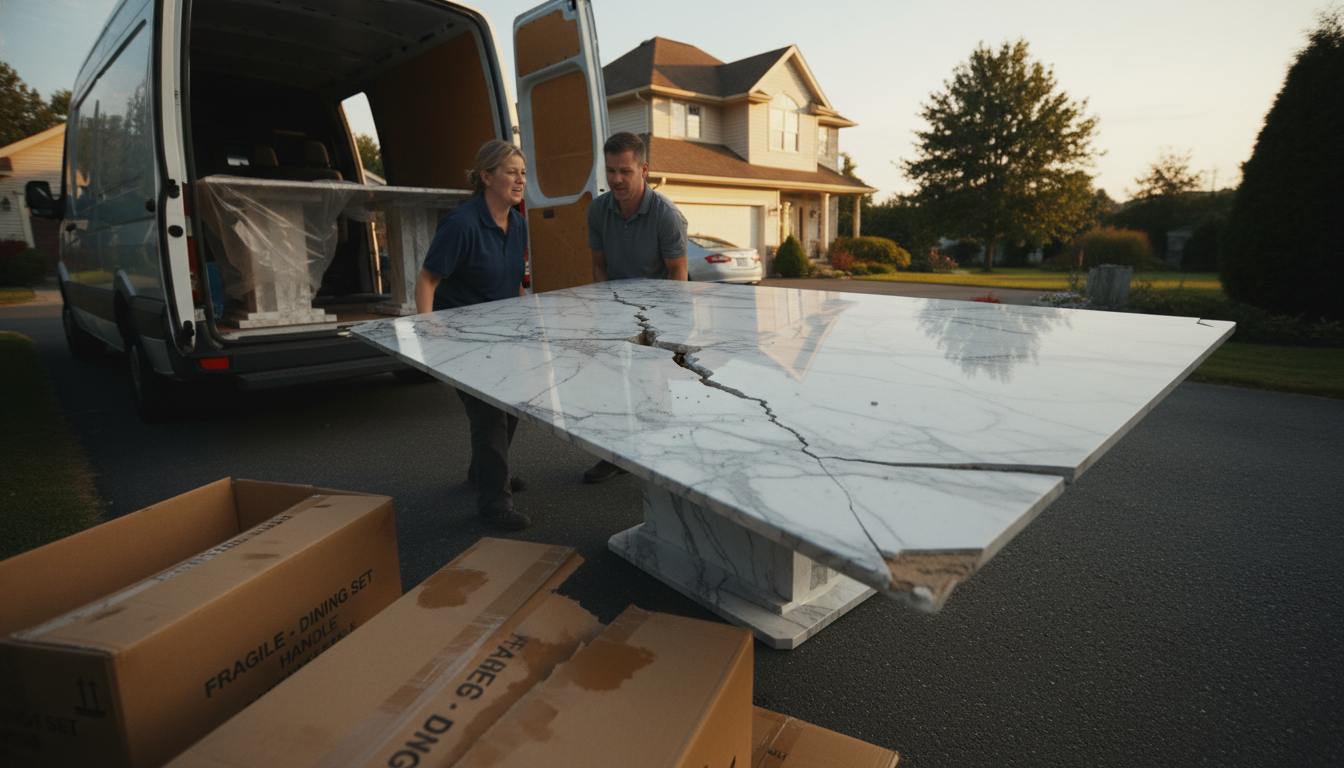
Artificial marble (often called engineered marble or cultured marble) can look impressively close to natural stone, but it comes with trade-offs that matter in a high-use spot like a dining table. The biggest drawbacks usually involve heat sensitivity, scratch resistance, staining risk from certain foods, and the long-term look of the surface finish.
Many artificial marble tops use a resin binder and a gel coat finish. Hot pots, pans, or bakeware can discolor, dull, or even crack that top layer. Even if the slab underneath is stable, the finish is what you see and touch—so heat rings and “cloudy” patches can be hard to ignore. Trivets and heat pads are often a must, not a suggestion.
Compared with natural stone, artificial marble can be more prone to fine scratches, especially on glossy finishes that show marks under overhead lighting. Knife slips, gritty placemats, and dragged ceramics may leave scuffs. Edge chips can happen if the table gets bumped, and repair results depend on how deep the damage is and how the finish was applied.
While some engineered surfaces are marketed as “stain-resistant,” dyed foods and strong liquids can still cause discoloration if left sitting—think red wine, coffee, turmeric, soy sauce, or berry juice. Acidic spills may also dull the sheen or create a patchy look on some finishes. Quick cleanup and gentle cleaners matter more than many shoppers expect.
High-traffic dining tables face constant wiping, friction, and occasional abrasive crumbs. Over time, the shine can fade unevenly, revealing a more matte area where people sit most often. Refinishing may be possible, but it’s not always simple or invisible.
For a deeper breakdown of real-world pros and cons, visit the main article on artificial marble dining table disadvantages.
It can be, as long as you’re comfortable using trivets, coasters, and non-abrasive cleaning habits. If your household is hard on surfaces, a more scratch- and heat-tolerant tabletop may be easier to live with.






Leave a comment